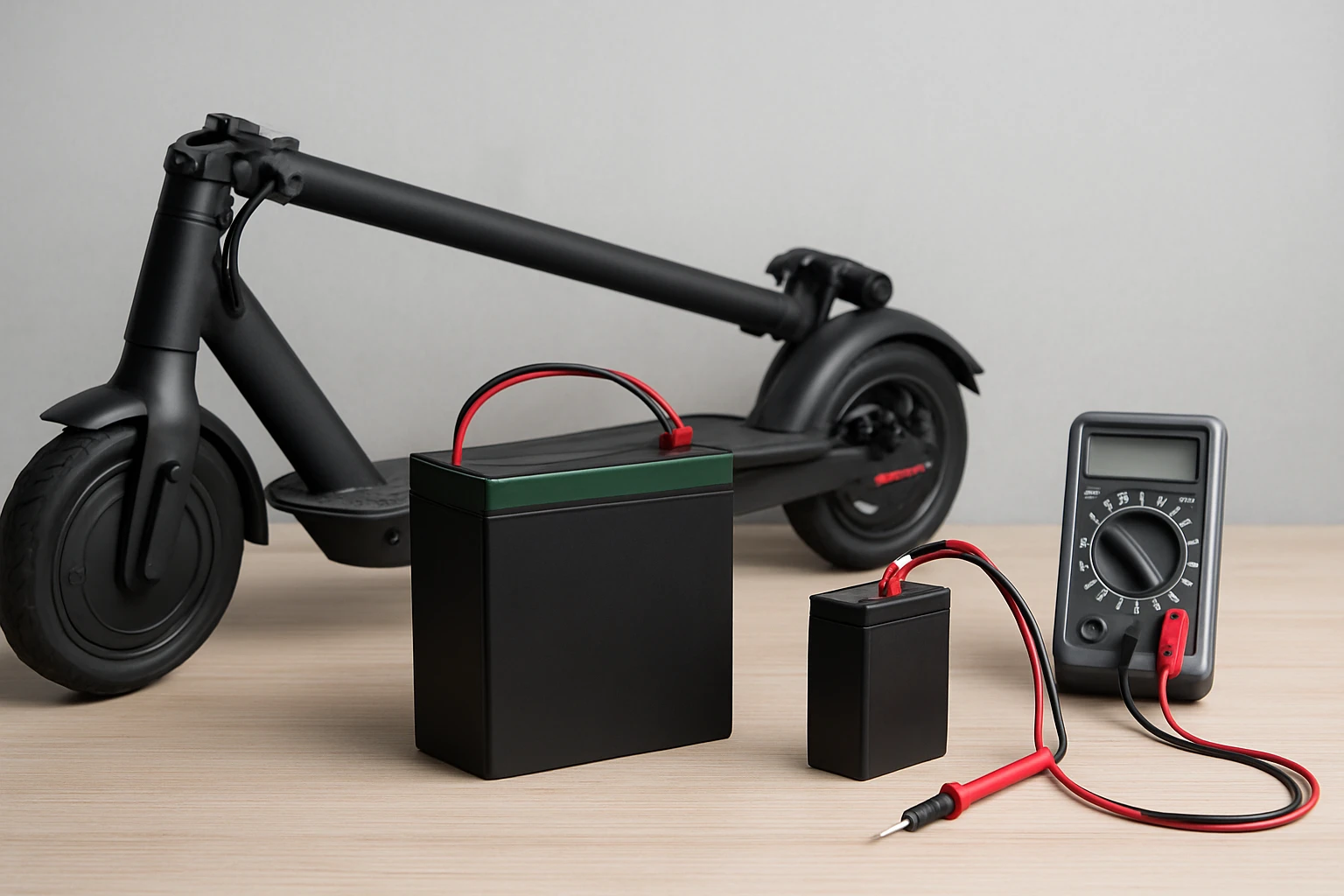

Ultimate Guide to Second-Life Folding E‑Scooter Batteries: Safety, Testing, Repurposing & DIY Projects
Introduction
The rapid growth of electric micro‑mobility has resulted in a surplus of used scooter batteries. Many owners discard these power packs without considering their remaining capacity. This guide explains how to evaluate, refurbish, and repurpose second‑life folding e‑scooter batteries safely and efficiently. Readers will learn essential safety practices, reliable testing procedures, practical repurposing ideas, and step‑by‑step DIY projects. The guide also highlights two affordable products that can serve as reference points for battery performance and replacement.
Background and Context
A typical folding e‑scooter employs a lithium‑ion battery pack rated between 24 V and 48 V, delivering between 250 W and 750 W of power. Over time, the battery’s capacity diminishes due to charge‑cycle wear, but a substantial portion of its energy storage often remains usable for lower‑current applications. Understanding the chemistry of lithium‑ion cells, the concept of cycle life, and the distinction between nominal and peak voltage is essential before embarking on any second‑life project.
Nominal voltage represents the average voltage of a fully charged cell under load, while peak voltage occurs at the moment of full charge. Cycle life indicates the number of full charge‑discharge cycles a battery can endure before its capacity falls to 80 % of the original rating. Manufacturers typically rate lithium‑ion packs for 500–1,500 cycles, depending on cell quality and usage patterns.
Second‑life applications often demand lower discharge rates than the original scooter, extending the usable lifespan of the pack. Common uses include portable power banks, off‑grid lighting, small‑scale solar storage, and DIY robotics. By following the procedures outlined in this guide, one can safely extract value from a battery that would otherwise become waste.
Safety Considerations
Safety must precede every handling step. Lithium‑ion cells store significant energy and can release heat, fire, or toxic gases if short‑circuited, punctured, or overcharged. The following precautions are mandatory:
- Wear insulated gloves and safety goggles at all times.
- Work in a well‑ventilated area away from flammable materials.
- Never discharge a battery below 2.5 V per cell; this can cause irreversible damage.
- Use a fire‑proof container, such as a metal bucket filled with sand, for testing.
When testing or repurposing, always employ a dedicated lithium‑ion battery management system (BMS) to monitor voltage, current, and temperature. A BMS prevents over‑discharge, over‑charge, and short‑circuit conditions, thereby protecting both the user and the battery.
Testing Second‑Life Batteries
Accurate testing determines whether a battery pack retains sufficient capacity for a new application. The testing process consists of three stages: visual inspection, voltage measurement, and capacity test.
- Visual Inspection: Examine the pack for swelling, corrosion, or damaged connectors. Any physical deformation indicates internal short circuits and the pack should be discarded.
- Voltage Measurement: Using a digital multimeter, measure the open‑circuit voltage (OCV) of each cell or the entire pack. For a 36 V scooter battery, a healthy OCV should read between 38 V and 42 V when fully charged.
- Capacity Test: Connect the pack to a programmable electronic load set to a constant current equal to 0.2 C (20 % of the rated capacity). Record the discharge time until the voltage reaches the cut‑off threshold (typically 30 V for a 36 V pack). Multiply the current by the discharge time to calculate remaining amp‑hours.
One practical tool for capacity testing is the Hover‑1 Journey Replacement Battery. Although marketed as a replacement, its specifications (36 V, 7.8 Ah, 280.8 Wh) provide a benchmark for evaluating other packs. The product holds a rating of 3.2/5.0 from six reviews, indicating moderate satisfaction among users who value its high capacity and long cycle life (up to 1,500 cycles at 85 % charge).
Repurposing Options
Once a battery passes safety and capacity tests, it can be integrated into various second‑life projects. The following categories illustrate common repurposing pathways:
- Portable Power Stations: Combine the battery with a DC‑AC inverter to create a mobile power source for camping or emergency use.
- Solar Energy Storage: Pair the pack with a solar charge controller to store daylight energy for nighttime lighting.
- Electric Bike Conversion: Use the battery to power a low‑speed electric bicycle, provided the voltage matches the motor requirements.
- DIY Robotics: Supply consistent power to hobbyist robots, drones, or remote‑controlled vehicles.
For projects requiring a smaller, rugged battery, the Weize YTX7A‑BS Motorcycle Battery offers a compact 12 V, 6 Ah sealed AGM solution. Although designed for gasoline scooters, its sealed lead‑acid chemistry provides stable voltage and high cold‑cranking amps (140 CCA). The product enjoys a high rating of 4.5/5.0 from 2,648 reviews, reflecting its reliability in demanding environments.
DIY Projects Using Second‑Life Batteries
Below are three detailed projects that illustrate how to transform a used scooter battery into a functional device.
1. Portable Power Bank for Outdoor Electronics
Materials required: the tested 36 V scooter battery, a 12 V to 5 V USB step‑down converter, a protective BMS, a project box, and appropriate wiring. Begin by installing the BMS to monitor cell balance. Connect the battery to the step‑down converter, ensuring polarity matches the converter’s input. Mount the components inside the project box, seal, and attach a USB outlet. The resulting power bank can charge smartphones, tablets, and GPS units for up to 30 hours of continuous use.
2. Solar‑Powered Garden Lighting System
Materials required: a 36 V battery, a 50 W solar panel, a solar charge controller, LED strip lights, and waterproof connectors. Install the solar panel on a south‑facing roof and wire it to the charge controller. Connect the controller’s output to the battery, then attach the LED strips in parallel. The system stores sunlight during the day and illuminates the garden at night, reducing reliance on grid electricity.
3. Low‑Speed Electric Tricycle
Materials required: a 36 V scooter battery, a 250 W hub motor, a throttle controller, a sturdy tricycle frame, and safety gear. Mount the hub motor on the rear wheel and connect it to the throttle controller. Wire the battery to the controller through the BMS. Adjust the throttle response to limit top speed to 15 km/h, complying with local regulations for low‑speed vehicles. This project demonstrates how a repurposed battery can extend personal mobility beyond the original scooter.
Comparison and Selection Guide
Choosing the appropriate battery for a second‑life project depends on voltage, capacity, chemistry, and form factor. The table below compares the two featured products against common criteria.
| Feature | Hover‑1 Journey Replacement Battery | Weize YTX7A‑BS Motorcycle Battery |
|---|---|---|
| Chemistry | Lithium‑Ion (Li‑FePO4) | Sealed Lead‑Acid (AGM) |
| Nominal Voltage | 36 V (fits 42 V systems) | 12 V |
| Capacity | 7.8 Ah (280.8 Wh) | 6 Ah (72 Wh) |
| Cycle Life | Up to 1,500 cycles at 85 % charge | Approximately 500 cycles (typical for AGM) |
| Weight | ~2.5 kg | ~1.8 kg |
| Price | $143.99 | $23.99 |
| Rating | 3.2/5.0 (6 reviews) | 4.5/5.0 (2,648 reviews) |
| Best For | High‑capacity portable power, solar storage | Compact, rugged backup power, low‑current devices |
When a project requires high energy density and long cycle life, the Hover‑1 battery is the superior choice despite its higher price. Conversely, for applications that demand durability, resistance to deep discharge, and a low upfront cost, the Weize AGM battery excels.
Best Practices & Tips
- Always calibrate the BMS to the specific pack configuration before use.
- Store batteries at a temperature between 15 °C and 25 °C to minimize capacity loss.
- Perform a brief discharge‑charge cycle monthly if the battery remains idle for extended periods.
- Label all connections clearly to avoid polarity mistakes during installation.
- Document the original specifications of the used battery; this information simplifies future troubleshooting.
Frequently Asked Questions
- Can I mix cells from different scooter batteries? Mixing cells with differing capacities or ages can lead to imbalance, reducing overall lifespan. It is advisable to use cells of the same brand and age group.
- Is it safe to charge a second‑life battery with a standard charger? Only use chargers that match the battery’s chemistry and voltage range. A charger designed for 36 V lithium‑ion packs is required for the Hover‑1 battery.
- How many cycles can I expect from a repurposed scooter battery? Most high‑quality lithium‑ion packs retain 70‑80 % of capacity after 1,000‑1,500 cycles when operated within safe limits.
- What is the best way to dispose of a battery that has failed safety tests? Contact a certified e‑waste recycling facility. Do not discard batteries in regular trash.
- Can I use an AGM battery for high‑current applications? AGM batteries provide high cold‑cranking amps, making them suitable for short bursts of high current, but they are not ideal for sustained high‑draw scenarios.
- Do I need a separate inverter for AC output? Yes, an inverter converts DC from the battery to usable AC power. Choose an inverter rated for at least 20 % higher power than the intended load.
- How often should I check the health of a second‑life battery? Perform a full capacity test every six months, or sooner if the battery shows signs of reduced performance.
Conclusion
Second‑life folding e‑scooter batteries represent a sustainable resource that can power a wide range of low‑to‑moderate energy projects. By adhering to strict safety protocols, conducting thorough testing, and selecting the appropriate chemistry, one can extend the functional lifespan of these packs while reducing electronic waste. The featured products illustrate the spectrum of options—from high‑capacity lithium‑ion packs to rugged AGM batteries—providing readers with concrete examples to inform their own projects.
Products Featured in This Guide
Hover-1 Journey Replacement Battery
Price: $143.99
Rating: 3.2/5.0 (6 reviews)
Why featured: Provides a high‑capacity 36 V lithium‑ion pack that serves as a benchmark for testing and repurposing projects requiring substantial energy storage.
Weize YTX7A-BS Motorcycle Battery
Price: $23.99
Rating: 4.5/5.0 (2,648 reviews)
Why featured: Offers a compact, rugged sealed AGM battery suitable for low‑current, high‑reliability applications such as backup power and portable devices.