Street-Legal E-Scooter Lighting Upgrades Guide: How to Make Your Scooter Road-Compliant and Safer
Introduction
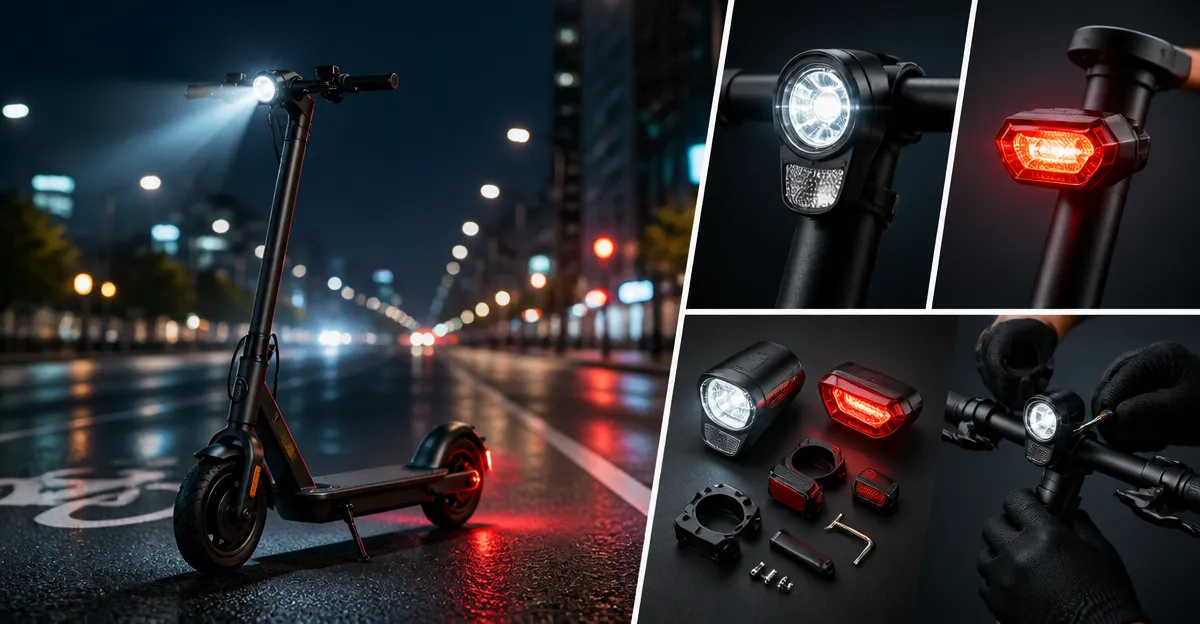
Electric scooters have become a popular urban mobility solution, yet many riders overlook the critical role of lighting in both safety and legal compliance. This guide explains the regulatory framework that governs e‑scooter illumination, outlines the technical criteria for effective lighting, and presents practical product recommendations. Readers will learn how to select, install, and maintain front and rear lights that satisfy street‑legal standards while enhancing visibility at night. By the end of the article, one will be equipped to upgrade a scooter with confidence and legal assurance.
Background and Context
In most U.S. jurisdictions, an e‑scooter is classified as a low‑speed vehicle and must meet the same lighting requirements as bicycles. The Federal Highway Administration (FHWA) stipulates that a front white light, a rear red reflector or light, and side reflectors are mandatory during low‑light conditions. Additionally, many states require a flashing mode for the rear light to improve conspicuity. Understanding these rules is essential because non‑compliant lighting can result in citations, insurance complications, or increased accident risk.
Beyond legal obligations, proper lighting mitigates the human visual limitations that occur after dusk. The average driver’s reaction time improves when a scooter presents a bright, steady white beam ahead and a flashing red beacon behind. Moreover, modern rechargeable lighting systems offer long runtimes and water resistance, ensuring reliable performance in rain or accidental splashes.
Understanding Street‑Legal Lighting Requirements
Street‑legal lighting can be divided into three functional categories: front illumination, rear visibility, and auxiliary reflectors. The front light must emit a white beam with a minimum luminous intensity of 100 lumens, and it should be visible from at least 500 feet. The rear light or reflector must emit a red signal visible from 300 feet, and a flashing mode is often recommended to meet state‑specific statutes. Side reflectors are optional but provide additional safety on multi‑lane roads.
When evaluating a lighting product, one should verify the lumens rating, beam pattern, and mounting flexibility. A rotatable headlight allows the rider to adjust the beam angle for urban streets versus off‑road trails. Likewise, a waterproof rating of IPX4 or higher ensures operation during rain, while an IP65 rating offers protection against dust and stronger water ingress.
Selecting an Effective Front Light
The front light is the most visible safety component, and it should balance brightness with battery efficiency. For commuters who ride 10‑15 miles per day, a light offering 800‑1200 lumens with a runtime of at least 4 hours on high mode is ideal. The Zewdov High-Lumen Rechargeable Bike Light Set provides a 1000‑lumen headlight, an auxiliary array of eight floodlights, and a durable aluminum alloy housing with an IP65 waterproof rating. Its USB‑C fast‑charging capability delivers a full charge in two hours, and the battery supports up to 4 hours of high‑brightness operation, making it suitable for long urban commutes.
For riders who prioritize lightweight equipment and a modest budget, the Ascher USB Rechargeable Bike Light Set offers a front headlight with a 2000 mAh battery that lasts between 5 and 12 hours depending on mode. Its 360° rotatable mount provides flexible beam direction, and the IPX4 rating protects against rain and splashes. Although its lumen output is lower than the Zewdov model, the Ascher set delivers reliable illumination for city streets and short suburban rides.
For users who need an all‑in‑one safety kit that includes a bell and a rear light, the BLITZU Gator 320 USB Rechargeable Bike Light Set supplies a bright white front headlight paired with a red rear taillight and a built‑in bell. While its lumen output is modest compared with the Zewdov model, the Gator 320 excels in ease of installation and tool‑free mounting, making it an excellent entry‑level choice for casual commuters.
Selecting an Effective Rear Light
A rear light must be visible from a distance of at least 300 feet and preferably feature a flashing mode to attract attention. The Zewdov set includes a rear light with seven distinct modes, ranging from steady high to cross‑warning flashes, powered by a 350 mAh battery that can last up to 50 hours on low mode. Its aluminum housing and IP65 rating provide robust protection against impacts and weather.
The Ascher rear light offers a bright red beacon with four lighting modes, including slow and fast flashing. Its 330 mAh battery delivers 9‑16 hours of operation, and the silicone mount strap ensures a secure fit on most handlebar diameters. This rear light is well‑suited for riders who need a simple, reliable solution without the complexity of multiple modes.
The BLITZU Gator 320 rear light integrates a red taillight with three flashing patterns and a mechanical bell. Although its battery runtime is shorter than the Zewdov model, the Gator 320’s compact design and quick‑mount system make it attractive for users who value convenience over extensive mode selection.
Power, Battery, and Charging Considerations
Rechargeable e‑scooter lights typically use lithium‑ion or lithium‑polymer cells ranging from 300 mAh to 2000 mAh. Higher capacity batteries extend runtime but add weight. The Zewdov lights employ a 2000 mAh battery for the headlight and a 350 mAh battery for the taillight, offering a balanced trade‑off between brightness and endurance. The Ascher front light’s 2000 mAh battery provides up to 12 hours on low mode, while the rear’s 330 mAh battery offers up to 16 hours.
Fast charging is a valuable feature for commuters who need to replenish the lights during a short break. Both the Zewdov and BLITZU models support USB‑C fast charging, achieving a full charge in approximately two hours. The Ascher set uses a standard USB‑A connection, which typically requires three to four hours for a full charge.
When selecting a lighting system, verify that the charging cable is included and that the connector type matches the rider’s existing power sources, such as a portable power bank or a scooter‑mounted USB outlet.
Installation and Mounting Techniques
Proper mounting ensures that the light remains stable during acceleration, braking, and vibration. Silicone strap mounts, as found on the Ascher and BLITZU models, provide a friction‑fit that can be adjusted without tools. These mounts accommodate handlebar diameters from 22 mm to 31 mm, covering the majority of consumer e‑scooters.
The Zewdov set utilizes an aluminum alloy bracket with a locking mechanism that snaps into pre‑drilled holes on the handlebar. This design offers a more rigid attachment, which is advantageous for high‑speed riding or rough urban terrain. However, it may require a small Allen key for initial installation.
Regardless of the mounting system, it is essential to tighten the strap or bracket until the light does not wobble when the scooter is shaken. A loose mount can cause the light to shift, reducing beam alignment and potentially damaging the device.
Comparison and Selection Guide
| Feature | Ascher USB Rechargeable Bike Light Set | Zewdov High-Lumen Rechargeable Bike Light Set | BLITZU Gator 320 USB Rechargeable Bike Light Set |
|---|---|---|---|
| Front Light Lumen Output | ~500 lumens (estimated) | 1000 lumens | ~400 lumens |
| Rear Light Modes | 4 (steady, slow flash, fast flash, off) | 7 (steady high, medium, low, flash, SOS, cross‑warning, off) | 3 (steady, flash, off) |
| Battery Capacity (Front) | 2000 mAh | 2000 mAh | ~800 mAh (estimated) |
| Battery Capacity (Rear) | 330 mAh | 350 mAh | ~300 mAh |
| Runtime (High Mode) | 5‑7 hours | 4 hours | ~2‑3 hours |
| Water Resistance | IPX4 | IP65 | IPX4 |
| Price (USD) | $14.53 | $19.99 | $18.98 |
| Average Rating | 4.4/5 (32,575 reviews) | 4.6/5 (1,548 reviews) | 4.5/5 (20,840 reviews) |
Riders who require maximum illumination for dark urban corridors should prioritize the Zewdov set because of its superior lumen output and extensive mode selection. Budget‑conscious commuters who value ease of installation may find the Ascher set the most practical choice. Those seeking an all‑in‑one safety kit with a bell and a straightforward mounting system will benefit from the BLITZU Gator 320.
Best Practices & Tips
- Always test the lights before a night ride to verify battery charge and correct mode selection.
- Use the highest steady‑white setting on the front light in low‑traffic areas, and switch to flashing rear mode in high‑traffic zones.
- Secure the mounting strap or bracket with a torque wrench if the manufacturer recommends a specific torque value.
- Store the lights in a dry environment when not in use to prolong battery lifespan.
- Consider adding reflective tape to the scooter frame to complement the electronic lights and meet additional local regulations.
Frequently Asked Questions
- What is the minimum lumen requirement for a street‑legal e‑scooter front light?
- Most jurisdictions require at least 100 lumens, but a brightness of 500‑1000 lumens provides a comfortable safety margin.
- Can I use a bicycle light on an e‑scooter?
- Yes, provided the mounting system is compatible and the light meets the required lumen and color specifications.
- Do I need a flashing rear light, or is a steady red light sufficient?
- While a steady red light satisfies basic legal requirements, many states mandate a flashing mode to improve conspicuity.
- How often should I recharge my scooter lights?
- Recharge after each week of regular use, or sooner if the runtime indicator shows less than 20 % remaining.
- Are waterproof ratings like IPX4 adequate for heavy rain?
- IPX4 protects against splashes from any direction; for prolonged exposure to heavy rain, an IP65 rating offers greater assurance.
- Will adding a powerful front light drain my scooter’s battery?
- Dedicated scooter lights have separate rechargeable batteries, so they do not affect the scooter’s main power source.
Conclusion
Upgrading an e‑scooter’s lighting system is a straightforward yet impactful method to achieve road compliance and enhance rider safety. By understanding legal requirements, evaluating lumen output, battery life, and waterproof performance, riders can select a solution that matches their commuting patterns. Whether one opts for the high‑performance Zewdov set, the budget‑friendly Ascher kit, or the versatile BLITZU Gator 320, each product offers distinct advantages that align with different use‑case scenarios. Implementing the best‑practice installation steps and maintenance routines ensures that the lights remain reliable throughout the riding season.
Products Featured in This Guide
Ascher USB Rechargeable Bike Light Set
Price: $14.53 | Rating: 4.4/5 (32,575 reviews)
Featured for its affordable price, 360° rotatable front mount, and IPX4 water resistance, making it a solid choice for everyday urban commuters.
Zewdov High-Lumen Rechargeable Bike Light Set
Price: $19.99 | Rating: 4.6/5 (1,548 reviews)
Featured for its 1000‑lumen headlight, extensive 8+7 mode selection, IP65 waterproof rating, and fast USB‑C charging, ideal for riders demanding maximum visibility.
BLITZU Gator 320 USB Rechargeable Bike Light Set
Price: $18.98 | Rating: 4.5/5 (20,840 reviews)
Featured for its integrated bell, tool‑free mounting, and balanced front‑rear illumination, offering a convenient, all‑in‑one safety package for casual riders.