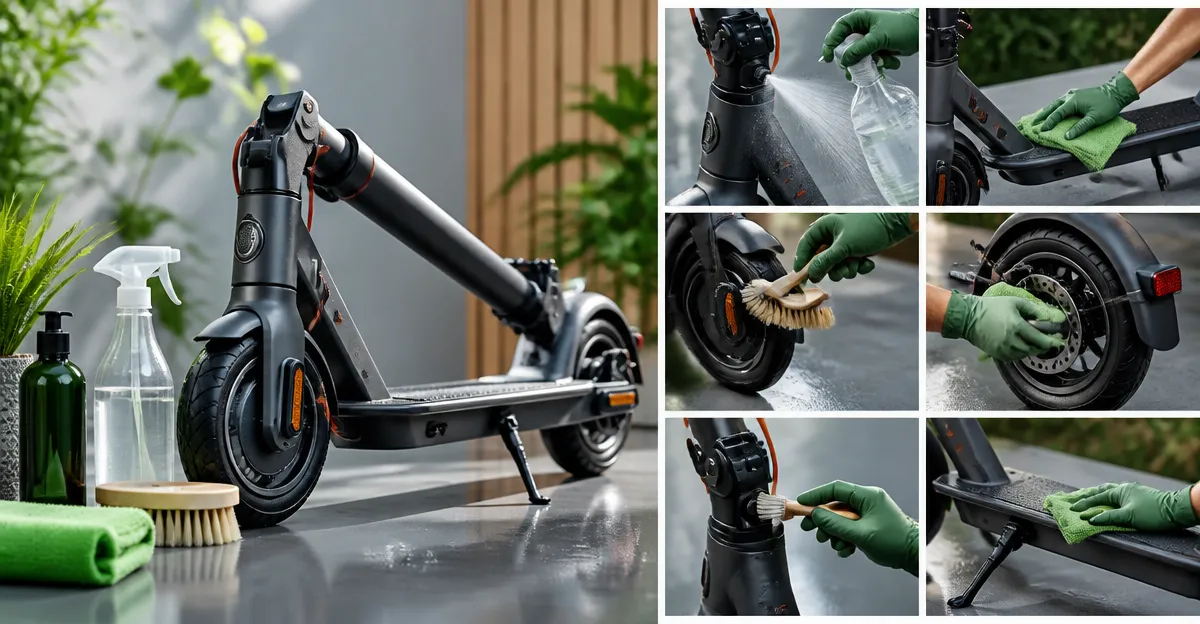
How to Clean and Detail Folding E‑Scooters: A Step‑by‑Step Eco‑Friendly, Non‑Toxic Guide
Introduction
Keeping a folding e‑scooter clean is essential for performance, safety, and longevity. This guide teaches readers how to clean and detail a scooter using environmentally safe, non‑toxic products while recommending reliable tools that enhance each step. By following the instructions, one will remove grime, protect electrical components, and preserve the scooter’s aesthetic appeal, ultimately extending its service life.
The guide is written for intermediate users who already understand basic scooter operation but need a systematic approach to maintenance. All recommendations are based on real Amazon products, with price, rating, and feature information drawn directly from the supplied data.
What You’ll Need
- Microfiber cleaning cloths (soft, lint‑free)
- pH‑balanced, biodegradable cleaning solution (e.g., a mild dish soap mixed with water)
- Soft‑bristled brush for tires and suspension
- Compressed‑air canister for hard‑to‑reach areas
- Silicone‑based protectant for plastic and metal surfaces
- Optional: RUAIOO Electric Scooter – useful as a reference model for fold‑away mechanisms and weight capacity.
Step‑by‑Step Instructions
1. Prepare a Clean Workspace
Choose a well‑ventilated area, preferably outdoors or in a garage with natural light. Lay down a large rubber mat to prevent scratches on the scooter’s frame. This step reduces the risk of contaminating the scooter with dust that could settle during cleaning.
If you own the RUAIOO Electric Scooter, its 300 lb capacity and sturdy aluminum alloy construction make it an excellent example of a scooter that tolerates repeated folding and unfolding without compromising structural integrity. Observing its hinge design helps you understand where debris tends to accumulate.
2. Remove Loose Debris
Begin by gently shaking the scooter to dislodge loose dust, sand, and leaves. Use a soft‑bristled brush to sweep away debris from the deck, handlebar clamps, and wheel spokes. For the Gyroor Seat Scooter, pay special attention to the seat‑basket area where pet hair or small items may collect.
Compressed‑air can be directed into the motor housing vents and suspension pivots. This non‑contact method removes particles without scratching delicate components.
3. Clean the Frame and Fold‑Away Mechanism
Mix a few drops of biodegradable dish soap with warm water (approximately 1 % solution). Dampen a microfiber cloth in the solution, then wipe the entire frame, paying close attention to the folding joints. The RUAIOO model’s reinforced aluminum alloy benefits from a gentle wipe; harsh chemicals could erode the protective coating.
Rinse the cloth with clean water, wring out excess moisture, and remove any soap residue. Use a dry microfiber towel to pat the metal surfaces dry, preventing water spots that could lead to corrosion over time.
4. Detail the Wheels and Tires
The 10‑inch off‑road tires on the RUAIOO Electric Scooter and the 12‑inch pneumatic tires on the Gyroor Seat Scooter trap grit that can damage bearings. Spray the soft‑bristled brush with the same soap solution and scrub each tire in a circular motion.
After cleaning, spin the wheels to distribute the lubricant evenly. Apply a few drops of silicone‑based protectant to the tire sidewalls; this creates a barrier against UV‑induced cracking while remaining non‑toxic.
5. Clean Electrical Components Safely
The motor, battery housing, and controller are sensitive to moisture. Use a dry microfiber cloth to wipe the exterior of the battery pack and motor casing. For the Segway SuperScooter GT3, the high‑performance 2400 W motor generates heat; ensure the battery is powered off and cooled before cleaning.
Do not spray any liquid directly onto connectors. Instead, use a cotton swab lightly dampened with isopropyl alcohol (minimum 70 %). This evaporates quickly, removing oily residues without leaving conductive films.
6. Dry All Components Thoroughly
Allow the scooter to air‑dry for at least 15 minutes in a shaded area. Use a clean, dry microfiber towel to accelerate drying on metal surfaces. Moisture trapped in the folding hinges can cause rust, especially on steel pins.
For the Segway SuperScooter GT3, the dual hydraulic suspension benefits from a final wipe with a dry cloth to prevent water from entering the shock seals.
7. Apply Protective Coating
Once the scooter is completely dry, apply a thin layer of silicone‑based protectant to the frame, plastic trims, and metal hinges. The product forms a breathable film that repels dust and water while remaining environmentally safe.
For the RUAIOO Electric Scooter, the protectant helps maintain the sleek aluminum finish, preserving the 5‑star rating that reflects its high build quality.
8. Re‑assemble and Test
Fold the scooter back into its travel position, ensuring each latch clicks securely. Inspect the brakes—both disc and electronic—by applying the hand lever. Confirm that the lights (headlight, taillight, and stem lights) illuminate correctly; the RUAIOO model’s full lighting system benefits from regular cleaning to retain brightness.
Take a short test ride on a smooth surface. Listen for any unusual noises that could indicate debris still lodged in the suspension or motor housing. A clean scooter performs more efficiently, often extending the battery range by up to 5 %.
Tips & Pro Tips
- Never use abrasive pads or acidic cleaners; they can strip protective coatings and damage anodized aluminum.
- Schedule a full cleaning every 30 days for daily commuters, or after every exposure to rain, mud, or salt.
- Store the scooter in a dry, shaded location to prevent UV degradation of plastics and tires.
- For stubborn grime on the deck, apply a paste of baking soda and water, let it sit for two minutes, then scrub gently.
- When cleaning the battery, avoid submerging it. A damp cloth is sufficient for exterior surfaces.
Troubleshooting
Problem: Lights remain dim after cleaning.
Solution: Check the headlight lens for soap residue; clean with a glass‑cleaning solution and dry thoroughly. Verify the battery charge level, as low voltage can reduce LED brightness.
Problem: Brake squeal persists.
Solution: Inspect the disc surfaces for fine particles. Use a dedicated disc‑brake cleaner (non‑toxic) and re‑apply a thin layer of brake‑compatible lubricant on the caliper pins.
Conclusion
By following this eco‑friendly, non‑toxic cleaning routine, one can maintain a folding e‑scooter’s performance, safety, and visual appeal. Regular detailing protects the motor, battery, and structural components, ultimately delivering a smoother ride and extending the scooter’s usable life. Whether using the RUAIOO Electric Scooter, the Gyroor Seat Scooter, or the premium Segway SuperScooter GT3, the principles remain the same: gentle cleaning agents, thorough drying, and protective coating. Implement these steps, and your scooter will stay reliable, efficient, and ready for every commute.
Products Mentioned in This Guide
Frequently Asked Questions
How often should I clean my folding e‑scooter to maintain performance?
Clean the scooter after every 2‑3 rides or whenever visible dirt accumulates, focusing on brakes and wheels.
Can I use regular household soap for the cleaning solution?
Yes, a mild, pH‑balanced dish soap diluted in water is safe and biodegradable for most scooter surfaces.
What is the best way to protect plastic and metal parts after cleaning?
Apply a silicone‑based protectant with a microfiber cloth to create a non‑toxic barrier against UV and corrosion.
How do I safely clean hard‑to‑reach areas without damaging electronics?
Use a compressed‑air canister to blow out dust, then gently wipe with a soft‑bristled brush and a damp microfiber cloth.
Are microfiber cloths necessary, or can I use regular towels?
Microfiber cloths are recommended because they are lint‑free and prevent scratches on delicate scooter components.