How to Test Ride a Folding Scooter: The Ultimate Checklist for Buyers
In this guide the reader will learn how to conduct a comprehensive test ride of any folding scooter before making a purchase. The process covers safety inspection, performance evaluation, ergonomics, and portability, ensuring that the chosen scooter meets personal needs. By following the checklist one can avoid costly mistakes and select a model that provides reliable mobility and comfort. The information is valuable for seniors, commuters, and recreational riders who demand confidence in their investment.
What You Will Need
- Valid driver’s license or identification for age verification
- Protective helmet, knee pads, and reflective clothing
- Smartphone with internet access to view product specifications
- Measuring tape or ruler for clearance checks
- Charging cable and power outlet if the scooter battery is not fully charged
These items are optional but greatly enhance the accuracy of the test ride and the safety of the rider.
Step 1: Unfold and Inspect the Scooter
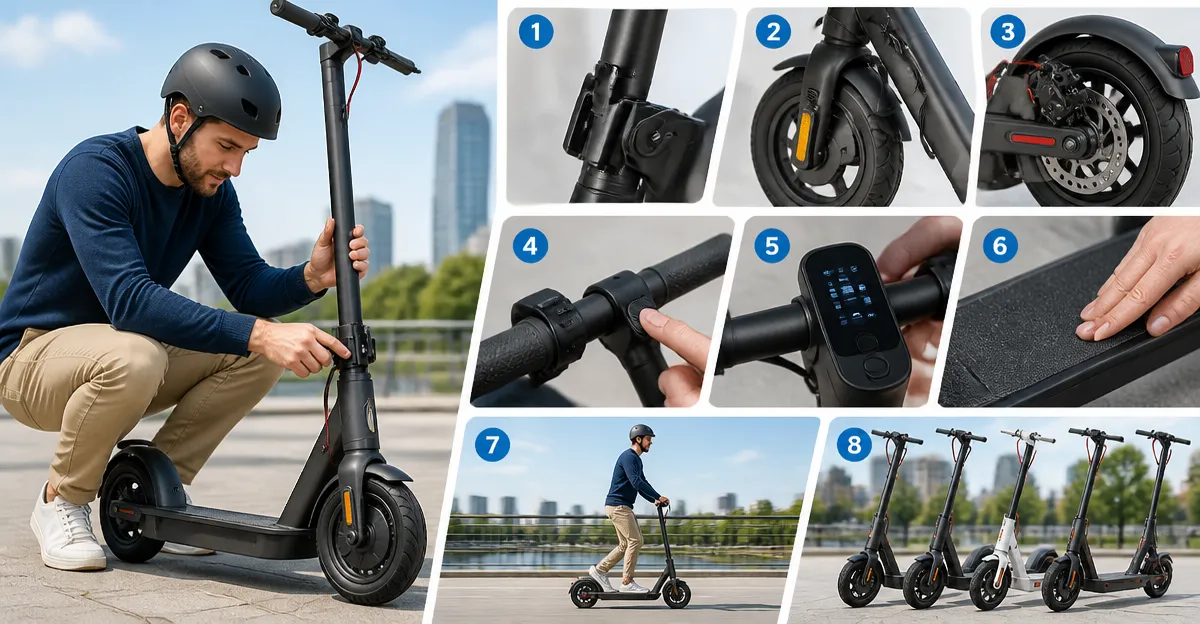
The first step is to unfold the scooter and perform a visual inspection. Ensure that the folding mechanism engages smoothly and locks securely; a faulty latch can lead to instability during riding. Verify that the battery is fully charged, that the display shows correct voltage, and that the tires are inflated to the recommended pressure. For seniors or travelers the PAISEEC L5 Mobility Scooter offers a one‑step folding system that can be evaluated in seconds, demonstrating how a lightweight design simplifies this step.
The PAISEEC L5 weighs only 32 lbs, features a 250 W brushless motor, and includes an NFC key start for convenience. It is priced at $1,399.99 and holds a rating of 4.4 out of 5 stars from four reviews. Its airline‑approved dimensions make it an ideal benchmark for portability.
Step 2: Verify Safety Features and Controls
Next, test all safety mechanisms before moving the scooter. Activate the emergency brake, check the responsiveness of the dual‑brake system, and confirm that the impact‑activated safety stop engages when the scooter is tipped. Examine the lighting system, including front and rear LEDs, to ensure visibility in low‑light conditions. The Sugogo Lightweight Mobility Scooter incorporates an instant‑response electromagnetic brake and bright LED lights, providing a clear example of advanced safety integration.
The Sugogo model weighs 43 lbs, utilizes a 270 W brushless motor, and offers a range of 12.4 miles per charge. It is priced at $899.99 and carries a rating of 4.4 out of 5 stars from fourteen reviews. Its fold‑and‑go design without tools illustrates how safety and convenience can coexist.
Step 3: Conduct a Flat‑Surface Performance Test
Ride the scooter on a smooth, level surface to assess acceleration, top speed, and ride smoothness. Start with a gentle throttle input and observe how quickly the scooter reaches its rated top speed. Listen for motor noise; a quiet motor indicates quality engineering. The Maxshot Electric Scooter provides a 350 W motor capable of 19 mph, making it an excellent choice for evaluating performance on flat terrain.
Maxshot is priced at $139.98, holds a rating of 4.3 out of 5 stars from 304 reviews, and offers a range of up to 15 miles on a single charge. Its dual‑braking system and smart app control allow the rider to monitor speed and battery status in real time.
Step 4: Test Incline Handling and Stability
Find a gradual incline of about 10–15 degrees and ride the scooter upward while maintaining a steady throttle. Observe whether the scooter maintains speed without excessive strain and whether the Smart Downhill Control reduces speed safely on the descent. Stability during turns is critical; engage the auto‑slow in turns feature if available. The PAISEEC L5 Mobility Scooter includes Smart Downhill Control and Auto‑Slow in Turns, providing a practical example of incline safety technology.
During this test the rider should note any wobble, excessive vibration, or delayed braking response, as these factors affect confidence on hills and uneven sidewalks.
Step 5: Evaluate Folding and Portability
After the ride, return the scooter to its folded state using the designated mechanism. Measure the folded dimensions and compare them to the space available in a car trunk or airline cabin. Assess the weight by lifting the scooter with one hand to determine if it is manageable for personal transport. The Sugogo Lightweight Mobility Scooter folds to 28.7 × 11.8 × 20 inches and weighs 43 lbs, illustrating a compact footprint suitable for travel.
For younger riders the WAYPLUS KS1 Kick Scooter folds quickly with a push‑button and includes a carrying strap, making it an ideal reference for quick portability in a family setting.
Step 6: Assess Comfort and Ergonomics
While seated or standing, evaluate the handlebar height, seat cushioning, and footboard size. Adjust the tiller to a comfortable angle and verify that the height settings accommodate the rider’s stature. Check the suspension system for absorption of minor bumps; a smooth ride reduces fatigue during longer trips. The Aovowheel Electric Scooter features dual suspension and an adjustable handlebar, offering a solid example of ergonomic design for adult commuters.
Aovowheel is priced at $149.98, holds a rating of 4.0 out of 5 stars from 712 reviews, and includes solid tires that enhance ride comfort on varied surfaces.
Tips & Pro Tips
- Always test the scooter with a fully charged battery; a partially charged unit may not display true performance.
- Wear appropriate protective gear; a helmet and knee pads can prevent injuries during sudden stops.
- Bring a measuring tape to verify that folded dimensions fit your vehicle or luggage compartment.
- Use the manufacturer’s app, if available, to monitor real‑time data such as speed, battery health, and mileage.
- Perform the test ride on the same type of surface you will use most frequently, whether pavement, grass, or indoor flooring.
Troubleshooting Common Issues
If the scooter does not fold smoothly, inspect the hinge pins for debris or misalignment; cleaning and lubricating the joints often resolves the problem. Should the brakes feel spongy, bleed the hydraulic system or adjust the cable tension according to the manual. In the event of a weak battery indicator, verify that the charger is functioning and that the battery contacts are clean.
Conclusion
The checklist presented in this guide enables prospective buyers to evaluate folding scooters methodically and confidently. By inspecting safety features, testing performance on flat and inclined surfaces, and assessing portability and comfort, one can select a scooter that aligns with personal mobility goals. The recommended products illustrate a range of options from lightweight senior models to high‑performance electric scooters, each demonstrating key attributes discussed in the steps.
Readers are encouraged to apply this systematic approach during their next test ride, ensuring that the final purchase delivers lasting value and reliable transportation.
Products Mentioned in This Guide
Frequently Asked Questions
What should I inspect first when test riding a folding scooter?
Unfold the scooter and check the frame, hinges, brakes, and tires for any damage or loose parts before riding.
Which safety gear is essential for a folding scooter test ride?
Wear a certified helmet, knee pads, and reflective clothing to protect yourself and stay visible.
How can I verify the scooter’s battery health during a test ride?
Ensure the battery is fully charged, then ride the scooter to see if it maintains power and reaches the advertised range.
What measurements should I take to ensure the scooter fits my needs?
Use a measuring tape to check handlebar height, deck width, and folded dimensions against your body size and storage space.
Do I need any documents to test ride a folding scooter?
Bring a valid driver’s license or ID for age verification, as many retailers require it before allowing a test ride.