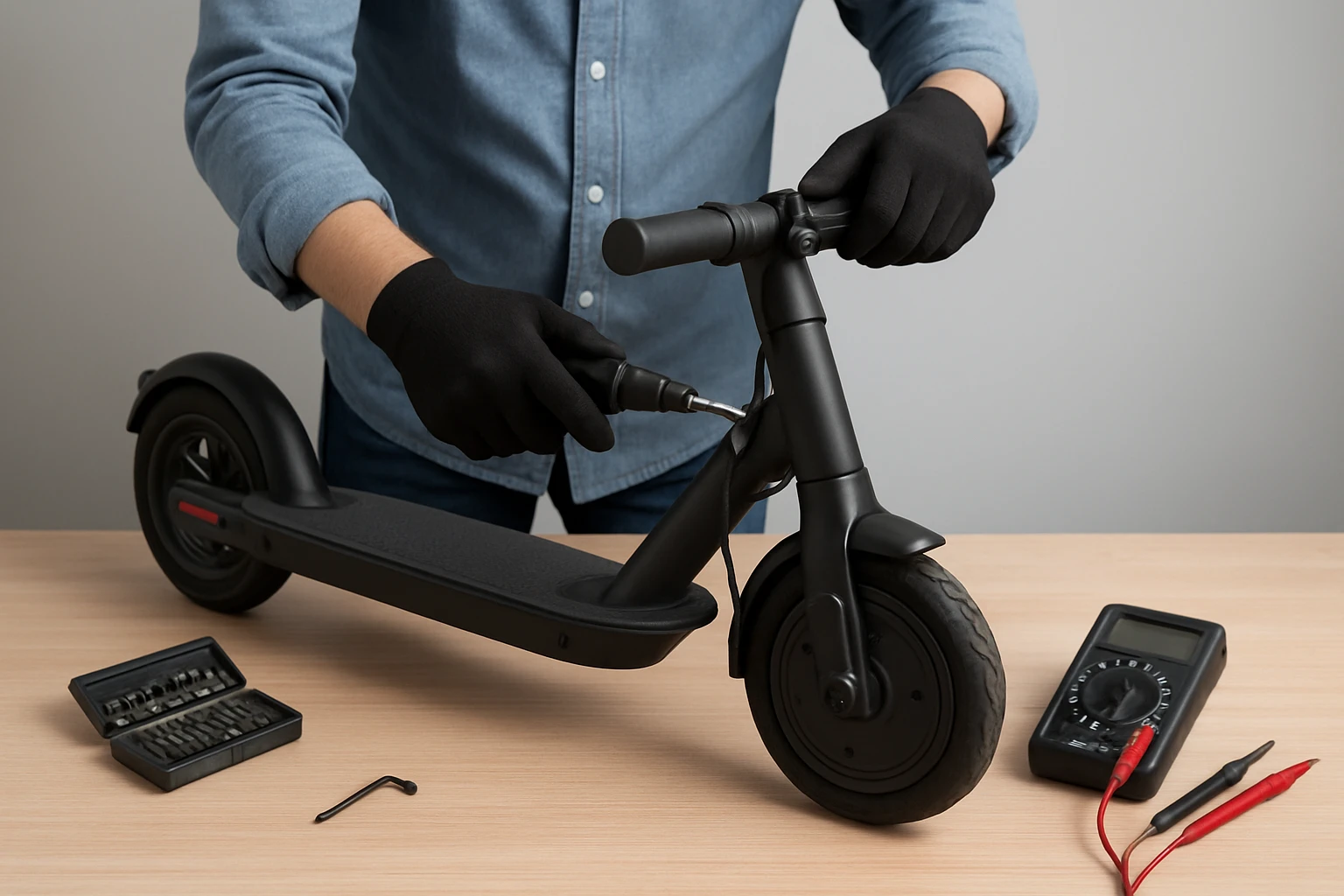
How to Inspect a Used Folding E‑Scooter Before Buying: Step‑by‑Step Pre‑Purchase Checklist
One will learn how to evaluate a used folding electric scooter in a systematic manner, ensuring that the investment is sound and safe. This guide provides a comprehensive checklist that covers visual inspection, mechanical testing, battery health assessment, and documentation verification. By following each step, one can avoid common pitfalls such as hidden frame damage, degraded batteries, or counterfeit components. The value of a thorough pre‑purchase inspection lies in extending the lifespan of the scooter and protecting the buyer from unexpected repair costs.
What You Will Need
- A reliable flashlight or headlamp for examining hidden areas.
- A digital multimeter capable of measuring voltage and resistance.
- A portable charger or power bank to test charging ports.
- A set of allen keys or a small screwdriver for tightening bolts.
- Smartphone with a camera for documenting findings.
- One of the recommended folding e‑scooters for comparison, such as the VOLPAM Electric Scooter.
Step 1: Visual Exterior Inspection
The first step is to conduct a meticulous visual inspection of the scooter's exterior surfaces. One should look for scratches, dents, or corrosion on the frame, handlebars, and deck, as these may indicate prior accidents or exposure to harsh weather. Check the paint finish for uneven wear, which can hide cracks beneath the surface. Use a flashlight to illuminate seams and joints, ensuring that no loose plastic clips or missing fasteners are present.
During this stage, the VOLPAM Electric Scooter serves as a benchmark for build quality. The VOLPAM model features dual suspension, solid 10‑inch tires, and a robust aluminum alloy frame, all of which set a high standard for durability. Its price of $265.97 and rating of 4.3 out of 5 stars based on 628 reviews demonstrate strong market acceptance. By comparing the used scooter to this reference, one can quickly gauge whether the overall construction meets expectations.
Step 2: Frame Integrity and Fold Mechanism
Next, one must verify that the frame is free from structural fatigue and that the folding mechanism operates smoothly. Open and close the fold repeatedly, listening for any grinding noises or excessive resistance. Inspect the locking pins, hinges, and latch springs for signs of wear or corrosion; these components are critical for rider safety during travel.
The MAXSHOT Electric Scooter offers a one‑touch folding system that can be collapsed in three seconds, illustrating an efficient design. Priced at $189.99 with a 4.0 rating from 3,290 reviewers, the MAXSHOT model demonstrates that a lightweight yet sturdy fold is achievable. If the used scooter’s fold feels stiff or the latch does not click securely, one should consider the potential cost of replacing the hinge assembly.
Step 3: Battery Health Assessment
The battery is the most expensive component of any electric scooter, making its condition a decisive factor in the purchase decision. Use a digital multimeter to measure the open‑circuit voltage of the battery pack; a fully charged 36 V system should read between 36.0 V and 42.0 V depending on the chemistry. Compare this reading with the manufacturer’s specifications, which for the VOLPAM model indicate a range of up to 23 miles on a single charge.
One can also perform a load test by briefly riding the scooter at moderate speed while monitoring voltage drop. A healthy battery will maintain voltage above 30 V during a short ride. The Hiboy S2 MAX includes a 350 W motor and a high‑capacity battery that delivers up to 17 miles of range; its price of $299.98 and rating of 4.1 out of 5 stars provide a realistic performance reference. If the used scooter’s battery shows a rapid voltage decline or fails to hold charge for more than a few minutes, the buyer should negotiate a lower price or request a replacement.
Step 4: Motor and Brake Evaluation
Inspect the motor housing for cracks, loose wires, or abnormal wear patterns. Spin the rear wheel by hand; it should rotate freely without grinding noises, indicating that the motor bearings are in good condition. Test the electronic anti‑lock braking system (EABS) by applying both the mechanical drum brake and the electronic brake while the scooter is stationary; the scooter should come to a smooth stop without pulling to one side.
The Hiboy S2 Pro features a 500 W brushless hub motor, dual disc and EABS brakes, and ultra‑bright headlights, all of which contribute to a safe riding experience. Priced at $422.98 with a 4.4 rating from 5,606 reviews, the S2 Pro exemplifies high‑performance braking and motor reliability. By comparing the brake feel and motor response of the used scooter to the S2 Pro, one can determine whether the safety systems are up to par.
Step 5: Test Ride and Performance Check
Arrange a short test ride in a safe, traffic‑free environment such as a parking lot or quiet street. One should evaluate acceleration, top speed, and cruising stability at both low and high speed modes. Pay attention to vibrations; excessive shaking may indicate tire imbalance or suspension issues.
During the ride, engage the cruise control feature if available, and observe whether the scooter maintains a steady speed without frequent throttle adjustments. The VOLPAM Electric Scooter’s cruise control maintains a set speed, making it an excellent reference for this function. Record the distance covered on a single charge during the test; a significant deviation from the advertised range suggests battery degradation. Finally, test the scooter on a slight incline to verify that the motor can handle uphill climbs without stalling.
Step 6: Verify Documentation and Serial Numbers
Ask the seller for the original purchase receipt, warranty card, and any maintenance records. Verify that the serial number on the frame matches the number listed on the receipt and the battery pack; mismatched numbers may indicate that parts have been replaced with non‑original components.
Check that the seller has transferred the ownership of any associated apps, such as the VOLPAM smartphone app, which provides battery monitoring and lock functionality. If the scooter is still under the manufacturer’s warranty, confirm that the warranty is transferable. Documentation gaps should be treated as red flags, and the buyer may request additional proof of authenticity before finalizing the purchase.
Tips & Pro Tips
- Perform the inspection in daylight or use a bright flashlight to reveal surface defects that are invisible in low light.
- Bring a friend to act as a second set of eyes; fresh perspective often catches issues that the primary inspector overlooks.
- When testing the battery, avoid fully depleting it; deep discharge can permanently reduce capacity.
- Use a portable charger to verify that the charging port accepts power and that the indicator lights function correctly.
- Record a short video of the test ride; this documentation can be useful for post‑purchase negotiations or warranty claims.
Troubleshooting Common Issues
Issue: The scooter does not power on despite a full charge.
Solution: Check the main power switch, ensure the battery connector is seated securely, and measure voltage at the controller terminals with a multimeter.
Issue: Unusual noises during folding or riding.
Solution: Lubricate the hinge pins with a light oil, tighten any loose bolts, and inspect the suspension components for cracked springs.
Issue: Reduced range compared to specifications.
Solution: Perform a full charge cycle, then measure the distance traveled at a constant speed; if the range remains low, the battery may need replacement.
Conclusion
One now possesses a detailed, step‑by‑step checklist for inspecting a used folding e‑scooter before purchase, covering visual checks, structural integrity, battery health, motor performance, and documentation verification. By applying these procedures, one can make an informed decision, mitigate financial risk, and ensure a safe riding experience. The recommended products—VOLPAM Electric Scooter, MAXSHOT Electric Scooter, Hiboy S2 MAX, and Hiboy S2 Pro—serve as reliable benchmarks and useful tools throughout the inspection process. Armed with this knowledge, one can confidently negotiate the best possible deal and enjoy the convenience of electric mobility.
Products Mentioned in This Guide
Frequently Asked Questions
What visual signs indicate frame damage on a used folding e‑scooter?
Look for cracks, dents, or corrosion at welds, joints, and folding hinges, especially after shining a flashlight into hidden areas.
How can I test the battery health of a used e‑scooter before purchase?
Use a digital multimeter to measure the resting voltage and compare it to the manufacturer's nominal voltage; a significant drop suggests reduced capacity.
Which components should I inspect for counterfeit or low‑quality parts?
Check the motor, controller, and charger branding against the official specifications and verify serial numbers on the seller’s documentation.
What simple mechanical checks can reveal wheel or brake issues?
Spin each wheel to feel for wobble or resistance, and squeeze the brake levers to ensure they engage smoothly without grinding.
Why is it important to verify the scooter’s charging port and connector?
Testing the port with a portable charger confirms proper fit and voltage delivery, preventing future charging failures.