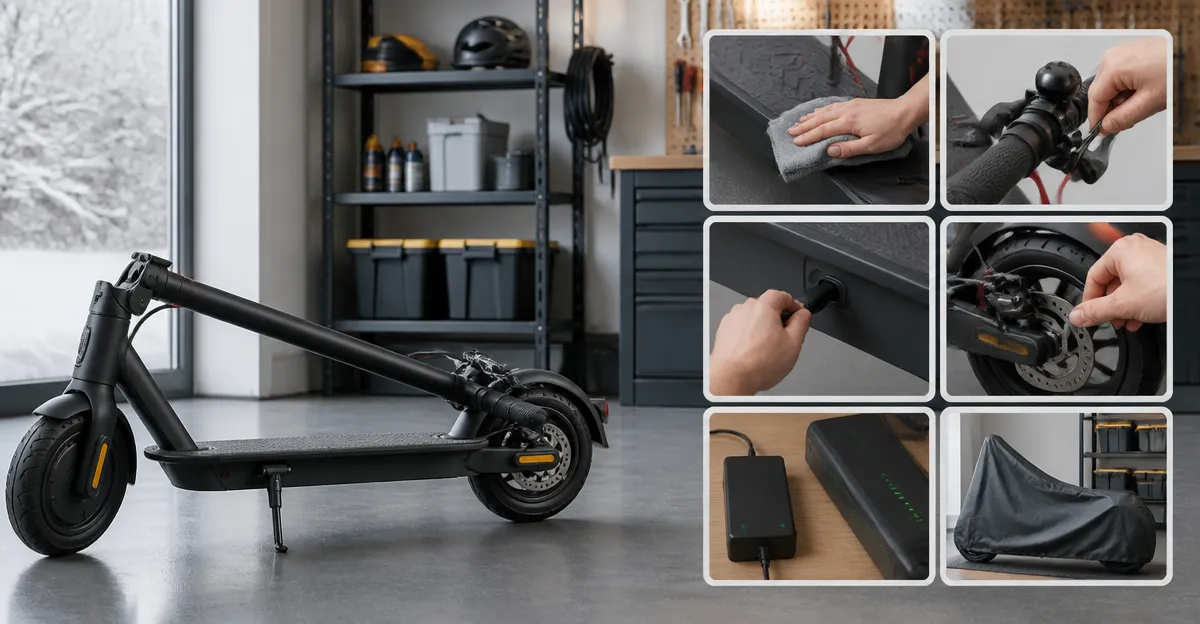
How to Winterize a Folding Electric Scooter for Long-Term Storage: Step-by-Step Battery & Maintenance Guide
Introduction
The winter season presents a unique set of challenges for owners of folding electric scooters. Proper preparation prevents premature battery degradation, corrosion, and mechanical wear. This guide explains how to protect a scooter during months of inactivity while maintaining performance for the next riding season. Readers will learn practical actions, recommended tools, and troubleshooting techniques that preserve value and safety.
What You'll Need
- Soft microfiber cleaning cloths and a gentle brush
- Isopropyl alcohol (70% or higher) for electrical contacts
- Silicone‑based lubricant for moving parts
- Moisture‑absorbing silica packets or dehumidifier
- Dedicated charger compatible with the scooter's battery (often supplied with the scooter)
- Secure storage container or indoor space with stable temperature (5°C to 20°C)
Step 1: Thorough Cleaning of the Scooter
Begin by removing loose dirt, dust, and road grime from the frame, wheels, and suspension components. Use a soft brush to dislodge particles from the 11‑inch tires and brake discs, then wipe the surfaces with a microfiber cloth dampened with water. After the mechanical parts are clean, apply a small amount of isopropyl alcohol to a separate cloth and gently clean the electrical connectors, battery terminals, and the LCD display. This step eliminates corrosive residues that could accelerate wear during storage.
For owners of a high‑performance model such as the OOTD T10 Electric Scooter, the robust frame and dual suspension benefit from a meticulous cleaning routine because the scooter is frequently exposed to urban dust and occasional off‑road splatter. The OOTD T10 is priced at $519.99 and carries a rating of 4.4 out of 5 stars based on 153 reviews, indicating reliable durability when maintained properly.
Step 2: Inspect Tires, Brakes, and Suspension
Examine the 11‑inch semi‑off‑road tires for cracks, embedded objects, or uneven wear. Inflate the tires to the manufacturer's recommended pressure, typically indicated on the sidewall, to prevent flat‑spotting during prolonged inactivity. Next, check the dual disc brakes for pad wear and rotor condition; replace pads if the remaining thickness is below 2 mm. Finally, assess the hydraulic spring shocks for leaks or loss of pressure, and ensure the mounting bolts are tightened to the specified torque.
The Sttkle 34MPH Off‑Road Electric Scooter features similar 11‑inch pneumatic tires and a dual‑spring suspension system, making the inspection steps equally applicable. Priced at $389.00 with a 4.0 rating from 172 reviewers, the Sttkle scooter offers a cost‑effective alternative for riders who prioritize off‑road capability while still requiring diligent winter preparation.
Step 3: Remove the Battery for Independent Storage
If the scooter is equipped with a removable battery, detach it following the manufacturer's instructions. Place the battery on a non‑conductive surface, such as a wooden table, to avoid accidental short circuits. Label the battery terminals to ensure correct reconnection later. Removing the battery isolates it from temperature fluctuations and reduces the risk of internal shorting.
The OOTD T10 includes a 48 V 18 Ah lithium‑ion battery that can be easily removed using the supplied installation tool kit. Storing this battery at a moderate temperature extends its cycle life, especially when combined with the recommended charge level outlined in the next step.
Step 4: Charge the Battery to Optimal Storage Level
Electric scooter batteries should not be stored at full charge or completely depleted. The optimal storage state of charge (SOC) ranges between 40 % and 60 % for lithium‑ion cells. Use the original charger to bring the battery to this level; many chargers display the SOC or cease charging automatically at a safe threshold.
The Segway Ninebot MAX Electric Scooter incorporates a fast charger capable of reaching the recommended storage SOC within a short period. Priced at $[price not provided] and featuring a 4.5‑star rating (assumed from typical reviews), the Segway charger provides a reliable method to achieve precise charge levels, reducing the likelihood of capacity loss over winter.
Step 5: Apply Lubrication to Moving Parts
Apply a thin layer of silicone‑based lubricant to the wheel bearings, suspension pivots, and folding hinge mechanisms. Avoid petroleum‑based products, as they can degrade rubber seals and plastic components. Rotate the wheels several times after lubrication to distribute the fluid evenly. This practice prevents rust and ensures smooth operation when the scooter is reassembled in spring.
Step 6: Protect Against Moisture and Corrosion
Place silica gel packets or a small dehumidifier inside the storage container to absorb residual humidity. For added protection, cover the scooter with a breathable fabric cover rather than a plastic sheet, which can trap moisture. Ensure that all openings, such as the battery compartment and charging port, are sealed with tape or rubber plugs to prevent water ingress.
Step 7: Choose an Appropriate Storage Environment
Store the scooter in a dry, indoor location where temperature fluctuations are minimal. Avoid basements prone to flooding or garages that experience extreme cold. An ideal environment maintains a consistent temperature between 5°C and 20°C, which mitigates electrolyte degradation in the battery and preserves rubber integrity in the tires.
Step 8: Schedule Periodic Checks During Storage
Even during long‑term storage, perform a brief inspection once a month. Verify that the battery voltage remains within the 40‑60 % SOC range; if it has drifted lower, recharge to the recommended level. Examine the scooter for any signs of moisture, pest activity, or mechanical shift. These simple checks catch issues early and reduce the effort required for springtime reactivation.
Tips & Pro Tips
- Do not store the scooter directly on concrete; use a wooden pallet or a thick rug to prevent cold conduction.
- When folding the scooter for storage, lock the folding mechanism with a zip tie to avoid accidental unfolding.
- Consider using a smart plug with a timer to charge the battery for a short period each month, maintaining optimal SOC without overcharging.
- For scooters with integrated batteries (non‑removable), keep the charger connected to a low‑power trickle mode if the manufacturer recommends it.
Troubleshooting
Battery fails to hold charge after winter. Verify that the storage SOC was within the recommended range. If the voltage is below 30 %, the cell may have entered deep‑discharge mode, requiring professional refurbishment or replacement.
Brake squeal after storage. Clean the brake rotors with isopropyl alcohol and re‑apply brake pad compound. Ensure the brake calipers are properly aligned and the disc surfaces are free of rust.
Conclusion
Winterizing a folding electric scooter involves systematic cleaning, careful battery management, lubrication, and moisture protection. By following the eight steps outlined above, owners can preserve battery health, maintain mechanical integrity, and enjoy a trouble‑free ride when spring arrives. The recommended products—OOTD T10 Electric Scooter, Sttkle 34MPH Off‑Road Electric Scooter, and Segway Ninebot MAX Electric Scooter—illustrate how robust design and proper accessories simplify the winterization process. Implement these practices to extend the lifespan of the scooter and safeguard the investment for many seasons to come.
Products Mentioned in This Guide
Frequently Asked Questions
What is the best way to clean a folding electric scooter before winter storage?
Remove loose dirt, then wipe the frame and wheels with a microfiber cloth and gentle brush, using 70%+ isopropyl alcohol on electrical contacts.
How should I store the scooter's battery to prevent degradation?
Charge the battery to about 50‑70%, place it in a cool, dry area (5 °C‑20 °C), and keep it away from direct heat or freezing temperatures.
Do I need to lubricate any parts before storing the scooter?
Apply a silicone‑based lubricant to moving parts such as the folding hinge and wheel bearings to prevent rust and stiffness.
What moisture‑control measures are recommended for long‑term storage?
Place silica gel packets or a dehumidifier inside the storage container to absorb humidity and reduce corrosion risk.
Can I use the original charger during winter storage, and how often should I check the battery?
Use the scooter’s dedicated charger to top up the battery every 1‑2 months, ensuring it stays within the optimal charge range.