How to Teach Kids to Ride an E‑Scooter Safely: Essential Rules, Protective Gear & Practice Steps
Introduction
This guide explains how an adult can teach a child to operate an electric scooter in a safe and confident manner. It covers the fundamental safety rules, the necessary protective equipment, and a detailed sequence of practice steps that build skill gradually. By following the structured approach, a parent or caregiver will reduce the risk of injury while fostering a love for active outdoor play.
The value of this guide lies in its combination of proven teaching methodology and carefully selected tools that support each learning phase. Although the principles can be applied with any scooter, the recommended products provide features that align with the instructional steps, making the learning curve smoother for both child and adult.
Readers will leave with a clear roadmap, practical tips, and a concise reference to the equipment that enhances safety and enjoyment.
What You'll Need
- Protective helmet that meets CPSC standards
- Knee and elbow pads
- Gloves with grip padding
- One of the following three‑wheel scooters designed for children
- Open, flat practice area free of traffic
- Smartphone or timer for interval practice
Step‑by‑Step Instructions
1. Choose the Right Scooter
Selecting a scooter that matches the child's size, weight, and skill level is the foundation of safe instruction. For beginners, a three‑wheel model with lean‑to‑steer technology offers inherent stability and intuitive turning.
The Micro Maxi Deluxe LED Scooter is a premium option that supports riders up to 110 lb, features motion‑activated LED wheels, and includes an adjustable T‑bar that grows with the child. It is priced at $159.99 and holds a rating of 4.8 out of 5 from 2,869 reviews, indicating high satisfaction among families.
For a budget‑friendly alternative, the Gotrax KS1 Kids 3‑Wheel Scooter offers LED wheels, three height settings, and a lightweight frame of 5.1 lb. It costs $38.00 and carries a rating of 4.5 out of 5 from 6,479 reviews, making it a reliable starter scooter.
If cost is the primary concern, the OutdoorCruiser 3‑Wheel Kids Scooter provides LED wheels, a sturdy deck, and a maximum load capacity of 150 lb for $24.37 with a rating of 4.6 out of 5 from 331 reviews. Its no‑assembly design is convenient for quick setup.
Each scooter includes safety‑oriented features such as slip‑resistant footplates and durable decks, which reduce the likelihood of falls during early practice.
2. Equip the Child with Protective Gear
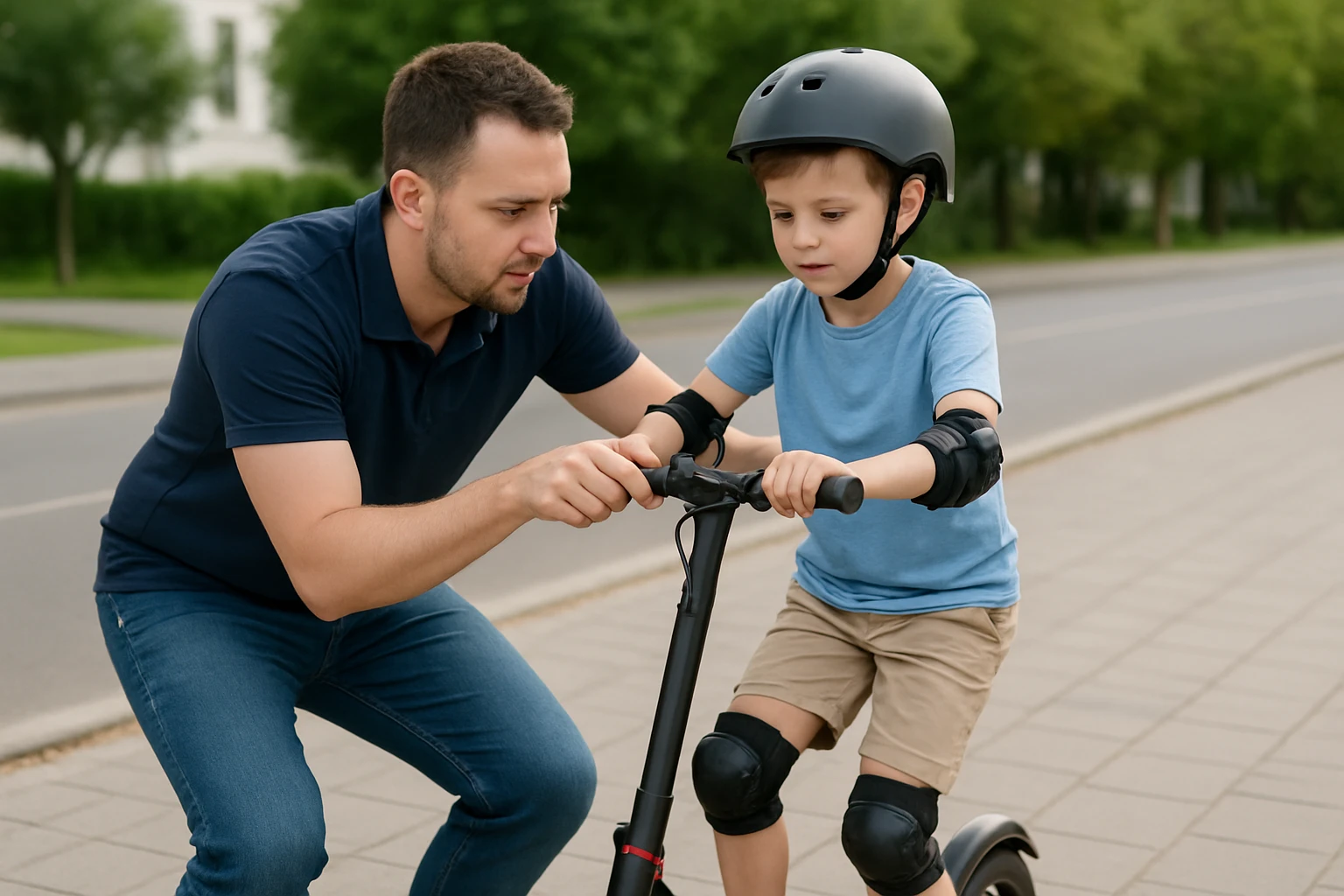
Proper protective gear mitigates injury risk and instills a safety‑first mindset. A certified helmet should fit snugly, covering the forehead and wrapping around the back of the head without excessive movement.
Knee and elbow pads with hard shells protect the joints during inevitable low‑speed tumbles. Gloves with reinforced palms improve grip on the handlebars, especially when the LED wheels are illuminated in low‑light conditions.
Inspect all gear before each session to ensure straps are intact and padding has not degraded. Encourage the child to wear the equipment every time they practice, even in the backyard.
When using the Micro Maxi Deluxe LED Scooter, the larger deck and higher weight capacity allow the child to wear full protective gear without compromising balance.
3. Select a Safe Practice Area
Identify a flat, paved surface such as a quiet residential street, a school parking lot after hours, or a community park pathway. The area should be free of obstacles, traffic, and steep inclines.
Mark a start‑line and a short finish line using chalk or cones. This visual cue helps the child understand distance and encourages controlled acceleration.Maintain a clear line of sight at all times; an adult should stand within arm's reach until the child demonstrates basic control.
When practicing with the Gotrax KS1, its lightweight nature makes it easy to transport to multiple locations, allowing the adult to select the safest environment for each session.
4. Teach Basic Stance and Balance
Begin by having the child stand on the scooter with both feet placed firmly on the footplate. Instruct them to keep knees slightly bent, shoulders relaxed, and eyes forward.
Ask the child to practice shifting weight from side to side while the scooter remains stationary. This exercise builds core stability, which is essential for lean‑to‑steer control.
Demonstrate the lean‑to‑steer principle: when the child leans left, the scooter turns left; when they lean right, it turns right. Emphasise that the motion is subtle and does not require forceful handlebar movement.
The OutdoorCruiser's wide rubber deck provides ample surface area for this balance drill, reducing the chance of foot slippage.
5. Practice Starting and Stopping
Show the child how to place one foot on the deck while the other foot remains on the ground for push‑off. Instruct them to push gently, then place the second foot on the deck once momentum is achieved.
For stopping, teach the child to apply gentle rear‑wheel pressure with the foot, or use the built‑in brake if the scooter model includes one. The Gotrax KS1 features a rear mudguard brake that is easy for small hands to engage.
Conduct a series of short sprints between the start and finish lines, counting seconds with a timer. Record the time to track progress.
Because the Micro Maxi Deluxe LED Scooter has motion‑activated wheels, the child receives visual feedback when the scooter is moving, reinforcing the concept of forward motion.
6. Master Steering and Turning
Set up a simple slalom course using cones spaced one meter apart. Instruct the child to navigate the course by leaning into each turn while maintaining a steady speed.
Encourage the child to look where they want to go, not at the handlebars. This eye‑direction technique improves balance and reduces over‑steering.
If the child struggles, reduce the distance between cones and allow them to practice tighter turns before expanding the course.
The adjustable T‑bar on both the Micro Maxi Deluxe and OutdoorCruiser models allows the adult to raise or lower the handlebars to suit the child's height, facilitating comfortable steering posture.
7. Introduce Traffic Awareness
When the child demonstrates consistent control, introduce basic traffic rules: stop at intersections, obey pedestrian signals, and ride on the right side of the pathway.
Use role‑play scenarios where the adult pretends to be a vehicle or pedestrian. The child learns to anticipate movement and respond appropriately.
Emphasise the importance of audible signals, such as a bell or verbal warning, to alert others of the child's presence, especially when riding at dusk with LED wheels illuminated.
All three recommended scooters have quiet wheels, which means the child must rely on visual cues and a bell to communicate intent.
8. Gradual Progression to Real Streets
Begin by selecting a low‑traffic residential street with wide sidewalks. Accompany the child on a bicycle or walk alongside the scooter, maintaining a safe distance.
Start with short rides of 5‑10 minutes, focusing on smooth starts, stops, and obeying stop signs. Increase duration gradually as confidence grows.
Reinforce the habit of wearing protective gear and checking the scooter's condition before each ride. Regularly inspect wheels, brakes, and battery (if applicable) for wear.
By the time the child is comfortable on a quiet street, the Micro Maxi Deluxe LED Scooter's robust construction and 2‑year warranty provide peace of mind for longer outings.
Tips & Pro Tips
- Practice at the same time each day to build routine and muscle memory.
- Use a bright, reflective vest in addition to the LED wheels for maximum visibility.
- Teach the child to perform a “quick stop” by placing the foot on the rear brake while keeping the other foot on the deck.
- Schedule a monthly check of all fasteners; tighten any loose bolts on the scooter frame.
- Encourage the child to keep the scooter clean; dirt on the wheels can reduce grip and cause slipping.
Troubleshooting
Problem: The child feels unstable when turning.
Solution: Lower the handlebars to a comfortable height, ensure the child’s knees are bent, and practice tighter slalom cones to develop finer balance control.
Problem: LED wheels do not illuminate.
Solution: Verify that the wheels are clean and free of debris; the motion‑activated LEDs on the Micro Maxi Deluxe and Gotrax models do not require batteries but may be blocked by dirt.
Problem: The scooter wobbles on uneven pavement.
Solution: Choose a smoother surface for early practice, or switch to the Gotrax KS1 which features ABEC‑7 bearings designed for stability on varied terrain.
Conclusion
Teaching a child to ride an e‑scooter safely involves selecting the appropriate scooter, equipping the child with certified protective gear, and following a progressive practice regimen. By adhering to the essential rules and employing the recommended tools, an adult can nurture confidence, develop coordination, and ensure that every ride is both enjoyable and secure.
Apply the steps outlined in this guide, monitor progress, and celebrate each milestone. Safe riding begins with preparation, and the right equipment makes the journey smoother for both child and caregiver.
Products Mentioned in This Guide
Frequently Asked Questions
What protective gear is essential for a child learning to ride an e‑scooter?
A CPSC‑approved helmet, knee and elbow pads, and grip‑padded gloves are the minimum safety equipment.
At what age is it safe to start teaching a child to use an e‑scooter?
Most experts recommend beginning around 8‑9 years old, when the child can follow instructions and has sufficient balance.
How should the first practice session be structured?
Start on a flat, traffic‑free surface, have the child practice mounting, balancing, and gentle pushes before engaging the motor.
What speed limit should be set for beginners?
Limit the scooter to 5–7 mph (8–11 km/h) until the child demonstrates consistent control.
How can parents reinforce safe riding habits?
Consistently remind the child to check brakes, obey local traffic rules, and always wear protective gear before each ride.