How to Read BMS Data for Folding E‑Scooter Batteries: Step‑by‑Step Guide to Diagnostics, State‑of‑Charge & Health
Introduction
Folding e‑scooters rely on lithium‑ion battery packs that are managed by a Battery Management System (BMS). Understanding the data that a BMS provides enables owners to maintain optimal performance, extend battery life, and avoid safety hazards. This guide explains how to read BMS data, interpret state‑of‑charge (SOC) and state‑of‑health (SOH), and apply diagnostic strategies for common issues. Readers will also discover two affordable BMS boards that are well suited for DIY upgrades and repairs.
Background / Context
A BMS monitors voltage, current, temperature, and balance across each cell in a pack. It protects the pack from over‑charge, over‑discharge, short circuits, and thermal runaway. For folding e‑scooters, the BMS is typically integrated into a compact enclosure and communicates via a simple display, Bluetooth, or a diagnostic port. The most important metrics are:
- Voltage per cell: Indicates whether any cell is approaching its safe limits.
- Current flow: Shows charge and discharge rates; excessive current can degrade cells.
- Temperature: High temperatures accelerate aging and may trigger protection.
- SOC: Estimated remaining capacity expressed as a percentage.
- SOH: Long‑term health metric derived from capacity loss and internal resistance.
Accurate interpretation of these values requires a baseline reference, such as the manufacturer’s specifications for the pack’s nominal voltage (usually 36 V or 48 V) and capacity (often 6‑10 Ah). By comparing real‑time readings to these baselines, one can determine whether the battery is healthy or requires maintenance.
Understanding Key BMS Metrics
When a BMS displays data, it usually presents a series of numbers that correspond to the metrics listed above. The following subsections break down each metric and explain how to act on it.
Cell Voltage and Balance
Each cell in a lithium‑ion pack has a nominal voltage of 3.6 V or 3.7 V. A 10‑cell (10S) pack therefore shows a total voltage around 36‑37 V when fully charged. If any cell deviates more than 0.05 V from the pack average, the BMS may flag an imbalance. Imbalance can be corrected by passive balancing circuits or by manually swapping cells of similar voltage.
Current Monitoring
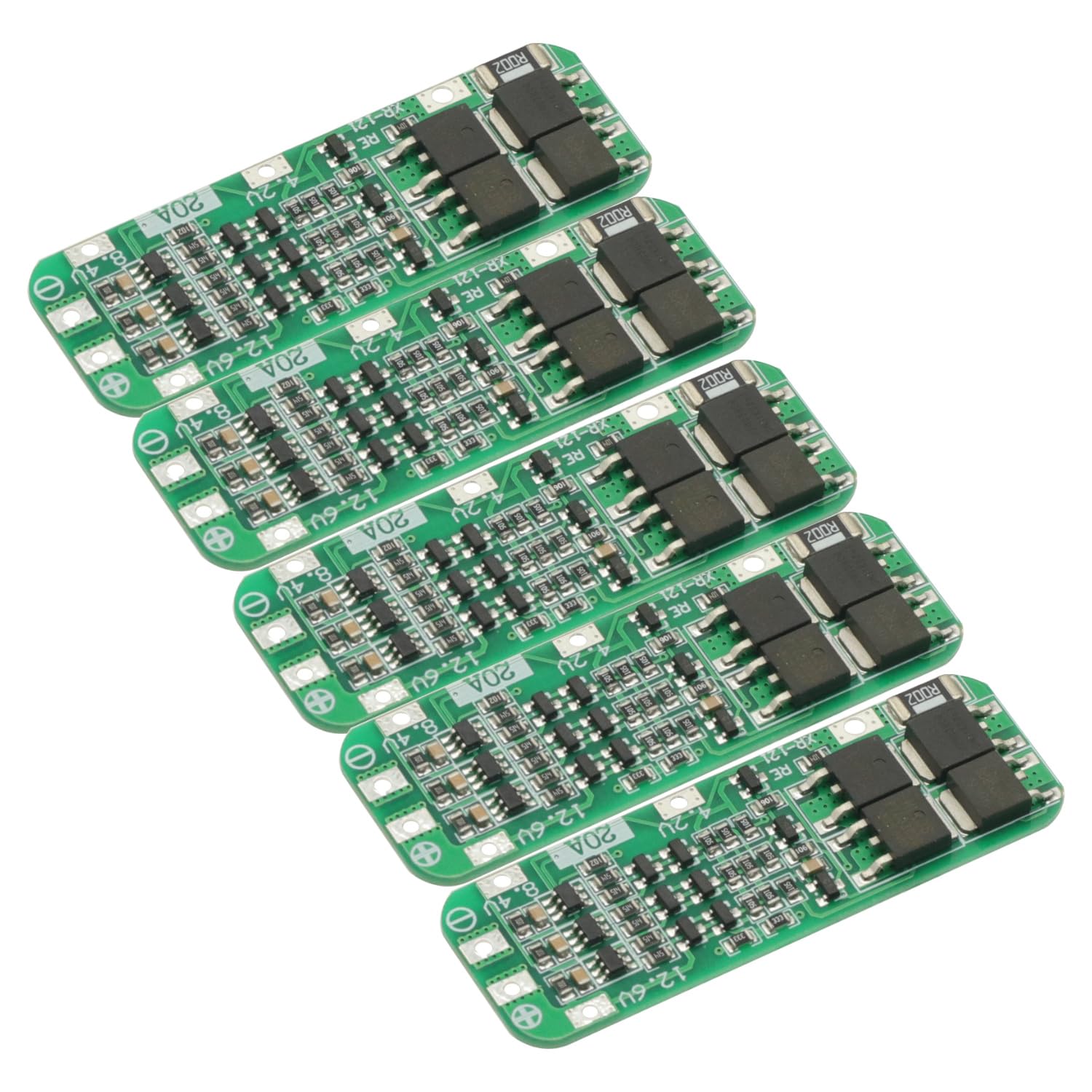
Current sensors report both charge and discharge currents. For a typical folding e‑scooter, continuous discharge currents range from 10 A to 20 A. Exceeding the BMS’s rated maximum, such as the 20 A limit of the GODIYMODULES 3S 20A BMS, can cause overheating and trigger protective shutdowns.
Temperature Sensors
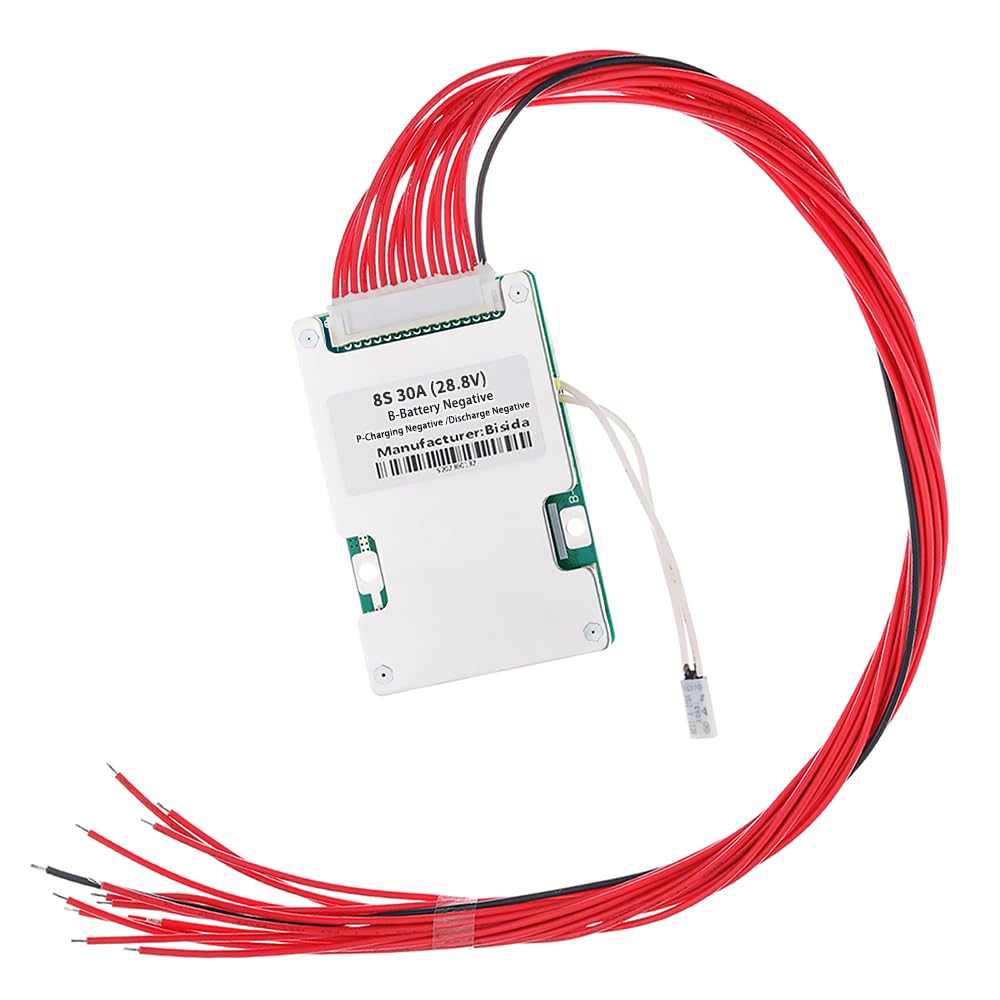
Temperature is measured at strategic points near the cells and the MOSFETs. A reading above 45 °C during discharge or above 55 °C while charging signals that the pack is stressed. The Bisida 8S 30A BMS offers protection down to –20 °C and up to 70 °C, making it suitable for extreme climates.
State‑of‑Charge (SOC)
SOC is calculated by integrating current over time and adjusting for voltage. Most BMS displays show SOC as a percentage; a reading of 80 % typically means the pack can deliver about 80 % of its rated capacity. Users should aim to keep SOC between 20 % and 80 % for daily riding to minimize stress.
State‑of‑Health (SOH)
SOH is a longer‑term indicator that compares the current usable capacity to the original design capacity. A healthy pack retains 90‑95 % of its original capacity after 300‑400 charge cycles. When SOH drops below 80 %, the rider should consider cell replacement or a new pack.
Practical Diagnostic Workflow
The following step‑by‑step workflow helps users identify issues quickly.
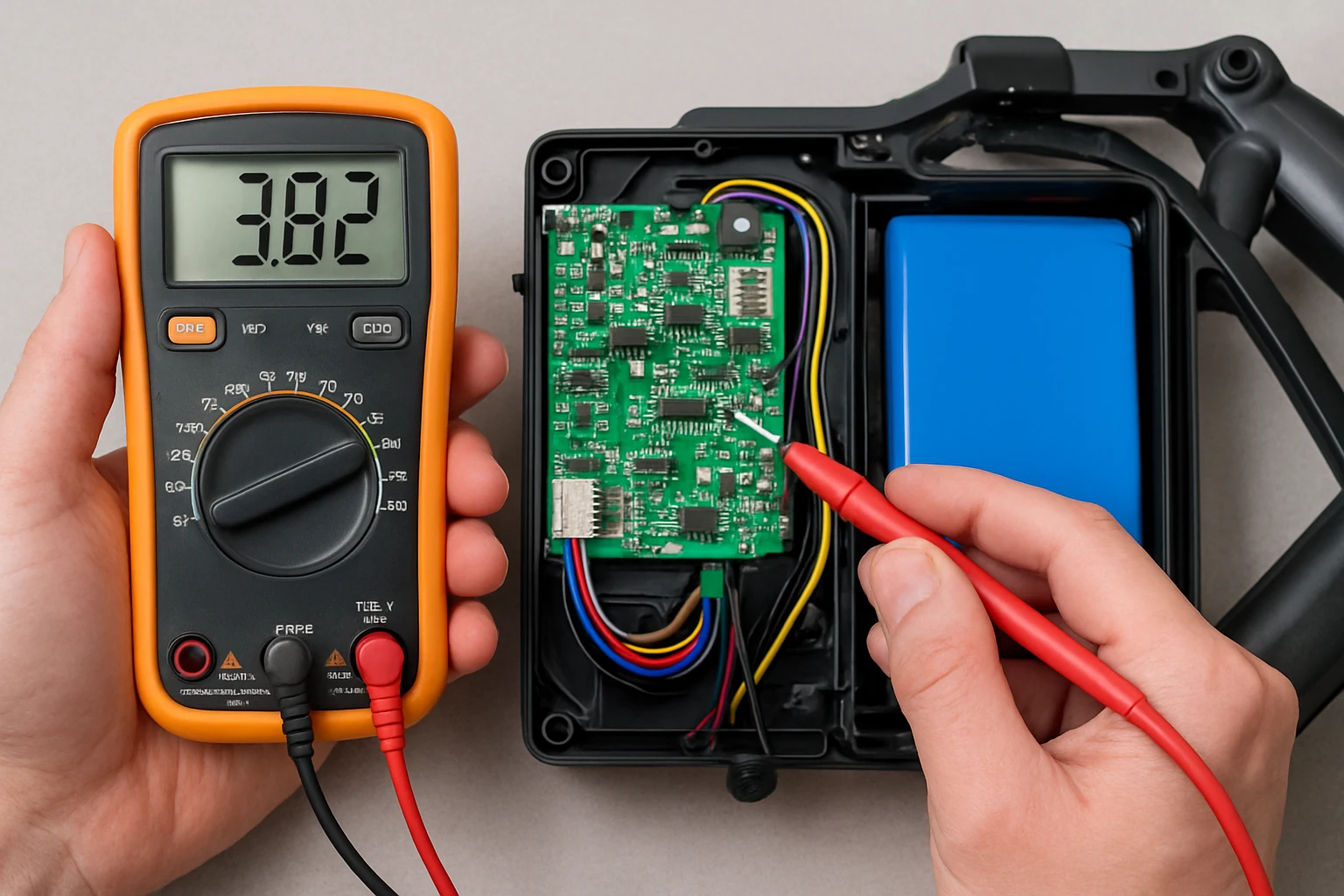
- Connect a diagnostic tool: Use a Bluetooth app or a USB‑C interface that reads raw BMS registers.
- Record baseline values: Capture voltage, current, temperature, SOC, and SOH when the pack is at rest and fully charged.
- Compare against specifications: Verify that cell voltages stay within 3.2 V–4.2 V and that temperature stays below the BMS’s safe limit.
- Identify anomalies: Look for cells that consistently read lower or higher than the pack average, or for current spikes above the rated limit.
- Apply corrective actions: Re‑balance cells, replace a faulty MOSFET, or upgrade to a higher‑current BMS if the scooter demands more power.
Following this routine after each major ride ensures that the battery remains within safe operating parameters and helps catch degradation early.
Product Recommendations Integrated Into the Guide
Two BMS boards provide reliable protection for DIY enthusiasts who wish to upgrade or replace their factory units.
GODIYMODULES 3S 20A BMS
This board is designed for 3‑cell (12.6 V) packs such as those used in low‑power drill motors. Key specifications include a charging voltage of 12.6 V, a maximum output current of 20 A, and compatibility with 18650, 26650, and lithium‑polymer cells. It holds a 4.5‑star rating from 34 reviewers, indicating solid performance at a price of $5.99. The board’s compact PCB layout makes it easy to install in the limited space of a folding e‑scooter chassis.
Bisida 8S 30A BMS
The Bisida board supports larger 8‑cell (28.8 V) packs, delivering up to 30 A of continuous current. It provides ten functional protections, including over‑charge, over‑discharge, over‑current, short‑circuit, temperature, and passive cell‑balancing. Its operating temperature range of –20 °C to 70 °C makes it suitable for outdoor riding in diverse climates. With a 4.7‑star rating from 4 reviewers and a price of $16.99, it offers robust protection for higher‑performance e‑scooter builds.
Comparison / Selection Guide
Choosing the right BMS depends on the scooter’s voltage, current demand, and environmental conditions. The table below summarizes the two featured products.
| Feature | GODIYMODULES 3S 20A BMS | Bisida 8S 30A BMS |
|---|---|---|
| Nominal Voltage | 12.6 V (3S) | 28.8 V (8S) |
| Max Continuous Current | 20 A | 30 A |
| Cell Compatibility | 18650, 26650, Li‑Poly | Standard 3.7 V Li‑ion cells |
| Protection Functions | Over‑charge, over‑discharge, short‑circuit | 10‑function suite including temperature and passive balance |
| Operating Temperature | Not specified (typical 0‑45 °C) | –20 °C to 70 °C |
| Price | $5.99 | $16.99 |
| Rating | 4.5/5 (34 reviews) | 4.7/5 (4 reviews) |
For scooters that use a 3‑cell pack and have modest power requirements, the GODIYMODULES board offers an economical solution. Riders who need higher voltage, greater current capability, and extensive temperature protection should consider the Bisida board.
Best Practices & Tips
- Always verify that the BMS voltage rating matches the pack’s nominal voltage before installation.
- Match cell capacities within 30 mAh and internal resistance within 5 mΩ to ensure balanced charging, as highlighted in the Bisida product notice.
- Use a dedicated charger that respects the BMS’s charging voltage (12.6 V for 3S, 28.8 V for 8S) to avoid over‑voltage conditions.
- Periodically log SOC and temperature data during rides; trends can reveal early signs of cell degradation.
- When upgrading to a higher‑current BMS, confirm that the scooter’s wiring and connectors can handle the increased amperage.
- Store the scooter battery at approximately 50 % SOC in a cool, dry environment to minimize calendar aging.
Frequently Asked Questions
- What does a BMS “balancing” function actually do?
- Balancing equalizes the voltage of each cell by shunting excess charge from higher‑voltage cells to lower‑voltage ones, preventing over‑charge of individual cells.
- Can I replace a factory BMS with an aftermarket board?
- Yes, provided the aftermarket board matches the pack’s voltage, current rating, and connector layout. The replacement should also retain all safety protections.
- How often should I check the SOH of my e‑scooter battery?
- Perform a full charge‑discharge cycle and record capacity every 50‑100 rides, or at least twice a year for regular commuters.
- Why does my BMS show a sudden drop in SOC after a short ride?
- A rapid SOC decline may indicate high current draw, a weak cell, or inaccurate calibration. Re‑balance cells and verify that the load is within the BMS’s current limits.
- Is it safe to operate the scooter when the BMS reports a temperature above 45 °C?
- No. Temperatures above the BMS’s safe threshold can trigger thermal protection and may permanently damage cells. Reduce load or allow the pack to cool.
Conclusion
Reading BMS data empowers e‑scooter owners to maintain battery health, prevent accidents, and optimize performance. By understanding voltage, current, temperature, SOC, and SOH, users can diagnose issues early and make informed decisions about upgrades. The GODIYMODULES 3S 20A BMS and Bisida 8S 30A BMS exemplify reliable, cost‑effective solutions for different voltage and current requirements. Applying the best‑practice checklist and following the diagnostic workflow will help riders keep their folding e‑scooters running safely for years.
Products Featured in This Guide
GODIYMODULES 3S 20A BMS
Price: $5.99
Rating: 4.5/5 (34 reviews)
Featured because it provides an affordable, compact solution for 3‑cell packs commonly found in low‑power folding e‑scooters.
Bisida 8S 30A BMS
Price: $16.99
Rating: 4.7/5 (4 reviews)
Featured because it offers extensive protection functions, higher current capacity, and a broad temperature range suitable for high‑performance e‑scooter builds.