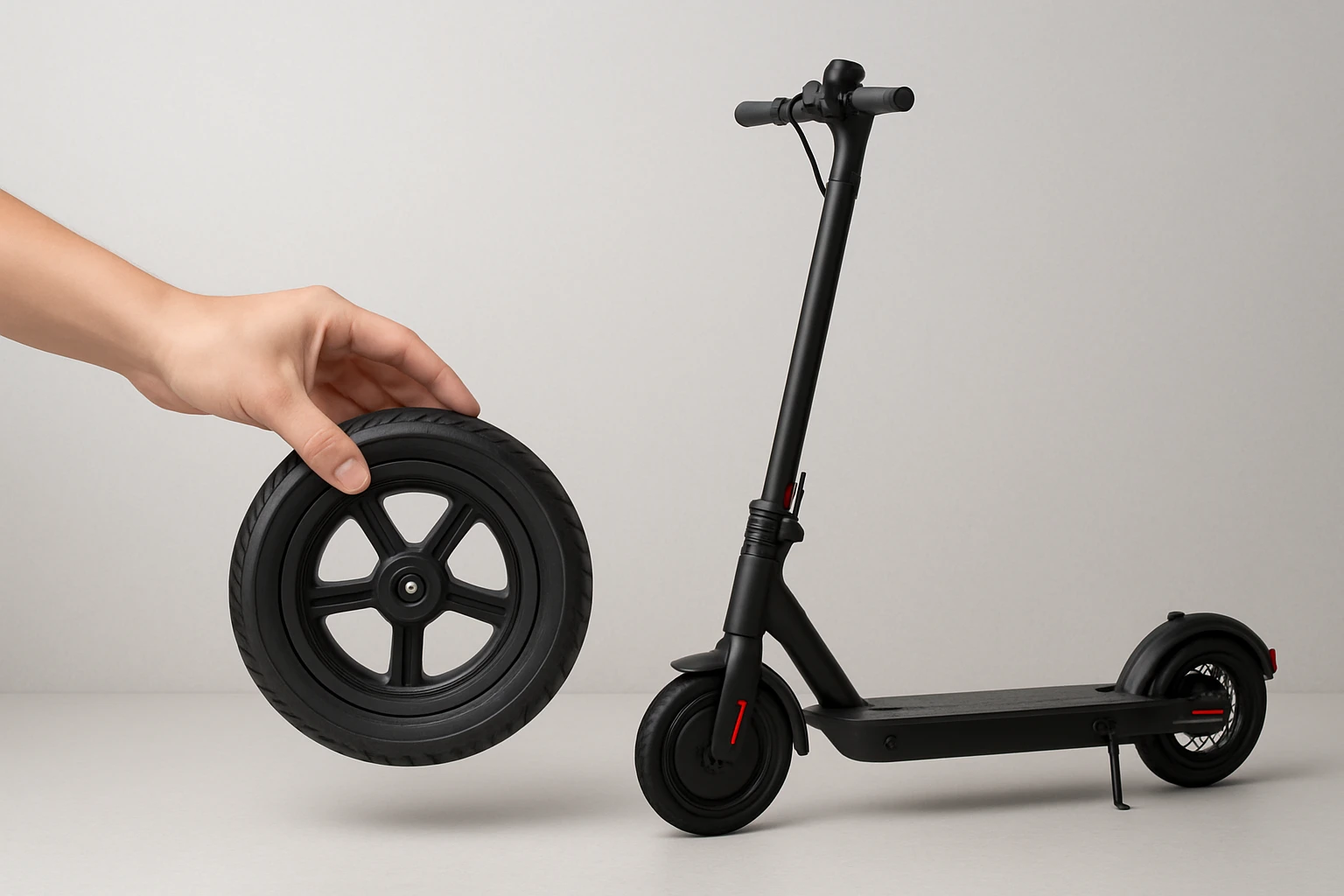
How to Choose the Right Wheel Size for Your Folding E‑Scooter: Comfort, Speed & Portability Explained
In this guide, one will understand the factors that influence wheel‑size decisions and how those choices affect ride quality, top speed, and storage convenience. The information presented empowers readers to match a scooter to their daily commute, recreational needs, and personal preferences. By following the structured steps, one can make an informed purchase without relying solely on marketing claims. The guide also integrates a practical product example to illustrate key concepts.
What You'll Need
- Pen and notebook or digital note‑taking app for recording measurements and preferences.
- Measuring tape or ruler to gauge current wheel dimensions if evaluating an existing scooter.
- Access to product specifications, such as those provided by manufacturers.
- Optional: a test ride location with smooth and rough surfaces to experience different wheel sizes.
Step 1: Identify Your Primary Riding Environment
The first decisive factor is the terrain on which the scooter will be used most frequently. Urban commuters typically travel on paved sidewalks, bike lanes, and occasional cobblestones, whereas suburban riders may encounter gravel paths and uneven driveways. One should list the top three environments and rank them by frequency. This assessment narrows the wheel‑size range that will deliver the best balance of stability and maneuverability.
Step 2: Determine Desired Comfort Level and Shock Absorption
Comfort correlates directly with wheel diameter and tire type; larger wheels roll over obstacles more smoothly, while pneumatic (air‑filled) tires dampen vibrations better than solid rubber. For riders who carry backpacks or exceed the average weight, a larger, air‑filled tire reduces fatigue during longer trips. The Hiboy S2 MAX exemplifies this principle with its 8.5‑inch (standard) and optional 10‑inch pneumatic tires, providing a comfortable ride on mixed surfaces. Its 500 W motor and 40.4‑mile range further demonstrate how a well‑chosen wheel size complements overall performance.
Step 3: Evaluate Speed Requirements and Acceleration Needs
Wheel size influences the effective gear ratio; larger wheels can maintain higher speeds with lower motor revolutions, extending battery life at cruising pace. Conversely, smaller wheels accelerate more quickly because of reduced rotational inertia. One should decide whether rapid city‑stop‑and‑go acceleration or sustained highway‑like speed is more valuable. If top speed is paramount, a scooter with a 10‑inch wheel, such as the Hiboy S2 MAX in sport mode (19 mph), offers a favorable compromise.
Step 4: Consider Portability and Storage Constraints
Folding e‑scooters are prized for their compactness, and wheel diameter directly affects folded dimensions. A scooter with 8.5‑inch wheels typically folds to a smaller footprint than a 10‑inch model, making it easier to store under a desk or in a crowded subway. However, the Hiboy S2 MAX folds in three seconds to a size of 44.1" × 18.9" × 20.9", which many urban commuters find acceptable while still enjoying the comfort of larger tires. One must weigh the marginal increase in folded size against the gain in ride smoothness.
Step 5: Match Wheel Size to Load Capacity and Rider Weight
Manufacturers specify maximum rider weight, and wheel size plays a role in distributing that load. Larger pneumatic tires spread weight more evenly, reducing stress on the axle and suspension. For riders above 200 lb, selecting a scooter with at least an 8.5‑inch pneumatic tire is advisable. The Hiboy S2 MAX supports a maximum load of 220 lb, making it suitable for taller, heavier users who also value comfort.
Step 6: Review Legal and Safety Regulations
Local regulations often dictate maximum speed and motor power, but some jurisdictions also reference wheel size when classifying a vehicle. Smaller wheels may be categorized differently, affecting where the scooter can be ridden. It is essential to consult municipal codes before finalizing a purchase. Additionally, larger wheels typically accommodate brighter front and rear lights, enhancing visibility in low‑light conditions.
Step 7: Test Ride Different Wheel Sizes When Possible
Hands‑on testing remains the most reliable method to gauge comfort and handling. Arrange a demo with retailers that stock multiple models, or borrow a friend’s scooter for a short ride. Pay attention to how the scooter absorbs bumps, how quickly it reaches desired speed, and how easy it is to fold and carry. Record observations in the notebook for later comparison.
Tips & Pro Tips
- When riding on rough pavement, prefer pneumatic tires with a minimum diameter of 8.5 inches for superior shock absorption.
- Choose a scooter with a dual‑braking system (mechanical drum front, regenerative rear) to complement larger wheels and ensure safe stopping distances.
- Consider accessories such as a lock that threads through the scooter frame; larger wheels may require a longer lock shackle.
- Maintain tire pressure regularly; under‑inflated tires diminish the comfort advantage of larger diameters.
Troubleshooting
Problem: The scooter feels unstable at high speeds.
Solution: Verify that the wheels are properly inflated and that the tire tread is not worn. If instability persists, switch to a smaller wheel size or adjust riding mode to Eco for reduced speed.
Problem: The folded scooter does not fit in a backpack or under a desk.
Solution: Measure the available storage space and compare it to the scooter’s folded dimensions. If the scooter is too large, consider a model with 8.5‑inch wheels, which typically folds to a smaller volume.
Conclusion
Choosing the right wheel size for a folding e‑scooter involves balancing comfort, speed, portability, and load capacity. By systematically evaluating riding environment, comfort preferences, speed goals, storage limits, and legal requirements, one can select a wheel diameter that maximizes overall satisfaction. The Hiboy S2 MAX illustrates how a well‑designed scooter integrates optimal wheel size with powerful performance and convenient folding. Armed with this knowledge, readers can confidently purchase a scooter that meets their unique needs.
Products Mentioned in This Guide
Frequently Asked Questions
What wheel size offers the best balance between comfort and portability for a folding e‑scooter?
A 8‑inch wheel typically provides a good mix of smooth ride comfort and compact folding size for most urban commuters.
How does wheel diameter affect the top speed of a folding e‑scooter?
Larger wheels (10‑inch or more) reduce rolling resistance, allowing higher top speeds, while smaller wheels may limit speed.
Can I use a larger wheel on a scooter that was originally designed with smaller wheels?
Yes, but ensure the frame and fork have enough clearance and that the motor can handle the increased load.
What terrain is best suited for 6‑inch wheels on a folding e‑scooter?
6‑inch wheels work best on smooth, paved surfaces such as city sidewalks and bike lanes.
Do larger wheels make a folding e‑scooter harder to store?
Larger wheels increase the folded dimensions slightly, but many models still fold compactly enough for car trunks or closets.