How to Choose the Best Suspension for Your Folding E‑Scooter: A Step‑by‑Step Buyer's Guide for Comfort & Performance
This guide will explain how to evaluate riding requirements, compare suspension options, install upgrades and fine‑tune the system for a smoother ride. By following each step, the reader will gain confidence in selecting a suspension solution that matches budget, terrain and performance goals. The information is valuable because a well‑chosen suspension reduces fatigue, improves handling and protects the scooter's components. Even readers who choose not to purchase any product will benefit from the practical methodology presented.
Step 1: Assess Your Riding Environment and Personal Requirements
Begin by documenting the typical routes, surface conditions and distance traveled each day. Urban commuters often encounter potholes, uneven sidewalks and occasional gravel, whereas suburban riders may experience smoother pavement but longer distances. Record the rider's weight, as heavier riders place greater demand on suspension components. Consider whether the scooter will be used for short errands, long commutes or recreational rides on mixed terrain. This assessment creates a baseline that guides the selection of appropriate suspension characteristics such as travel length, damping force and load capacity.
Step 2: Examine the Existing Suspension System on Your Folding E‑Scooter
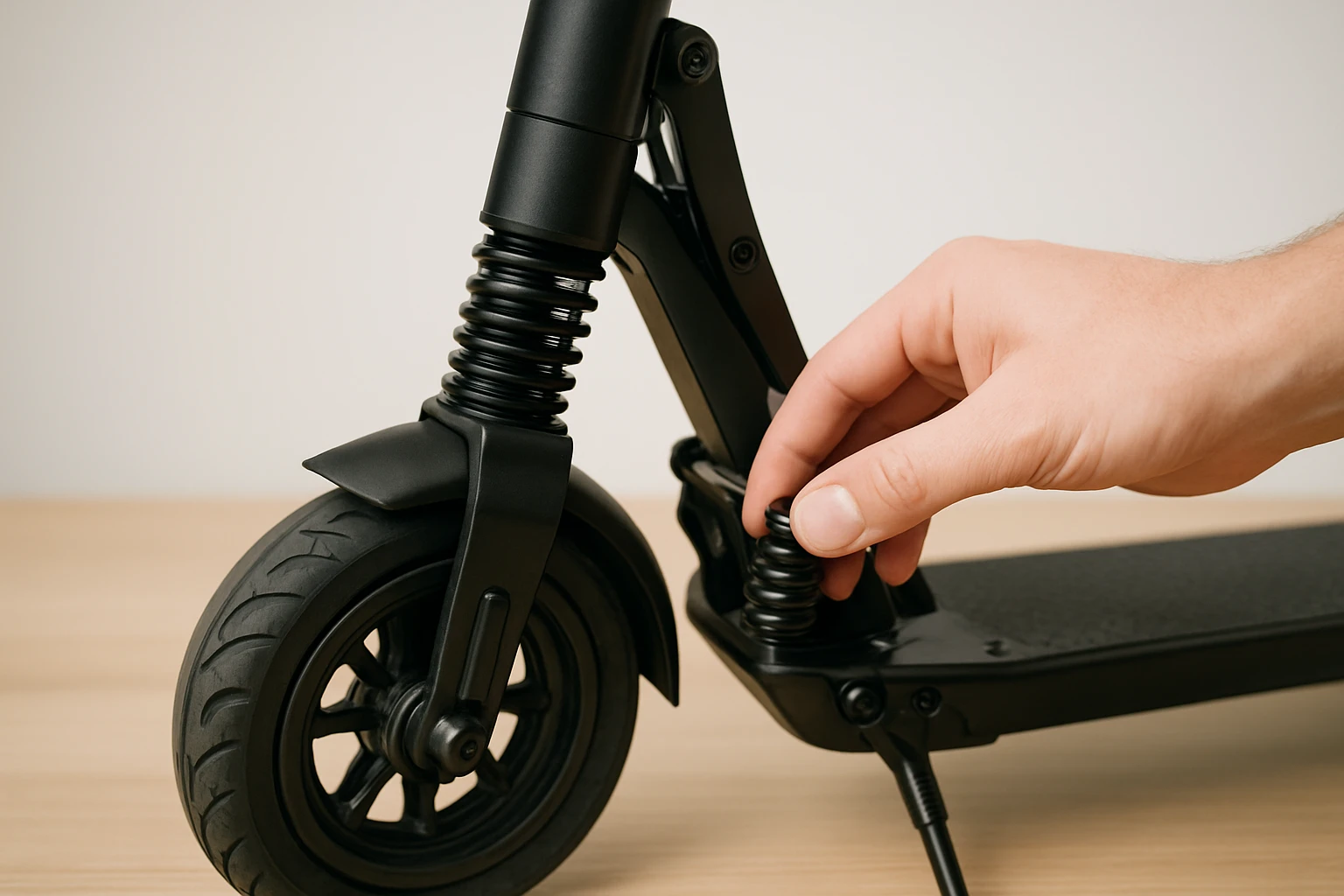
Inspect the scooter for built‑in suspension elements such as front forks, rear shock absorbers or dual‑suspension designs. Many folding models incorporate solid tires that provide limited vibration isolation. If the scooter already includes a dual‑suspension system, evaluate its performance by riding on a representative surface and noting any excessive bounce or harsh impacts. Measure the travel distance of the suspension (typically expressed in millimetres) and verify that the mounting points are robust. Understanding the current setup helps determine whether an upgrade is necessary or if the existing system is sufficient for the rider's needs.
Step 3: Choose Between Integrated Suspension Scooters and Aftermarket Upgrades
When the existing suspension is inadequate, there are two primary pathways: purchase a scooter that ships with a superior suspension system, or retrofit an aftermarket component. Integrated solutions simplify the decision because the manufacturer has engineered the suspension to work harmoniously with the frame, battery and motor.
For example, the NAVIC Dual Suspension Electric Scooter offers 8.5‑inch honeycomb solid tires, a dual‑braking system and a dedicated suspension design that balances comfort with portability. Key specifications include a 350 W motor, a top speed of 19 mph, a range of up to 22 miles per charge, a weight of 30 lb and a user rating of 4.1 stars from 439 reviews. The integrated suspension provides reliable shock absorption on city streets while maintaining a compact folded size.
Another integrated option is the MEGAWHEELS Foldable Electric Scooter. This model features front dual suspension, 10‑inch vacuum tires and a 350 W motor capable of handling 15° inclines. It delivers up to 19 miles of range, supports riders up to 220 lb and carries a 4.1‑star rating from 178 reviews. The dual‑suspension architecture excels on uneven surfaces and offers a smoother ride compared with solid‑tire alternatives.
If the rider prefers to retain a current scooter chassis, an aftermarket upgrade such as the INXING Front Fork can be installed. This front‑fork shock absorber provides enhanced vibration reduction, is constructed from heavy‑duty steel and includes non‑destructive mounting hardware. Priced at $39.99 with a 4.8‑star rating from eight reviews, it represents a cost‑effective method to improve comfort without purchasing a new scooter.
Step 4: Install the Chosen Suspension Component
Before installation, gather the required tools: a set of hex wrenches, a screwdriver, and optionally a torque wrench for precise tightening. Ensure the scooter is powered off and the battery is disconnected to avoid accidental activation. Follow the manufacturer's instructions for the specific component; most aftermarket forks use a bolt‑on design that aligns with existing mounting points.
For the INXING Front Fork, the installation process is straightforward: remove the original fork, align the new fork with the head tube, insert the provided bolts and tighten to the recommended torque. The package includes all necessary hardware, so no additional tools are required. Verify that the fork moves freely and that the brake calipers align correctly before re‑assembling the wheels.
After installation, calibrate the scooter's electronic settings if applicable. Some scooters allow suspension stiffness to be adjusted via a companion app; refer to the user manual for the NAVIC or MEGAWHEELS models to enable any available ride‑mode options. Conduct a short test ride on a safe surface, checking for abnormal noises, excessive play or uneven brake response.
Step 5: Test, Fine‑Tune and Validate Performance
Ride the scooter over a variety of surfaces that reflect typical usage, noting any residual harshness or instability. Adjust suspension preload or damping settings if the component offers such adjustments; many aftermarket forks include a simple knob for preload. Record battery consumption during the test ride to ensure that the added weight of the suspension does not significantly reduce range.
If the scooter feels overly soft, increase preload to reduce sag under load. Conversely, if the ride feels too stiff, decrease preload to allow more travel over bumps. Re‑test after each adjustment to confirm the desired balance between comfort and handling. Document the final settings for future reference, especially if the rider changes weight or cargo load.
Tips & Pro Tips
- Always verify that the scooter's maximum load rating exceeds the rider's weight plus any cargo.
- When installing aftermarket components, retain the original parts in case a return is necessary.
- Regularly inspect bolts and suspension bushings for wear; tighten to torque specifications every 50‑100 miles.
- Use a protective cover for the scooter when storing it folded to prevent dust accumulation on suspension pivots.
- Consider upgrading to puncture‑resistant solid tires if the scooter will be used primarily on smooth pavement, as this reduces maintenance.
Troubleshooting Common Issues
| Problem | Possible Cause | Solution |
|---|---|---|
| Excessive squeaking after installation | Insufficient lubrication of fork bearings | Apply a thin layer of high‑temperature grease to bearing surfaces. |
| Reduced range after suspension upgrade | Added weight or increased rolling resistance | Check tire pressure, reduce unnecessary cargo, and recalibrate regenerative braking settings. |
| Brake misalignment | Fork not seated correctly | Loosen bolts, re‑align fork, and retighten to specification. |
Conclusion
The guide has outlined a systematic approach to selecting, installing and fine‑tuning suspension for folding e‑scooters. By assessing riding conditions, evaluating existing hardware, choosing between integrated or aftermarket solutions, performing a careful installation and validating performance, the rider can achieve a comfortable and safe commuting experience. The recommended products illustrate how both complete scooter purchases and targeted upgrades can meet diverse needs. Readers are encouraged to apply the steps, experiment with adjustments and enjoy a smoother ride.
Products Mentioned in This Guide
Frequently Asked Questions
What factors should I consider when selecting a suspension for my folding e‑scooter?
Evaluate riding terrain, daily distance, typical surface conditions, and your weight to match suspension stiffness and travel.
How does rider weight affect suspension choice?
Heavier riders need stiffer springs or higher preload to prevent bottoming out and maintain control.
Are there differences between front, rear, and dual suspension systems for folding e‑scooters?
Front suspension improves steering stability, rear suspension enhances rear wheel grip, and dual setups offer the smoothest ride but add weight and cost.
Can I upgrade the suspension on a stock folding e‑scooter, and what tools are needed?
Most models allow aftermarket forks or shock upgrades using basic tools like Allen keys and a torque wrench.
How do I fine‑tune my scooter’s suspension for optimal comfort?
Adjust preload, damping, and lockout settings based on ride feedback, then test on typical routes and tweak as needed.