Introduction
In this guide the reader will learn how to create a child‑proof barrier around the battery compartment of an electric scooter. The process combines simple mechanical safeguards with practical habits that reduce the risk of accidental contact. By following each step one can protect young children while preserving the performance and convenience of the scooter. The guide also highlights tools that simplify the work without compromising safety.
What You'll Need
- A set of durable zip ties or reusable Velcro straps.
- Non‑slip rubber pads to prevent the scooter from sliding during installation.
- Small screwdrivers (Phillips and flat‑head) for removing the cover.
- Optional: a portable lock or cable lock for added security.
- QnQ 500W Foldable Electric Scooter – useful for testing the lock mechanism and demonstrating the child‑proofing process.
- WERHY 500‑1000W Foldable Electric Scooter – offers a robust frame that can accommodate additional safety accessories.
Step 1: Assess the Existing Battery Compartment
The first action is to locate the battery compartment on the scooter frame. Most modern scooters place the compartment beneath the deck, secured with a latch or screws. Examine the latch for any wear, and verify that the compartment closes flush with the surrounding panel. This assessment determines whether additional hardware such as a lock or tie‑down is required.
When using the QnQ 500W Foldable Electric Scooter one can observe that its cover employs a simple snap‑fit that can be reinforced with zip ties. The scooter’s lightweight design (28 lbs) makes it easy to handle during the inspection.
Step 2: Install a Secure Locking Mechanism
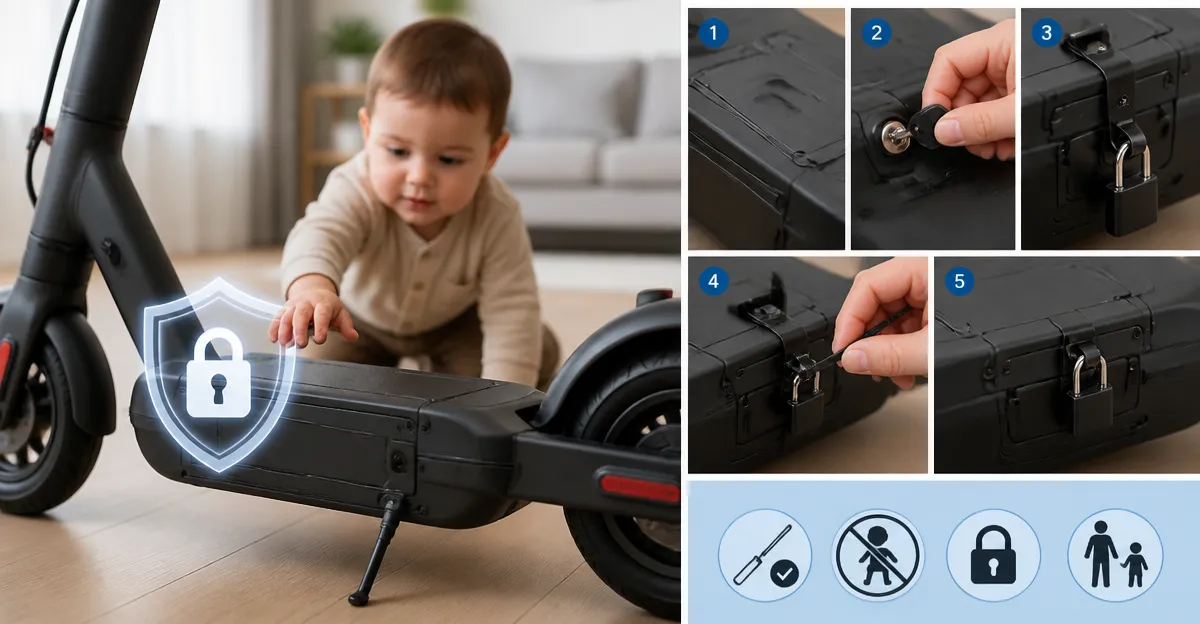
To prevent a child from opening the compartment, install a small padlock or a cable lock that threads through the existing latch holes. Choose a lock with a minimum shackle diameter of 5 mm to ensure durability. The lock should be positioned so that it cannot be removed without a key or combination.
The WERHY 500‑1000W Foldable Electric Scooter features a more substantial frame that can accommodate a cable lock without compromising balance. Its higher load capacity (265 lb) provides additional confidence when adding accessories.
Step 3: Apply Reinforcing Zip Ties
After the lock is in place, reinforce the closure with two or three heavy‑duty zip ties. Loop each tie around the latch and the lock shackle, then pull tight to eliminate any play. Trim the excess tail of each tie with scissors to avoid sharp edges.
Zip ties are inexpensive, yet they add a redundant barrier that discourages curious fingers. The combination of a lock and zip ties creates a two‑layer defense that is difficult for a child to bypass.
Step 4: Add Non‑Slip Padding Under the Scooter
Place non‑slip rubber pads beneath the scooter deck while performing the child‑proofing work. The pads keep the scooter stable, preventing it from sliding and exposing the battery compartment unintentionally. Choose pads with a thickness of at least 5 mm for adequate grip.
Stability is especially important when working with the QnQ 500W Foldable Electric Scooter because its compact design can shift easily on smooth surfaces.
Step 5: Verify the Effectiveness of the Child‑Proofing
Conduct a hands‑on test by attempting to open the compartment without the key. The lock should remain engaged, and the zip ties should resist removal without cutting tools. If any component yields, replace it with a stronger alternative.
It is advisable to repeat the test after a short ride, as vibration can loosen fasteners. Re‑tighten any loose screws with a screwdriver before the scooter is used again.
Step 6: Establish Ongoing Safety Habits
Beyond physical modifications, adopt daily habits that reinforce safety. Store the scooter in a locked garage or closet when not in use. Keep the key to the lock out of reach of children, and educate family members about the importance of the child‑proofing measures.
Regularly inspect the zip ties and lock for signs of wear. Replace worn components promptly to maintain a high level of protection.
Tips & Pro Tips
- Use reusable Velcro straps if frequent removal of the battery is required; they provide a secure hold without permanent damage.
- Consider a lock with a weather‑proof coating to resist rust in humid climates.
- Label the battery compartment with a clear warning sign to remind adults of the safety protocol.
- When cutting zip ties, wear safety glasses to protect the eyes from stray plastic fragments.
Troubleshooting
Problem: The lock shackle interferes with the scooter's folding mechanism.
Solution: Choose a low‑profile lock or reposition the cable to a side slot that does not obstruct the hinge. Verify that the scooter folds smoothly after adjustment.
Problem: Zip ties become brittle in cold weather.
Solution: Replace them with stainless‑steel cable ties that retain flexibility across temperature ranges.
Conclusion
This guide has outlined a systematic approach to child‑proofing the battery compartment of an electric scooter. By assessing the existing closure, adding a lock, reinforcing with zip ties, and maintaining stable work conditions, one can create a robust safety barrier. Ongoing inspection and disciplined storage habits ensure that the protection remains effective over time. Implementing these steps will give parents and caregivers confidence that the scooter can be enjoyed safely around children.
Products Mentioned in This Guide
Frequently Asked Questions
How can I create a child‑proof barrier around my electric scooter's battery compartment?
Use durable zip ties or reusable Velcro straps to secure the battery cover, and add non‑slip rubber pads to keep the scooter stable during installation.
What tools are required to childproof the battery compartment?
You’ll need a set of zip ties or Velcro straps, non‑slip rubber pads, and small Phillips and flat‑head screwdrivers.
Is a lock or cable necessary for extra safety?
A portable lock or cable lock provides added security, especially if children can access the scooter when unattended.
Can I test the child‑proofing method on any scooter model?
Yes, you can use a typical 500‑1000W foldable scooter, such as the QnQ or WERHY models, to practice and verify the lock mechanism.
What habits help maintain a child‑proofed scooter?
Regularly inspect the straps and locks, keep the scooter out of reach when not in use, and ensure the battery cover remains tightly secured after each ride.