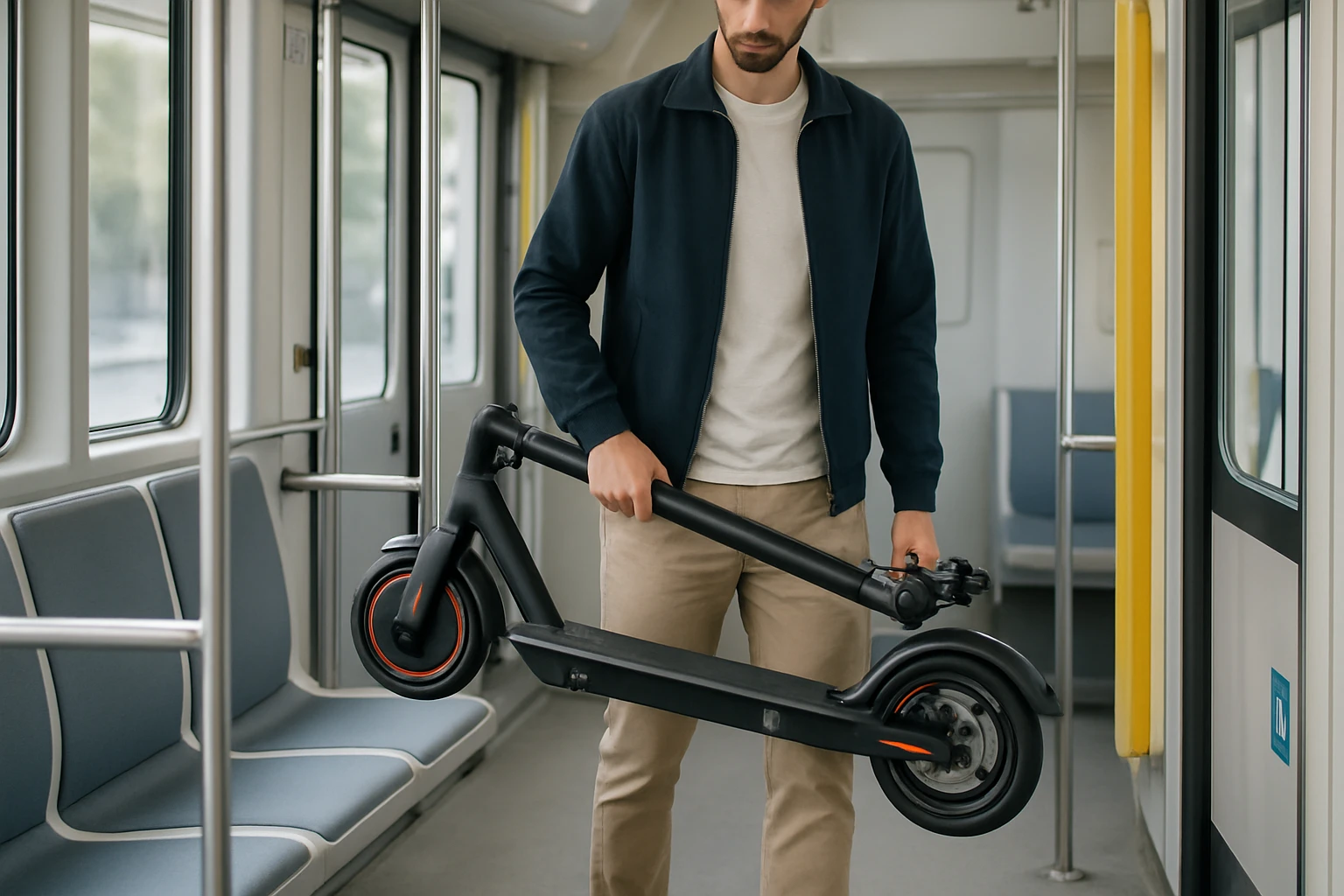
How to Carry a Folding E‑Scooter on Public Transit: Rules, Tips & a Step‑by‑Step Commuter Guide
Introduction
Commuters who rely on a folding electric scooter often face the challenge of integrating that portable vehicle with public‑transit systems. This guide explains the essential rules, provides a clear step‑by‑step process, and highlights practical accessories that simplify the journey. By following the instructions, one can reduce friction at gates, avoid damage to the scooter, and enjoy a smoother, more efficient commute.
The information presented is based on current transit policies in major cities, real‑world user feedback, and the specific features of three highly rated Amazon accessories. Whether the reader chooses to purchase a storage solution or not, the core steps remain applicable.
After completing this guide, the commuter will be able to fold, pack, and transport a folding e‑scooter confidently on buses, trains, and subways, while complying with regulations and protecting the device.
What You’ll Need
- A folding electric scooter that meets local transit size limits.
- A sturdy lock or cable to secure the scooter while on board.
- One of the following storage accessories (optional but recommended):
- Personal items such as a phone, wallet, and water bottle.
Step‑by‑Step Instructions
Step 1 – Verify Transit Policies
Before boarding, the commuter should review the specific rules of the transit authority. Most systems allow a folded scooter that does not exceed 36 inches in length, 24 inches in width, and 12 inches in height. Some agencies require the scooter to be placed in a bag or basket to prevent it from obstructing aisles.
If the policy mandates a bag, the Hiboy Scooter Handlebar Bag satisfies the size requirement while offering waterproof protection. Its 4‑liter capacity ensures that the scooter fits comfortably without exceeding dimensional limits.
In jurisdictions where a bag is optional, the commuter may still benefit from a dedicated storage solution to keep personal items organized and to protect the scooter’s handlebars from scratches.
Documenting the policy on a smartphone can prevent disputes at gate checks.
Step 2 – Fold the Scooter Correctly
Most folding e‑scooters feature a quick‑release lever or latch. The commuter should first power off the scooter, disengage the brake, and then press the release to collapse the deck. Ensure that the handlebar locks into place and that any folding hinges are fully engaged.
To avoid accidental unfolding during transit, use a lock or strap. The Bohemiaby Electric Scooter Basket includes three adjustable magic straps that can be tightened around the handlebar, keeping the scooter rigid while it is carried on a bus or train.
When the scooter is folded, check that the wheels are aligned and that the deck is not protruding beyond the approved dimensions.
Practice the folding motion at home to develop a smooth, repeatable routine.
Step 3 – Choose an Appropriate Carrying Solution
Depending on the commuter’s daily load, one of three accessories can be selected:
- Bohemiaby Electric Scooter Basket – Ideal for riders who need a dedicated laptop pocket and cup holders. The basket measures 13 × 5.9 × 10.2 inches, weighs only $16.95, and holds a 14‑inch laptop securely. Its padded compartments protect electronics, while the integrated cup holders keep beverages stable.
- Hiboy Scooter Handlebar Bag – Suited for commuters who prioritize waterproofing and a sleek profile. Constructed from impact‑resistant EVA, it offers a sealed two‑way zipper, reflective elements for night safety, and a lightweight design under 1 lb. Priced at $23.65, it has a 4.4‑star rating from 1,074 reviewers.
- Rhinowalk Scooter Storage Bag – Best for users who travel with the entire scooter as luggage. Made from 600D Oxford fabric, it can be folded into a compact pouch, includes shoulder straps, and weighs only 2.5 lb. At $21.24 and a 4.2‑star rating, it offers a versatile carry‑as‑handbag option.
The commuter should match the accessory to the typical cargo: a laptop and coffee call for the Bohemiaby basket; rain‑prone cities benefit from the Hiboy bag; and long trips with the scooter itself favor the Rhinowalk bag.
Each product’s design includes adjustable straps that secure the scooter to the bag, preventing movement during the ride.
When the scooter is placed inside the chosen bag, verify that the strap tension is firm but does not compress the battery excessively.
Step 4 – Pack Personal Essentials
While the scooter is folded, the commuter should load essential items into the bag’s dedicated pockets. The Bohemiaby basket’s 14‑inch laptop compartment keeps the device upright and protected by padded walls. The Hiboy bag’s interior mesh pockets organize chargers, keys, and a small first‑aid kit.
Water bottles belong in the cup holders of the Bohemiaby basket or in the side compartments of the Hiboy bag, ensuring they remain upright during sudden stops.
Any fragile items should be wrapped in a thin cloth before placement to mitigate vibration.
Keeping the load balanced—equal weight on both sides of the handlebar—reduces strain on the scooter’s frame.
Step 5 – Board the Transit Vehicle
Approach the gate or door with the folded scooter and bag in hand. If the vehicle requires a ticket scan, hold the scooter upright to avoid obstructing the scanner. Once inside, locate a designated area for large items; many trains have a “bike zone” that also accommodates folded scooters.
Secure the scooter to a rail or hook using a cable lock if the transit authority permits. The Bohemiaby basket’s straps can double as a temporary tether when a lock is not available.
Maintain a clear line of sight on the scooter to prevent accidental nudges from other passengers.
If the scooter must be placed on the floor, position it with the wheels facing the direction of travel to reduce the risk of tripping.
Step 6 – Ride Inside the Vehicle
During the journey, keep the bag’s zippers closed to prevent items from spilling. The Hiboy bag’s waterproof sealing protects electronics from unexpected rain that may enter through open doors.
Should the vehicle become crowded, the commuter can hold the bag close to the chest, using the cup holders as a natural grip point.
When the ride is short, the commuter may opt to keep the scooter unfolded for quick disembarkation, but must ensure it does not block aisles.
Maintain awareness of stop announcements to prepare for a smooth exit.
Step 7 – Disembark and Store the Scooter
At the destination, locate the nearest exit that allows easy scooter handling. If the scooter is still in the bag, remove it by releasing the adjustable straps. The Bohemiaby basket’s magic straps release with a single pull, enabling rapid deployment.
If the commuter plans to store the scooter at the station, verify that the station provides a lockable rack or a secure locker. Use a sturdy cable lock to secure the frame and the basket or bag to the rack.
Finally, fold the scooter back to its compact state, place it in the chosen bag if not already there, and continue the journey on foot.
Consistent practice of these steps reduces stress and improves overall transit efficiency.
Tips & Pro Tips
- Check Dimensions Early: Measure the folded scooter against the transit authority’s maximum dimensions to avoid denied boarding.
- Use a Waterproof Bag: In rainy climates, the Hiboy Scooter Handlebar Bag’s sealed zipper prevents moisture damage to electronics.
- Leverage Cup Holders: The Bohemiaby basket’s cup holders keep a water bottle stable, reducing spill risk during sudden stops.
- Carry a Small Repair Kit: Include a mini‑Allen wrench and a spare tire patch in the bag’s interior pocket for quick fixes.
- Plan for Battery Safety: Avoid exposing the scooter’s battery to extreme temperatures; store it in a shaded area while on the train.
- Use Reflective Elements: The Hiboy bag’s reflective strips increase visibility when boarding at night.
Troubleshooting
- Bag Does Not Fit the Scooter: Verify that the scooter’s handlebar width matches the bag’s adjustable strap range. If necessary, loosen the straps further or choose a larger bag such as the Rhinowalk Scooter Storage Bag.
- Zipper Sticks: Apply a small amount of silicone lubricant to the Hiboy bag’s two‑way zipper to restore smooth operation.
- Straps Slip During Transit: Ensure the straps are threaded through the reinforced loops on the scooter’s handlebars rather than the thin plastic parts.
- Water Leakage: Double‑check that the cup holders on the Bohemiaby basket are empty before entering a rainy car, as condensation can collect and drip.
Conclusion
Carrying a folding e‑scooter on public transit becomes a manageable task when the commuter follows a systematic approach: understand the rules, fold the scooter securely, select an appropriate bag, pack essentials wisely, and board with confidence. The recommended accessories—Bohemiaby Electric Scooter Basket, Hiboy Scooter Handlebar Bag, and Rhinowalk Scooter Storage Bag—address common pain points such as protection, waterproofing, and portability.
By integrating these steps into daily routines, one can enjoy the flexibility of an e‑scooter without compromising the convenience of public transportation.
Now the commuter is equipped to travel smarter, protect their equipment, and arrive at destinations ready to ride.
Products Mentioned in This Guide
Frequently Asked Questions
What size limits do most public‑transit systems impose on folding e‑scooters?
Most systems require a folded scooter to be under 36‑inches long and 12‑inches wide, but you should check your local authority for exact dimensions.
Do I need a lock when carrying a folding e‑scooter on a bus or train?
A lightweight lock or cable is recommended to secure the scooter to a seat or pole and prevent theft while you’re on board.
Can I bring a folded e‑scooter onto a subway during peak hours?
Yes, as long as it’s fully folded and fits in the designated luggage area or under the seat without blocking doors or aisles.
What accessories help protect my scooter during transit?
A padded sleeve, a compact carry bag, and a sturdy lock are the top accessories for preventing scratches and securing the scooter.
What’s the step‑by‑step process for boarding with a folding e‑scooter?
Fold the scooter, secure it with a lock or strap, place it in a bag or sleeve, and carry it through the gate, storing it in the designated area once on board.