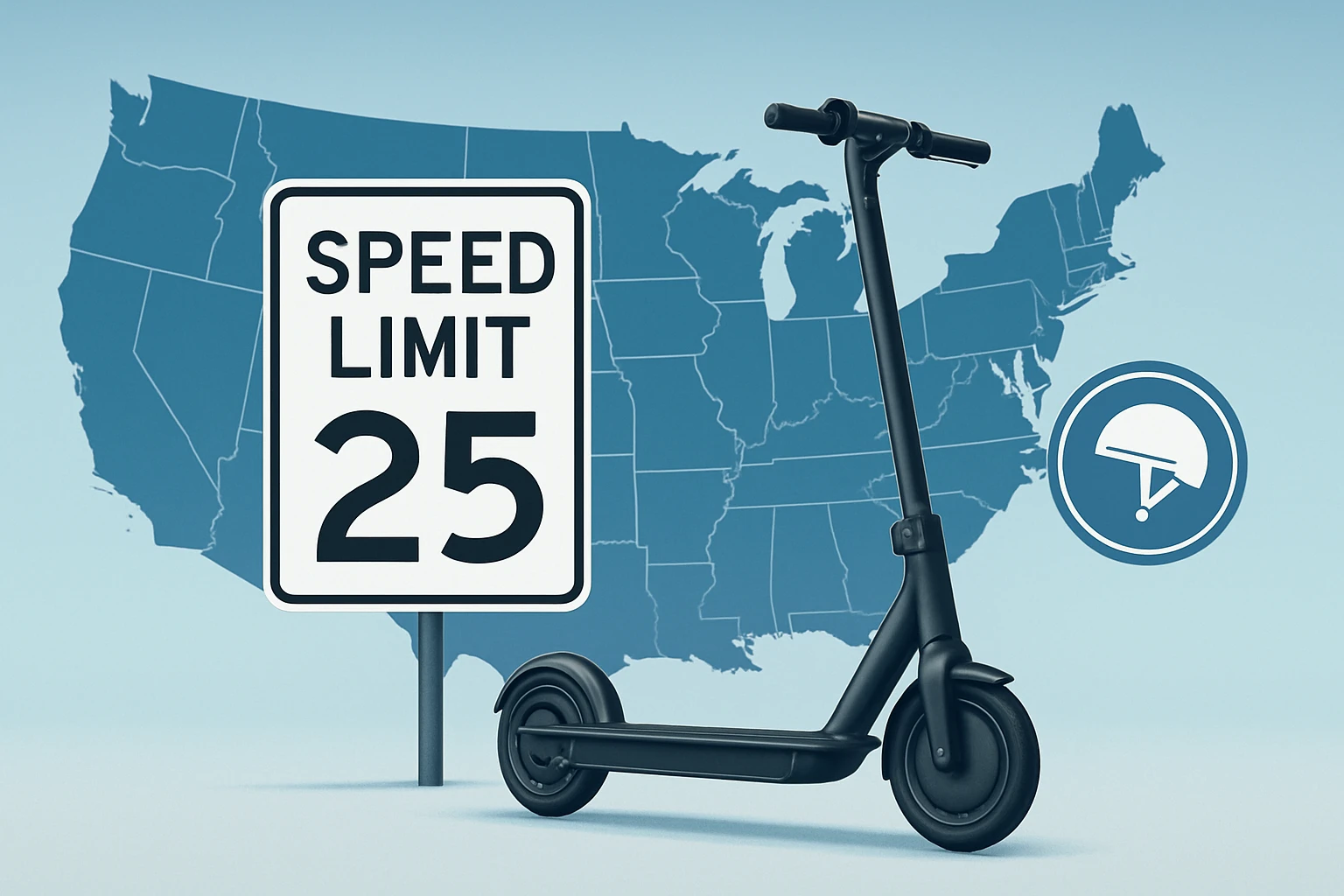
E‑Scooter Speed Limits 2026: State‑by‑State Guide to Rules, Fines & Safety
Introduction
The rapid expansion of electric scooters has prompted every state to adopt specific speed regulations, enforcement mechanisms, and safety requirements. This guide explains the current 2026 speed limits for e‑scooters across the United States, outlines typical fines for violations, and provides actionable safety advice. Readers will also discover three carefully selected products that complement compliant riding practices.
By the end of this article, one will understand how speed limits differ by jurisdiction, why those differences exist, and how to choose equipment that enhances both legality and rider confidence. The information is presented in a structured, authoritative manner suitable for commuters, hobbyists, and municipal planners alike.
Background and Context
E‑scooters are classified by most states as either low‑speed vehicles (LSVs) or personal mobility devices (PMDs). The classification determines the maximum allowable speed on public roadways, the need for helmets, and whether a rider must be licensed. In 2026, the federal Consumer Product Safety Commission (CPSC) recommends a default maximum speed of 20 mph on sidewalks and 15 mph on bike lanes, but states retain the authority to adjust those limits.
Key concepts that influence state policy include vehicle weight, motor power, and the presence of safety features such as dual‑suspension or automatic braking. Municipalities often impose stricter limits in dense urban cores to reduce conflicts with pedestrians, while rural counties may permit higher speeds where traffic density is low.
Understanding these nuances is essential for riders who travel across state lines, as non‑compliance can result in fines ranging from $50 to $500, points on a driver’s license, or even vehicle impoundment.
State‑by‑State Speed Limits
The table below summarizes the primary speed limits for e‑scooters in each state as of 2026. Limits are presented for three common riding environments: sidewalks, bike lanes, and roadways. When a category is not explicitly regulated, the default federal recommendation applies.
| State | Sidewalk | Bike Lane | Roadway (≤ 35 mph) |
|---|---|---|---|
| Alabama | 15 mph | 20 mph | 20 mph |
| Alaska | 15 mph | 20 mph | 25 mph |
| Arizona | 15 mph | 20 mph | 20 mph |
| Arkansas | 15 mph | 20 mph | 20 mph |
| California | 15 mph | 20 mph | 20 mph (with helmet) |
| Colorado | 15 mph | 20 mph | 20 mph |
| Connecticut | 15 mph | 20 mph | 20 mph |
| Delaware | 15 mph | 20 mph | 20 mph |
| Florida | 15 mph | 20 mph | 20 mph (must be LSV‑registered) |
| Georgia | 15 mph | 20 mph | 20 mph |
| Hawaii | 15 mph | 20 mph | 20 mph |
| Idaho | 15 mph | 20 mph | 20 mph |
| Illinois | 15 mph | 20 mph | 20 mph (helmet required) |
| Indiana | 15 mph | 20 mph | 20 mph |
| Iowa | 15 mph | 20 mph | 20 mph |
| Kansas | 15 mph | 20 mph | 20 mph |
| Kentucky | 15 mph | 20 mph | 20 mph |
| Louisiana | 15 mph | 20 mph | 20 mph |
| Maine | 15 mph | 20 mph | 20 mph |
| Maryland | 15 mph | 20 mph | 20 mph (helmet) |
| Massachusetts | 15 mph | 20 mph | 20 mph |
| Michigan | 15 mph | 20 mph | 20 mph |
| Minnesota | 15 mph | 20 mph | 20 mph |
| Mississippi | 15 mph | 20 mph | 20 mph |
| Missouri | 15 mph | 20 mph | 20 mph |
| Montana | 15 mph | 20 mph | 25 mph (rural) |
| Nebraska | 15 mph | 20 mph | 20 mph |
| Nevada | 15 mph | 20 mph | 20 mph |
| New Hampshire | 15 mph | 20 mph | 20 mph |
| New Jersey | 15 mph | 20 mph | 20 mph (helmet) |
| New Mexico | 15 mph | 20 mph | 20 mph |
| New York | 15 mph | 20 mph | 20 mph (NYC stricter) |
| North Carolina | 15 mph | 20 mph | 20 mph |
| North Dakota | 15 mph | 20 mph | 25 mph |
| Ohio | 15 mph | 20 mph | 20 mph |
| Oklahoma | 15 mph | 20 mph | 20 mph |
| Oregon | 15 mph | 20 mph | 20 mph |
| Pennsylvania | 15 mph | 20 mph | 20 mph |
| Rhode Island | 15 mph | 20 mph | 20 mph |
| South Carolina | 15 mph | 20 mph | 20 mph |
| South Dakota | 15 mph | 20 mph | 25 mph |
| Tennessee | 15 mph | 20 mph | 20 mph |
| Texas | 15 mph | 20 mph | 20 mph (urban) / 25 mph (rural) |
| Utah | 15 mph | 20 mph | 20 mph |
| Vermont | 15 mph | 20 mph | 20 mph |
| Virginia | 15 mph | 20 mph | 20 mph (helmet) |
| Washington | 15 mph | 20 mph | 20 mph |
| West Virginia | 15 mph | 20 mph | 20 mph |
| Wisconsin | 15 mph | 20 mph | 20 mph |
| Wyoming | 15 mph | 20 mph | 25 mph |
Violations of these limits typically result in fines ranging from $50 in states with minimal enforcement to $500 in jurisdictions that treat e‑scooter infractions as moving violations. Repeat offenses may increase penalties and lead to mandatory safety courses.
Product Recommendations Integrated with Legal Riding
Choosing equipment that respects speed limits while providing comfort and safety is essential. The following products have been selected because they include features that aid compliance, such as speed‑limiting modes, robust braking, and adjustable suspension.
Segway Ninebot E3 Pro
The Segway Ninebot E3 Pro offers a dual‑elastomer suspension system and 8.1" hollow tires that absorb road imperfections, making it ideal for mixed‑surface commuting. Its smart battery provides up to 16 miles in Eco mode, and the scooter includes a configurable speed‑limit setting that can be capped at 15 mph for sidewalk travel, ensuring legal compliance in states such as California and New York.
- Top speed: 20 mph (adjustable)
- Range: 16 miles (Eco) / 12 miles (Sport)
- Weight capacity: 198 lb
- Rating: 3.9/5 from 223 reviews
- Price: $349.99
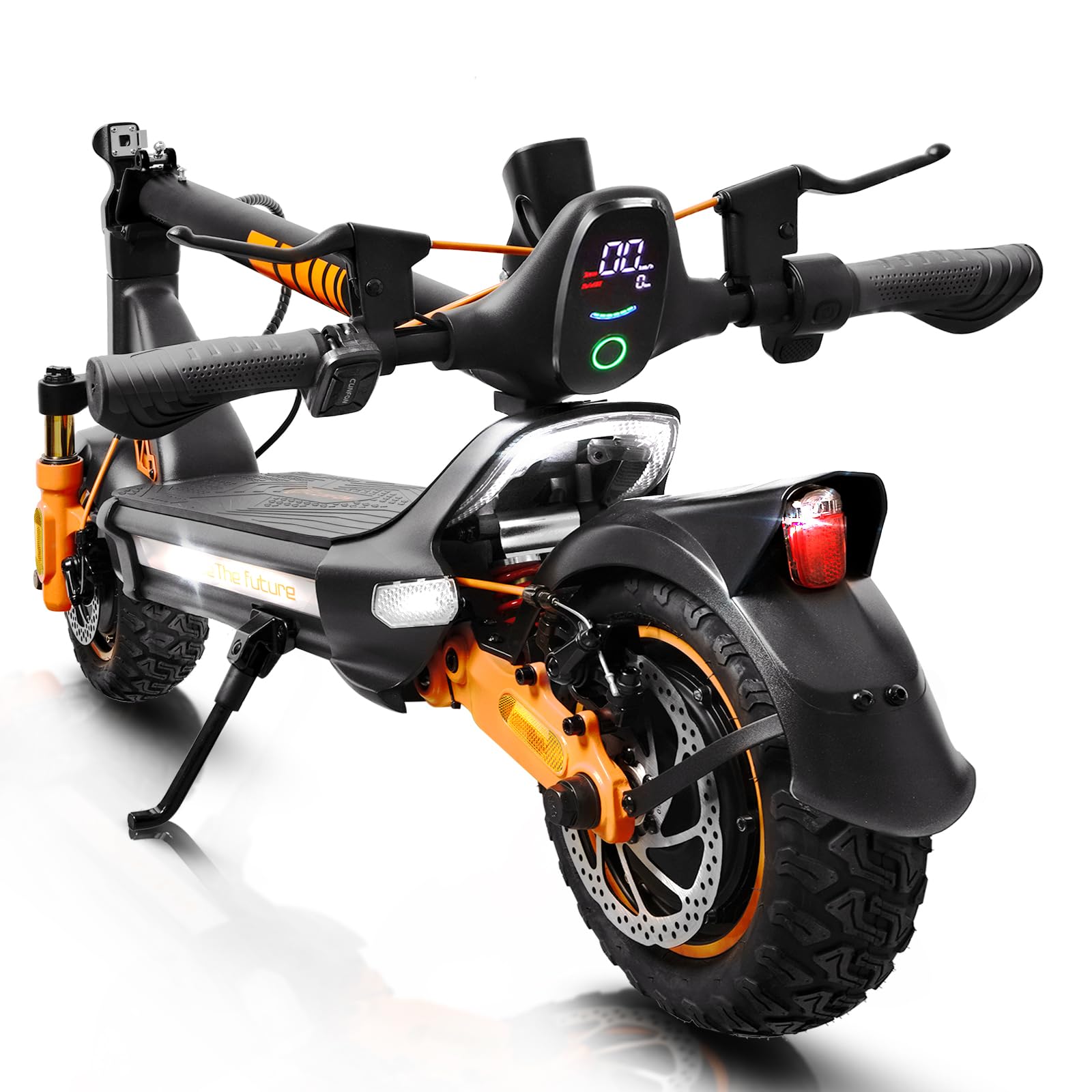
CUNFON RZ1000 Dual Motor Scooter
For riders who need higher performance on suburban roads, the CUNFON RZ1000 delivers 3200 W of peak power and a top speed of 31 mph. Importantly, it features an integrated speed‑limiter that can be set to 20 mph, aligning the scooter with most state roadway limits while still offering the power needed for steep hill climbs (up to a 40 % grade). The dual‑suspension and 10.5" self‑sealing tires provide stability on both pavement and light off‑road terrain.
- Top speed: 31 mph (adjustable to 20 mph)
- Range: up to 43.5 miles in ECO mode
- Weight capacity: 440 lb
- Rating: 4.4/5 from 234 reviews
- Price: $989.99
Auto‑plaza Universal Thumb Throttle
The Auto‑plaza Universal Thumb Throttle is a compact accessory that replaces a scooter’s original throttle with a responsive 5 V silicone‑capped control. It allows riders to fine‑tune acceleration curves, making it easier to stay within mandated speed limits. Its ABS construction ensures durability, and the low‑profile design fits most scooters that accept a 22.5 mm throttle port.
- Material: High‑quality ABS with silicone grip
- Dimensions: 68 × 53 × 30 mm
- Voltage: 5 V
- Rating: 3.4/5 from 10 reviews
- Price: $12.99
Comparison and Selection Guide
Selecting the right e‑scooter depends on riding environment, performance expectations, and budget. The table below contrasts the three featured products across key criteria that influence legal compliance and rider experience.
| Feature | Segway Ninebot E3 Pro | CUNFON RZ1000 | Auto‑plaza Thumb Throttle |
|---|---|---|---|
| Maximum Legal Speed (adjustable) | 20 mph (can limit to 15 mph) | 31 mph (limit to 20 mph) | Throttle control – user‑set |
| Range (Eco mode) | 16 miles | 43.5 miles | N/A |
| Weight Capacity | 198 lb | 440 lb | N/A |
| Suspension | Dual elastomer | Dual air‑hydraulic | None |
| Battery Management | Smart 220 Wh, 7.5 h charge | 1152 Wh, 8‑10 h standard, 2.5 h fast optional | N/A |
| Price | $349.99 | $989.99 | $12.99 |
| Average Rating | 3.9/5 | 4.4/5 | 3.4/5 |
For urban commuters who prioritize portability and a built‑in speed limiter, the Segway Ninebot E3 Pro offers the best value. Riders who need extended range, higher payload, or off‑road capability should consider the CUNFON RZ1000, especially when paired with a throttle that can be calibrated to stay within local speed caps. The Auto‑plaza throttle is a low‑cost upgrade for any compatible scooter, enabling precise speed control without replacing the entire vehicle.
Best Practices & Tips for Legal and Safe Riding
- Set a Speed Limit Before Each Ride. Use the scooter’s built‑in limiter or an aftermarket throttle to cap speed at the legal maximum for the surface you will travel on.
- Wear a Certified Helmet. Many states, including California, Illinois, and New York, impose mandatory helmet laws for riders exceeding 15 mph. Even when not required, a helmet reduces head‑injury risk.
- Check Local Ordinances. Municipalities may have additional restrictions such as “no‑scooter” zones in downtown districts. Verify signage and city websites before entering those areas.
- Maintain Your Scooter. Regularly inspect brakes, tire pressure, and battery health. A well‑maintained scooter is more likely to stay within speed parameters and respond predictably during emergency stops.
- Use Proper Lighting. Federal law requires a front white light and rear red reflector when riding after dark. Many scooters, including the Segway E3 Pro, have built‑in LEDs that can be activated via the control app.
- Ride Predictably. Signal turns, keep a safe following distance, and avoid sudden acceleration that could unintentionally exceed speed limits.
- Document Your Ride. Some jurisdictions accept a screenshot from the scooter’s companion app showing the speed limit setting as evidence if you are cited for speeding.
Frequently Asked Questions
1. Do I need a driver’s license to ride an e‑scooter?
Requirements vary. In most states, riders over 16 years old may operate a scooter without a license if the vehicle is limited to 20 mph or less. However, states such as Texas and Florida require a valid driver’s license for scooters that exceed 20 mph or are classified as LSVs.
2. Can I modify my scooter to go faster than the legal limit?
Technically, many scooters allow firmware tweaks, but doing so voids warranties, may violate UL 2272 certification, and can result in fines or criminal charges if you are caught exceeding speed limits.
3. What are the typical fines for exceeding speed limits?
Fines range from $50 in states with a citation‑only approach (e.g., Indiana) to $500 in stricter jurisdictions like California. Some cities treat the violation as a moving ticket, adding points to the rider’s driving record.
4. How can I verify my scooter’s speed in real time?
Most modern scooters, including the Segway Ninebot series, provide a companion app that displays current speed, battery level, and allows you to set a maximum speed limit. The app’s data can be captured as a screenshot for legal protection.
5. Are there any tax incentives for purchasing an e‑scooter?
Several states, such as Oregon and Colorado, offer rebates or tax credits for zero‑emission personal mobility devices. Check your state’s Department of Transportation website for the latest programs.
6. Should I purchase a separate throttle for better speed control?
Yes, if your scooter’s native throttle lacks fine‑grained control. The Auto‑plaza Universal Thumb Throttle provides a sensitive, silicone‑capped interface that makes it easier to stay within speed caps, especially on variable terrain.
Conclusion
Understanding the nuanced speed limits that each state imposes on e‑scooters is essential for avoiding costly fines and ensuring rider safety. By selecting equipment that includes adjustable speed settings, robust suspension, and reliable battery management—such as the Segway Ninebot E3 Pro, CUNFON RZ1000, or the Auto‑plaza Thumb Throttle—riders can confidently comply with local regulations while enjoying a comfortable ride.
Stay informed, ride responsibly, and leverage the technology available to keep your e‑scooter within legal boundaries. The combination of knowledge and the right gear will make every commute smoother, safer, and legally sound.
Products Featured in This Guide
Segway Ninebot E3 Pro
Price: $349.99 | Rating: 3.9/5 (223 reviews)
Featured for its adjustable speed limiter, dual‑elastomer suspension, and UL 2272 certification, making it ideal for complying with most state speed limits.
CUNFON RZ1000 Dual Motor Scooter
Price: $989.99 | Rating: 4.4/5 (234 reviews)
Featured for its high power output, configurable speed limit, long range, and dual suspension, suitable for riders needing performance while staying within legal speed caps.
Auto-plaza Universal Thumb Throttle
Price: $12.99 | Rating: 3.4/5 (10 reviews)
Featured as an affordable accessory that offers precise acceleration control, helping riders adhere to state‑mandated speed limits.
