Introduction
This guide explains how to minimise the motor noise of an electric scooter, thereby improving rider comfort and extending component lifespan. The reader will learn to identify vibration sources, apply appropriate damping materials, and verify the results with simple tests. By following the outlined steps, one can achieve a noticeably quieter ride without requiring specialised tools or professional services. The information is valuable for commuters, hobbyists, and anyone seeking a smoother urban travel experience.
What You'll Need
- Basic hand tools such as screwdrivers and hex wrenches.
- Cleaning cloths and isopropyl alcohol for surface preparation.
- fitoon Rubber Isolation Washers – 8‑pack, 1.5 in diameter, high‑density rubber.
- uxcell Rubber Anti‑Vibration Pads – 4‑piece set, 50 mm square, 10 mm thick.
- Adhesive tape or small zip ties for temporary securing.
Step 1: Assess Existing Noise Sources
Begin by riding the scooter on a smooth surface and listening for the dominant pitch of the motor. While the scooter is stationary, gently tap the motor housing with a rubber mallet and note where the sound is amplified; this indicates a resonant point. Use a smartphone recording app to capture the noise profile, then replay it to identify whether the noise originates from the motor mount, the frame, or ancillary components such as the battery casing. Document the findings, as they will guide the placement of damping materials in subsequent steps.
Step 2: Isolate Motor Mounts
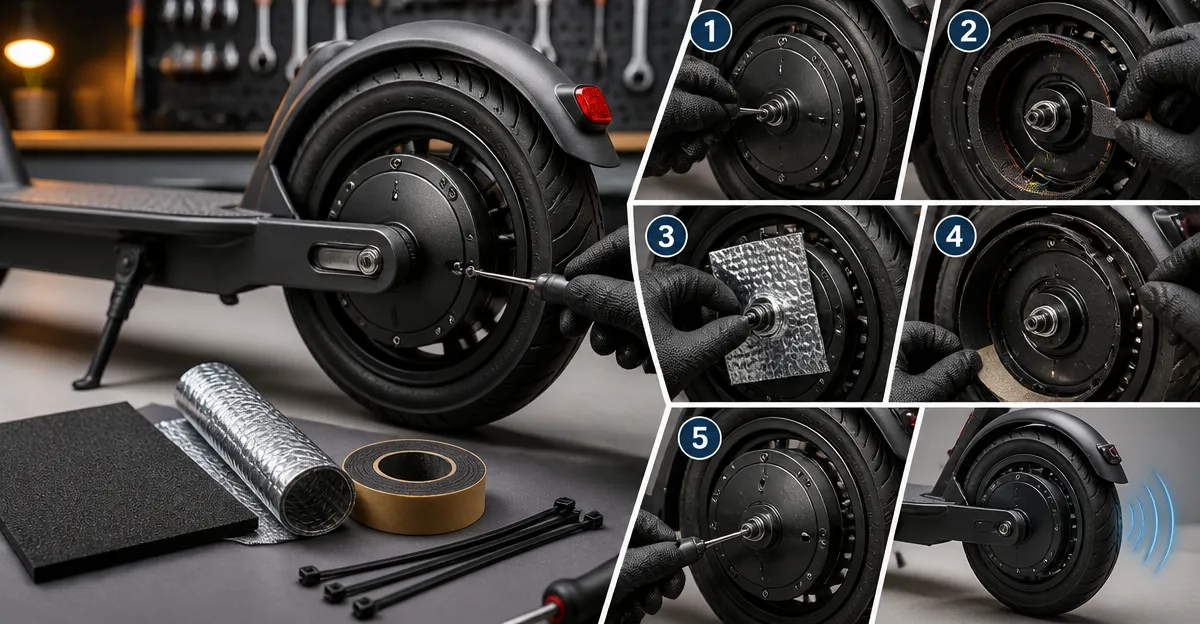
The motor is typically secured to the scooter frame with metal bolts that transmit vibration directly to the chassis. Remove the mounting bolts using the appropriate hex wrench, taking care to support the motor to avoid accidental drops. Place one fitoon Rubber Isolation Washers between the motor base and the mounting plate; the 65 duro hardness provides a balance between firmness and cushioning. Re‑install the bolts to the manufacturer's torque specifications, ensuring the washers remain centred. The washers absorb shock, reduce resonant frequencies, and prevent metal‑to‑metal contact, which is the primary cause of high‑pitched motor whine.
Step 3: Dampen Frame Vibrations
Even after isolating the motor, the scooter frame can act as a sounding board, amplifying residual vibrations. Identify points where the frame contacts the deck, footboard, or rear suspension. Apply one uxcell Rubber Anti‑Vibration Pad under each contact point; the 50 mm square size fits most mounting holes and the 10 mm thickness offers substantial damping. Press the pads firmly until they adhere to the surface; no additional adhesives are required because the rubber’s inherent grip prevents slippage. These pads minimise the transmission of motor‑induced vibrations to the rider's feet, resulting in a smoother and quieter ride.
Step 4: Secure Loose Components
Loose screws, bolts, or brackets can generate rattling noises that mask the benefits of the isolation washers and pads. Inspect the entire scooter for any hardware that feels loose when the scooter is lifted. Tighten all fasteners to the torque values specified in the owner's manual, using a torque wrench when available. For components that lack dedicated fasteners, such as small plastic covers, use a small amount of double‑sided tape to keep them in place. Securing these items eliminates secondary noise sources that often appear after the primary vibration has been addressed.
Step 5: Test and Fine‑Tune
After installing the damping materials, perform a short test ride on a typical urban route. Listen for any remaining motor hum and note whether it has shifted in frequency or volume. If the noise persists at a specific location, add an additional fitoon Rubber Isolation Washer or uxcell Rubber Anti‑Vibration Pad to further isolate that point. Repeat the test until the motor noise is reduced to a level that no longer distracts the rider. Record the final configuration for future reference, especially if the scooter is serviced by a third party.
Tips & Pro Tips
- Apply a thin layer of isopropyl alcohol to metal surfaces before installing rubber components; this removes oils and improves adhesion.
- When using the isolation washers, ensure they are oriented consistently so the inner hole aligns with the bolt shaft, preventing uneven pressure.
- If the scooter is used in wet conditions, select rubber pads with oil and corrosion resistance, such as the uxcell Rubber Anti‑Vibration Pads, to avoid degradation.
- Consider adding a thin layer of felt under the footboard for additional comfort; felt does not interfere with the rubber pads and provides a soft surface for the rider.
- Maintain a regular inspection schedule—every three months—to verify that the damping materials have not compressed excessively.
Troubleshooting
| Problem | Possible Cause | Solution |
|---|---|---|
| Motor noise unchanged after installation | Isolation washers placed incorrectly or insufficient thickness | Replace the washers with a second layer of fitoon Rubber Isolation Washers and verify that the motor sits evenly on them. |
| Pads slip under load | Surface contamination or inadequate compression | Clean the contact area with isopropyl alcohol and press the pads firmly; if slippage persists, use a small zip tie to hold the pad in place. |
| Excessive vibration when riding over bumps | Frame still resonating | Install additional uxcell Rubber Anti‑Vibration Pads at suspension mounting points. |
Conclusion
By following the systematic approach outlined in this guide, one can substantially reduce the motor noise of an electric scooter. The combination of high‑density fitoon Rubber Isolation Washers and durable uxcell Rubber Anti‑Vibration Pads provides an effective, low‑cost solution that does not require specialised equipment. Regular maintenance and periodic re‑evaluation will ensure the scooter remains quiet and enjoyable for many miles to come.
Products Mentioned in This Guide
fitoon Rubber Isolation Washers
Price: $3.99 | Rating: 4.7/5 (27 reviews)
Features: 1.5 in outer diameter, 0.5 in inner diameter, 0.4 in thickness, 65 duro hardness, high‑density rubber, eight pieces per pack.
uxcell Rubber Anti-Vibration Pads
Price: $7.89 | Rating: 4.6/5 (69 reviews)
Features: 50 mm square, 10 mm thickness, oil and corrosion resistant, suitable for indoor and outdoor use, four pieces per pack.
Frequently Asked Questions
What are the common sources of motor noise on an e‑scooter?
Noise typically comes from motor vibration, loose bolts, and resonating frame parts that amplify the motor’s hum.
How do rubber isolation washers reduce e‑scooter motor noise?
They cushion the motor mounting points, absorbing vibrations before they transfer to the frame.
Can I install anti‑vibration pads without special tools?
Yes, adhesive tape or zip ties can temporarily hold the pads while you tighten the bolts with standard screwdrivers or hex wrenches.
What simple test confirms that the noise reduction worked?
Ride the scooter at a typical speed and listen for a quieter, smoother hum; a noticeable drop in vibration feels less rattly.
Will reducing motor noise also extend component lifespan?
Lower vibration reduces wear on bearings and electronic connections, helping parts last longer.