Introduction
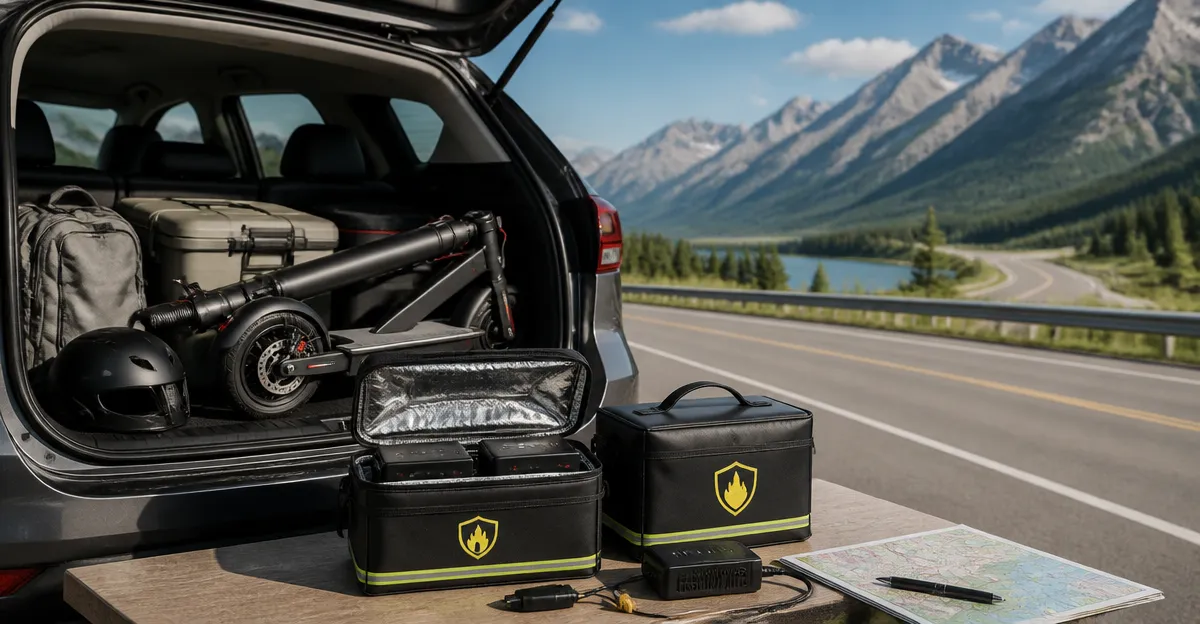
Traveling long distances on a folding e‑scooter offers freedom, but the battery demands careful handling. This guide explains the legal framework, safety considerations, and practical packing methods for interstate road trips. Readers will learn how to comply with transportation regulations, protect batteries from fire hazards, and select the most suitable fire‑proof storage solutions. By the end of the article, one will be equipped to embark on a cross‑country journey with confidence and peace of mind.
Background and Context
E‑scooter batteries are typically lithium‑ion or lithium‑polymer (LiPo) cells, which store large amounts of energy in a compact form. While these chemistries enable high performance, they also present risks such as thermal runaway if damaged or overcharged. Federal regulations, including the Department of Transportation (DOT) hazardous materials rules, classify certain lithium batteries as limited‑quantity hazardous materials when shipped by air, but road transport is generally less restrictive provided the batteries are packed safely. Understanding the difference between charging, storage, and transport states is essential for preventing accidents on the highway.
In addition to federal guidelines, many states have adopted specific statutes concerning the carriage of lithium batteries in passenger vehicles. For example, California requires that batteries be secured to prevent movement during sudden stops, while Texas recommends fire‑resistant containment for batteries larger than 100 Wh. These rules aim to mitigate the spread of fire should a battery fail while the vehicle is in motion. Therefore, a combination of legal compliance and proactive safety measures creates the optimal environment for long‑distance e‑scooter travel.
Planning Your Trip
Before setting out, assess the total energy requirement for the intended mileage. A typical folding e‑scooter consumes between 15 and 25 Wh per mile, so a 500‑mile trip may require 7,500‑12,500 Wh of capacity. This calculation determines whether a single battery will suffice or if multiple spares are necessary. Carrying spare batteries extends range but also increases the number of items that must be protected from fire.
Next, map out charging opportunities along the route. Many highway rest areas now provide Level‑2 EV chargers, which can also charge e‑scooter batteries with the appropriate adapter. Identifying these locations reduces the need to transport excessive spare capacity, thereby decreasing the overall fire‑risk exposure. Finally, create a packing checklist that includes the scooter, charger, protective bag, fire extinguisher, and documentation of battery specifications.
Legal Requirements for Interstate Transport
The Federal Motor Carrier Safety Administration (FMCSA) does not impose specific limits on the number of lithium batteries carried in a private passenger vehicle, but it does require that the batteries be secured and that any fire‑hazardous material be contained. The Occupational Safety and Health Administration (OSHA) recommends that batteries be stored in a fire‑resistant container when not in use. State regulations may add further constraints; for instance, New York mandates that batteries over 100 Wh be placed in a flame‑retardant bag while in transit.
When traveling across state lines, it is prudent to keep a copy of the battery’s safety data sheet (SDS) in the vehicle. The SDS provides emergency responders with essential information about the battery chemistry and recommended extinguishing agents. Failure to produce this documentation in the event of an incident can result in legal penalties and delayed emergency response.
Choosing a Fire‑Proof Bag
Fire‑proof bags are engineered to isolate a battery from oxygen, thereby suppressing flame propagation. The most effective designs employ multiple layers of flame‑retardant fabric, a sealed closure system, and compliance with UL 94 testing standards. The following products represent the leading options currently available on the market.
The Tenergy Fireproof LiPo Charging Bag offers a triple‑layer construction of fire‑resistant fiberglass, an oxygen‑reducing fold‑over closure, and a compact 5.5 × 3.5 × 2 in footprint. Priced at $11.99, it holds a 4.8‑star rating from 2,390 reviews, indicating strong user satisfaction. Its UL 94 certification ensures that the bag meets internationally recognised flame‑retardant performance criteria.
The standard Zeee Fireproof LiPo Battery Bag provides a larger interior (21.5 × 14.5 × 16.5 cm) capable of storing up to 25 three‑cell 2200 mAh packs. At $13.49, it carries a 4.7‑star rating from over 10,000 reviews. Its three‑layer composition—including a PVC outer layer—offers heat insulation up to 1000 °F, making it suitable for high‑drain batteries during charging.
For riders who need additional capacity, the Zeee Extra Large Fireproof LiPo Bag expands the interior to 14.17 × 7.87 × 9.84 in, allowing simultaneous storage of a battery and its charger. It maintains the same flame‑retardant fabric technology and includes a side vent for charging without opening the bag. Priced at $21.59, it also enjoys a 4.7‑star rating from the same reviewer base.
The FLASLD E‑Bike Battery Fireproof Bag is designed for larger e‑bike packs but works equally well for high‑capacity e‑scooter batteries. Its three‑proof design—fire, explosion, and waterproof—handles temperatures up to 1800 °F and includes reflective strips for visibility. At $19.99, it holds a 4.7‑star rating from 3,309 reviews and offers a generous 19.3 × 4.3 × 7 in interior.
Finally, the BeasTrek LiFePO4 Fireproof Battery Bag targets 100 Ah LiFePO4 packs, featuring liquid silicone fireproof fiber and a reinforced circular handle. It withstands temperatures up to 3000 °F, making it the most robust option for extreme scenarios. Priced at $23.99, it carries a 4.5‑star rating from 118 reviews and includes a 12‑month warranty.
Comparison and Selection Guide
| Product | Dimensions (in) | Max Temp (°F) | Price (USD) | Rating |
|---|---|---|---|---|
| Tenergy Fireproof LiPo Charging Bag | 5.5 × 3.5 × 2 (2‑Pack) | UL 94 (flame‑retardant) | 11.99 | 4.8/5 (2,390) |
| Zeee Fireproof LiPo Battery Bag | 21.5 × 14.5 × 16.5 cm | 1000 | 13.49 | 4.7/5 (10,807) |
| Zeee Extra Large Fireproof LiPo Bag | 14.17 × 7.87 × 9.84 | 1000 | 21.59 | 4.7/5 (10,807) |
| FLASLD E‑Bike Battery Fireproof Bag | 19.3 × 4.3 × 7 | 1800 | 19.99 | 4.7/5 (3,309) |
| BeasTrek LiFePO4 Fireproof Battery Bag | 14 × 9.4 × 7.8 | 3000 | 23.99 | 4.5/5 (118) |
When selecting a bag, consider the size of your e‑scooter battery, the number of spare packs you intend to carry, and the environmental conditions you may encounter. Smaller bags such as the Tenergy model are ideal for a single spare, while the Zeee Extra Large or FLASLD options accommodate both battery and charger for longer trips. For extreme temperature excursions, the BeasTrek bag provides the highest heat resistance.
Best Practices & Packing Tips
- Always charge batteries inside the fire‑proof bag, never directly on a vehicle seat or carpet.
- Secure the bag with a seat‑belt anchor or cargo tie‑down to prevent movement during sudden braking.
- Maintain a Class D lithium‑battery fire extinguisher within easy reach; verify that it is not expired.
- Label each bag with the battery’s voltage, capacity, and serial number for quick identification by emergency personnel.
- Store the bag in a ventilated compartment away from direct sunlight; extreme ambient heat can accelerate degradation.
- Inspect bags before each trip for tears, compromised seals, or worn Velcro; replace any damaged unit immediately.
In addition to physical protection, adopt a charging routine that avoids over‑charging. Use a charger with automatic shut‑off and monitor the battery temperature throughout the process. If a battery feels unusually hot, remove it from the charger and allow it to cool before placing it back in the fire‑proof bag.
Frequently Asked Questions
1. Are fire‑proof bags required by law for interstate travel?
No federal law mandates fire‑proof bags for private passengers, but many state regulations and safety agencies recommend or require flame‑retardant containment for larger batteries. Using a certified bag provides compliance with most state statutes and reduces liability.
2. Can I use a regular backpack instead of a fire‑proof bag?
A regular backpack does not provide the oxygen‑restricting barrier needed to suppress a lithium‑battery fire. In the event of thermal runaway, a standard backpack may accelerate flame spread, increasing risk to occupants and property.
3. How many batteries can I legally carry?
There is no universal limit for private vehicles, but practical considerations such as weight, space, and fire‑risk management usually dictate carrying no more than two spare packs for a typical folding e‑scooter.
4. What temperature range is safe for storing LiPo batteries?
Most manufacturers recommend storing LiPo cells between 32 °F and 77 °F (0 °C–25 °C). Fire‑proof bags can tolerate higher temperatures during a fire event, but prolonged exposure to extreme heat can degrade battery performance.
5. Do fire‑proof bags protect against water damage?
Only the FLASLD bag explicitly advertises waterproofing with a silicone coating. Other bags focus primarily on flame resistance; if water exposure is a concern, choose a bag with a waterproof rating.
6. Should I transport batteries in the passenger cabin or trunk?
Placing the bag in the passenger cabin allows quicker access for monitoring, but it also places the battery closer to occupants. Securing the bag in the trunk or a cargo area reduces direct exposure while still meeting safety guidelines, provided the bag is firmly anchored.
7. How often should I replace my fire‑proof bag?
Replace the bag after any visible damage, after a fire‑incident, or every three to five years as a preventive measure, even if no damage is apparent.
Conclusion
Transporting folding e‑scooter batteries across state lines demands a blend of regulatory awareness, proactive safety measures, and reliable protective equipment. By understanding the chemistry of lithium batteries, adhering to state and federal guidelines, and selecting an appropriate fire‑proof bag, travelers can mitigate fire risks while enjoying the convenience of long‑distance e‑scooter travel. The strategies outlined in this guide empower riders to plan, pack, and protect their batteries with confidence.
Products Featured in This Guide
Tenergy Fireproof LiPo Charging Bag
Price: $11.99 | Rating: 4.8/5 (2,390 reviews)
Featured for its compact size, triple‑layer flame‑retardant construction, and UL 94 certification, making it ideal for a single spare battery on short trips.
Zeee Fireproof LiPo Battery Bag
Price: $13.49 | Rating: 4.7/5 (10,807 reviews)
Featured for its larger interior capacity, heat‑insulation up to 1000 °F, and ability to store up to 25 small LiPo cells, suitable for multi‑battery packs.
Zeee Extra Large Fireproof LiPo Bag
Price: $21.59 | Rating: 4.7/5 (10,807 reviews)
Featured for its spacious design that accommodates both battery and charger, side vent for safe charging, and same flame‑retardant technology as the standard Zeee bag.
FLASLD E‑Bike Battery Fireproof Bag
Price: $19.99 | Rating: 4.7/5 (3,309 reviews)
Featured for its three‑proof design (fire, explosion, waterproof), high temperature resistance up to 1800 °F, and reflective stripes for visibility.
BeasTrek LiFePO4 Fireproof Battery Bag
Price: $23.99 | Rating: 4.5/5 (118 reviews)
Featured for its ultra‑high temperature tolerance (up to 3000 °F), reinforced circular handle, and American‑style branding, making it suitable for large 100 Ah packs.