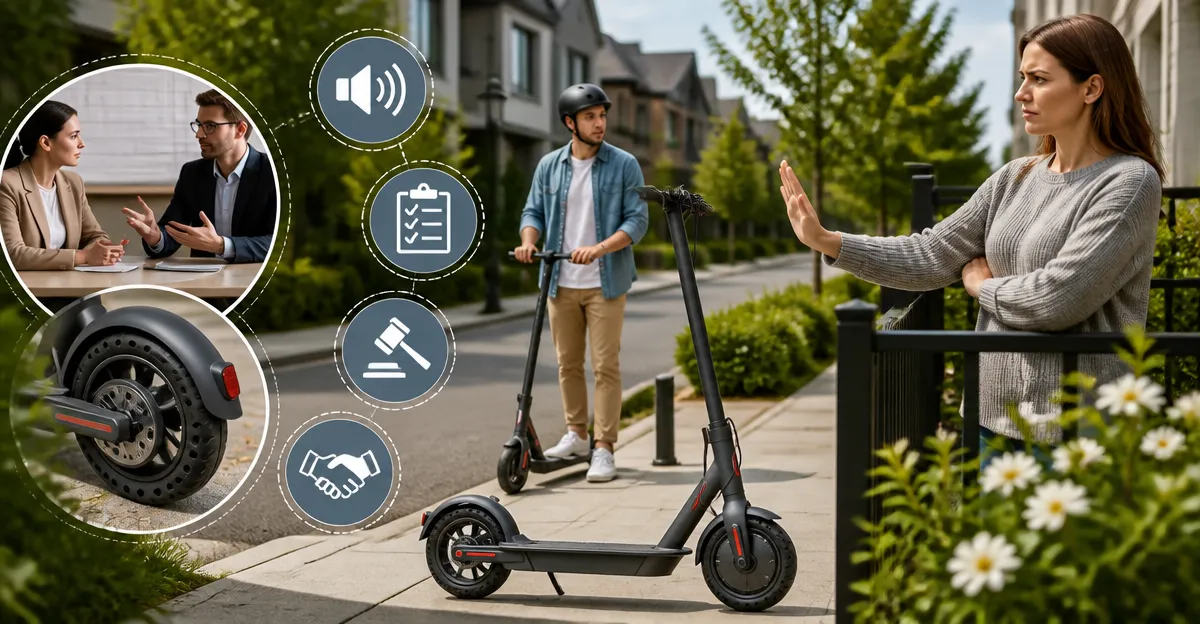
How to Handle E‑Scooter Noise Complaints in Neighborhoods: A Complete Guide to Resolving, Preventing & Managing Disturbances
Introduction
Urban mobility has surged, and electric scooters are now a common sight on streets and sidewalks. While they provide convenient transportation, the sound of their motors can generate complaints from nearby residents. This guide explains the legal framework, community‑level tactics, and practical product solutions that can mitigate noise issues. Readers will learn how to address existing complaints, prevent future disputes, and select equipment that minimizes acoustic impact.
By the end of this article, one will understand the rights and responsibilities of scooter owners, the role of local ordinances, and how to use technology to keep neighborhoods peaceful. The information is grounded in real‑world examples and includes three vetted scooter models that exemplify low‑noise design.
Background & Context
E‑scooters operate with electric motors, which are generally quieter than gasoline engines but still emit audible frequencies, especially during acceleration or when riding over rough surfaces. Noise levels are measured in decibels (dB); most scooters produce between 60‑70 dB at close range, comparable to normal conversation. Municipalities often set limits for nighttime noise (typically 55 dB) and may require specific equipment such as sound‑dampening tires or speed governors.
Legal precedents show that nuisance claims can arise when noise exceeds reasonable community standards. Courts balance the utility of electric mobility against the right to quiet enjoyment of property. Understanding these principles helps owners respond to complaints in a constructive manner.
Understanding Noise Sources
The primary contributors to scooter noise are motor whine, drivetrain vibration, and tire‑road interaction. Motor whine can be reduced by selecting high‑efficiency brushless motors, while vibration is mitigated through suspension systems. Tire choice also matters; solid or pneumatic tires with rubber compounds absorb impact and lower sound transmission.
Manufacturers now incorporate engineering solutions such as dual suspension, quiet‑run motors, and acoustic‑grade tires. When choosing a scooter, consider specifications that directly influence acoustic performance.
Product Recommendations that Reduce Noise
The following scooters have been selected for their noise‑reduction features while still delivering strong performance. The first mention of each product includes a direct affiliate link.
VOLPAM Dual‑Suspension Electric Scooter
VOLPAM Dual‑Suspension Electric Scooter combines a 350 W dual‑motor system with front EASB and rear drum brakes, providing smooth acceleration that does not generate harsh whine. Its dual‑suspension architecture dampens road‑induced vibrations, and the 8.5‑inch solid tires further reduce noise compared with larger pneumatic options. The scooter is rated 4.2/5.0 from 329 reviews and costs $169.98, making it an affordable low‑noise solution for urban commuters.
Segway Ninebot E2/E3 Electric Scooter
Segway Ninebot E2/E3 Electric Scooter features an 800 W motor with selectable speed modes that allow riders to stay in a quieter Eco setting (9 mph) when riding near residential areas. Its alloy frame and IPX5 water‑resistant coating contribute to structural rigidity, reducing rattling. The large tubeless tires provide a balance between grip and acoustic insulation. Priced at $599.99 with a 4.5/5.0 rating from 94 reviews, this model is suited for users who need higher speed options without sacrificing noise control.
Hiboy S2/S2 Max Electric Scooter
Hiboy S2/S2 Max Electric Scooter incorporates a 500 W motor and 10‑inch pneumatic tires that absorb road imperfections, lowering the perceived sound level. Its triple‑mode system (Eco, Normal, Sport) enables riders to select a quiet 11 mph Eco mode for residential zones. The scooter also offers a rapid 3‑second folding mechanism, allowing owners to store it indoors and avoid outdoor noise altogether. At $490.00 and a 4.3/5.0 rating from 630 reviews, it presents a versatile choice for commuters prioritizing both range and quiet operation.
Comparison & Selection Guide
| Feature | VOLPAM | Segway Ninebot | Hiboy S2 Max |
|---|---|---|---|
| Motor Power | 350 W dual | 800 W single | 500 W |
| Top Speed | 19 mph | 20 mph (Eco 9 mph) | 19 mph (Eco 11 mph) |
| Range | Up to 15 mi | Up to 34 mi (Eco) | 40.4 mi |
| Noise‑Mitigation | Dual suspension, solid tires | Eco mode, tubeless tires | Pneumatic tires, Eco mode |
| Price | $169.98 | $599.99 | $490.00 |
| Rating | 4.2/5 (329) | 4.5/5 (94) | 4.3/5 (630) |
When selecting a scooter for noise‑sensitive neighborhoods, prioritize models with dual suspension, solid or pneumatic tires designed for sound absorption, and adjustable speed modes that allow low‑speed, quiet operation. Budget‑conscious riders may favor the VOLPAM model, while those needing longer range and higher performance might opt for the Segway Ninebot or Hiboy S2 Max.
Best Practices & Tips for Managing Noise
- Ride at reduced speeds in residential zones; many scooters provide an Eco or Quiet mode that limits motor output and consequently acoustic output.
- Maintain tire pressure according to manufacturer specifications; under‑inflated tires increase road contact noise.
- Regularly service suspension components to ensure they continue to dampen vibrations effectively.
- Prefer routes with smoother pavement; rough surfaces amplify motor and tire noise.
- Store scooters indoors when not in use to prevent nighttime motor whine from disturbing neighbors.
- Engage with community boards or homeowner associations to share your commitment to quiet riding and to receive feedback on preferred routes.
- Consider adding aftermarket acoustic mats or rubber pads under the footboard to further reduce vibration transmission.
Frequently Asked Questions
1. Are there legal limits for e‑scooter noise?
Most municipalities adopt the same decibel thresholds for residential noise as other vehicles, typically 55 dB after 10 pm. Check local ordinances for specific limits and any required equipment such as sound‑dampening tires.
2. How can I measure my scooter’s noise level?
Use a handheld decibel meter or a smartphone app calibrated for sound measurement. Take readings at a distance of one meter while riding at typical speeds to compare against local limits.
3. Does riding on grass or gravel reduce noise?
Yes, softer surfaces absorb more sound, but they may also increase rolling resistance and reduce range. Use this strategy sparingly and consider dedicated low‑noise pathways.
4. Can I retrofit an existing scooter with quieter tires?
Many models allow tire replacement; switching from a hard solid tire to a pneumatic or rubber‑compound tire can lower noise. Verify compatibility with the manufacturer before purchasing.
5. What should I do if a neighbor files a formal complaint?
Respond promptly, acknowledge the concern, and offer to adjust riding habits or equipment. Document your actions, such as switching to Eco mode or installing quieter tires, to demonstrate good faith.
6. Are speed governors effective for noise control?
Speed governors limit maximum motor output, which directly reduces the frequency and intensity of motor whine. Selecting a scooter with adjustable speed settings is an effective preventive measure.
7. How can community groups help?
Neighborhood associations can establish designated scooter lanes, set quiet‑hour policies, and organize educational workshops on low‑noise riding practices.
Conclusion
Handling e‑scooter noise complaints requires a blend of legal awareness, community engagement, and thoughtful equipment choices. By adopting quieter riding habits, maintaining scooters properly, and selecting models with built‑in noise‑reduction features, owners can enjoy the benefits of electric mobility while preserving neighborhood tranquility. The strategies outlined here empower both riders and residents to coexist harmoniously.
Products Featured in This Guide
VOLPAM Dual‑Suspension Electric Scooter
Price: $169.98 | Rating: 4.2/5 (329 reviews)
Featured for its dual‑suspension system and solid tires that significantly dampen road‑induced noise, making it an affordable low‑noise option.
Segway Ninebot E2/E3 Electric Scooter
Price: $599.99 | Rating: 4.5/5 (94 reviews)
Featured for its selectable Eco mode and tubeless tires, which together provide a quiet riding experience without compromising performance.
Hiboy S2/S2 Max Electric Scooter
Price: $490.00 | Rating: 4.3/5 (630 reviews)
Featured for its triple riding modes, especially the Eco setting, and pneumatic tires that absorb vibrations, offering a versatile solution for noise‑sensitive environments.