
What to Do After an E‑Scooter Accident: A Step‑by‑Step Guide to Medical Care, Insurance Claims, and Legal Rights
Introduction
The rapid growth of micro‑mobility has increased the frequency of e‑scooter accidents in urban environments. This guide explains the actions that a rider should take immediately after a crash, how to manage medical care, navigate insurance processes, and assert legal rights. Readers will learn practical steps, understand the underlying legal framework, and discover a recommended first‑aid product that can improve outcomes in emergency situations.
Each section is organized to provide clear, actionable information while maintaining a professional tone suitable for an intermediate audience. The guide also includes a comparison of essential safety equipment, best‑practice tips, and a concise FAQ.
Background and Context
E‑scooters are classified in many jurisdictions as either bicycles or motor vehicles, a distinction that influences liability and insurance coverage. Riders often assume that municipal regulations provide sufficient protection, yet the reality is that personal responsibility and preparedness play a larger role. Understanding the legal definitions, typical injury patterns, and common insurance policies is essential before an accident occurs.
Injury patterns frequently involve abrasions, fractures, and head trauma because e‑scooters lack protective enclosures. Prompt first‑aid treatment can reduce the severity of these injuries, especially when a comprehensive kit is available. Moreover, accurate documentation of the incident creates a reliable record for insurance adjusters and potential legal proceedings.
Immediate Medical Response
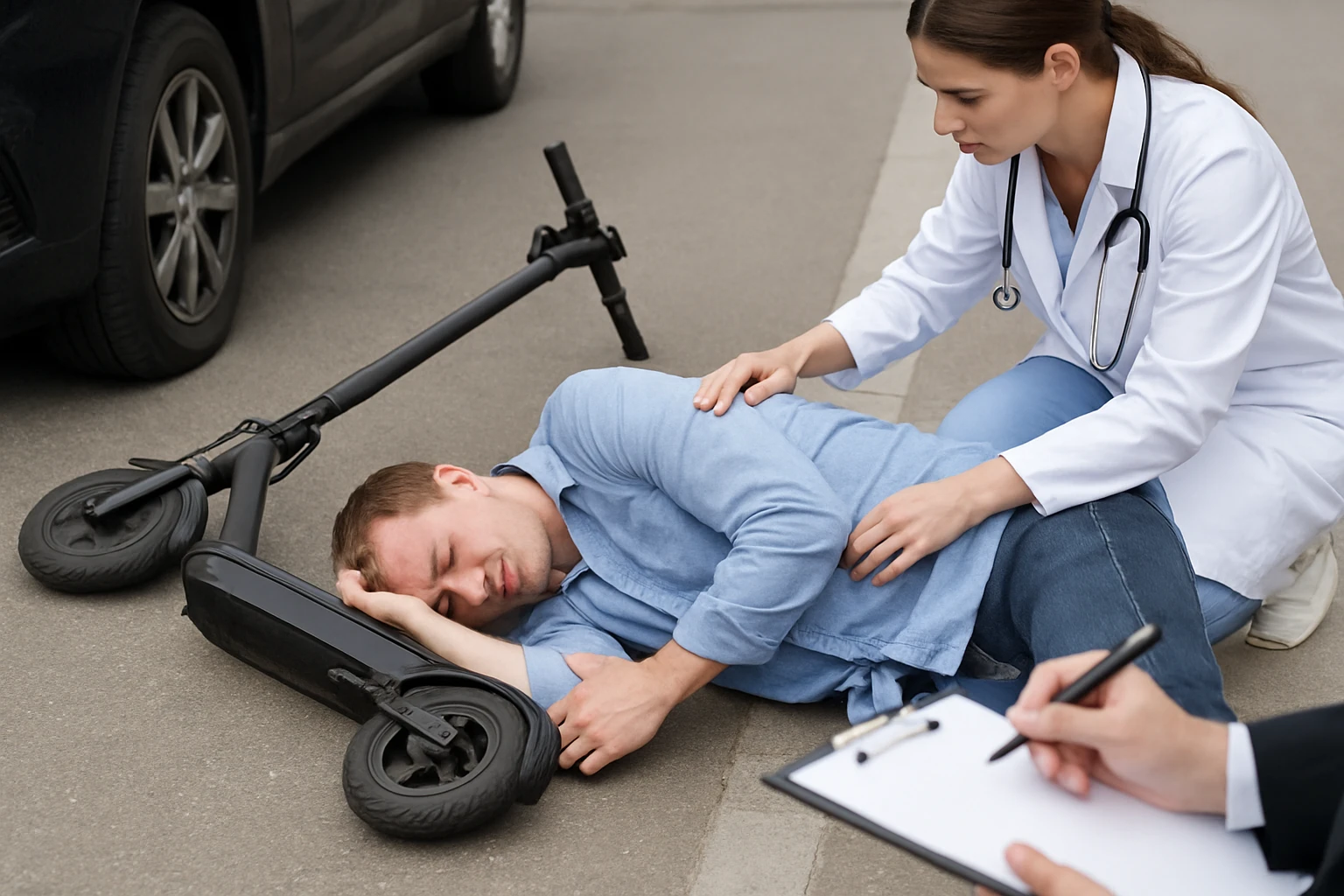
When an e‑scooter collision happens, the first priority is to assess personal safety and seek medical attention if needed. The following steps should be followed in order:
- Move to a safe location away from traffic, if possible, while remaining aware of surrounding hazards.
- Conduct a rapid self‑assessment for signs of serious injury, such as uncontrolled bleeding, loss of consciousness, or difficulty breathing.
- Call emergency services (911 or local equivalent) if any life‑threatening condition is suspected.
- Apply basic first‑aid measures while waiting for professional help. A well‑stocked kit can be invaluable at this stage.
For riders who wish to be prepared, the Besst Survivor First Aid Kit offers 324 pieces of professional medical supplies, including Israeli bandages, splints, a trauma pad, and a CPR kit. The kit’s labeled compartments enable rapid identification of items, reducing response time during an emergency.
Documenting the Incident
Accurate documentation is a cornerstone of successful insurance claims and legal actions. The rider should gather the following evidence as soon as it is safe to do so:
- Photographs of the accident scene, vehicle damage, and any visible injuries.
- Contact information of witnesses, including names, phone numbers, and statements.
- A copy of the e‑scooter’s rental agreement or ownership documentation.
- The police report number, if law enforcement was involved.
- Medical records, including emergency department notes and follow‑up treatment plans.
All records should be stored digitally in a secure folder, with timestamps to establish a clear chronology. This organized approach simplifies communication with insurers and attorneys.
Dealing with Insurance
Insurance coverage for e‑scooter accidents varies by state and by the type of policy held by the rider. The most common sources of compensation are personal health insurance, renters or homeowners insurance, and, in some cases, a dedicated e‑scooter liability policy offered by the rental company.
When filing a claim, the rider should follow these steps:
- Notify the insurance provider within the timeframe stipulated in the policy (often 30 days).
- Submit the documentation collected in the previous section, including medical bills and photographs.
- Provide a detailed narrative of the incident, emphasizing factual information over speculation.
- Maintain a log of all communications with the insurer, noting dates, representatives spoken to, and outcomes.
If the claim is denied or the settlement is insufficient, the rider may consider consulting a personal injury attorney. Many attorneys work on a contingency basis, meaning they receive a percentage of any recovered compensation.
Understanding Legal Rights
Legal rights after an e‑scooter accident depend on fault, local traffic laws, and the contractual terms of any rental agreement. In most jurisdictions, the injured party has the right to pursue compensation for medical expenses, lost wages, pain and suffering, and punitive damages if gross negligence is proven.
Key legal concepts include:
- Comparative negligence: A system where fault is allocated between parties, reducing the compensation proportionally.
- Premises liability: If the accident occurred on private property, the property owner may be held responsible for unsafe conditions.
- Statute of limitations: The period within which a lawsuit must be filed, typically ranging from one to three years.
Consulting an attorney early can preserve evidence, advise on the appropriate jurisdiction, and ensure that deadlines are met.
Product Recommendation: First‑Aid Kit
A comprehensive first‑aid kit is an essential component of personal safety preparedness for e‑scooter riders. The Besst Survivor First Aid Kit stands out for several reasons:
- 324 pieces of professional medical supplies, including trauma pads, splints, and a CPR kit.
- Color‑coded, labeled compartments that allow rapid identification of items.
- Removable MOLLE system for attachment to backpacks, car seats, or RVs, providing hands‑free transport.
- Durable 600D rip‑resistant polyester construction with reflective piping for night‑time visibility.
- Highly rated by consumers, with a 4.8/5.0 rating based on 713 reviews.
- Price of $84.43, representing a reasonable investment for comprehensive emergency preparedness.
Riders who keep this kit in a backpack, vehicle glove compartment, or home first‑aid station will be better equipped to address injuries immediately after a crash.
Comparison/Selection Guide
When selecting a first‑aid kit for e‑scooter use, consider the following criteria:
| Criterion | Why It Matters | Besst Survivor First Aid Kit |
|---|---|---|
| Item Count | Higher count provides more options for varied injuries. | 324 pieces |
| Portability | Compact size and straps enable transport on a scooter or in a backpack. | Removable MOLLE system, shoulder strap, handles |
| Durability | Resistance to tears and water protects supplies in adverse conditions. | 600D rip‑resistant polyester, waterproof |
| Organization | Labeling reduces time spent searching for the right item. | Color‑coded compartments with usage guide |
| Cost | Balance between price and comprehensiveness. | $84.43 |
| User Rating | Reflects overall satisfaction and reliability. | 4.8/5.0 (713 reviews) |
If a rider requires a lighter kit for pocket‑size carry, a mini‑first‑aid set may suffice, but it will lack the trauma supplies needed for severe injuries. For most e‑scooter users, the Besst Survivor kit offers the optimal blend of quantity, organization, and durability.
Best Practices & Tips
- Conduct a pre‑ride safety check of the scooter, brakes, and tires to reduce accident risk.
- Wear a certified helmet and reflective clothing, especially during low‑light conditions.
- Keep the first‑aid kit within arm’s reach, preferably attached to a MOLLE‑compatible backpack.
- After an accident, refrain from moving severely injured persons unless there is an immediate danger.
- Follow up with a healthcare professional even for seemingly minor injuries, as symptoms can develop later.
- Maintain a personal injury log documenting pain levels, medication usage, and functional limitations.
- Review your insurance policies annually to ensure adequate coverage for e‑scooter incidents.
Frequently Asked Questions
- 1. Do I need a separate insurance policy for an e‑scooter?
- Many riders rely on personal health insurance and renters/homeowners policies, but some states require a specific liability policy. Review local regulations and your existing coverage.
- 2. How long do I have to file a claim after an accident?
- The statute of limitations varies by jurisdiction, typically ranging from one to three years. Filing promptly preserves evidence and strengthens the claim.
- 3. Can I use a regular first‑aid kit for e‑scooter injuries?
- A regular kit may address minor cuts, but severe trauma often requires splints, trauma pads, and a CPR kit—items included in the Besst Survivor First Aid Kit.
- 4. What should I do if the other party refuses to exchange information?
- Contact law enforcement to file an official report. Police documentation can serve as legal evidence if the other party later disputes responsibility.
- 5. Is it advisable to settle with the insurance company without legal counsel?
- Small settlements may be acceptable, but if significant medical costs or long‑term disability are involved, consulting an attorney can ensure full compensation.
- 6. How can I prevent future e‑scooter accidents?
- Follow traffic laws, avoid distractions, ride defensively, and perform regular scooter maintenance. Wearing protective gear further reduces injury severity.
Conclusion
An e‑scooter accident demands swift medical attention, meticulous documentation, and informed interaction with insurance and legal systems. By preparing a comprehensive first‑aid kit such as the Besst Survivor First Aid Kit, riders can mitigate injury severity while they arrange professional care. Understanding one’s legal rights and insurance options empowers the injured party to pursue appropriate compensation and to avoid common pitfalls.
Implementing the steps outlined in this guide will enhance personal safety, streamline claim processes, and protect legal interests. Preparedness, documentation, and professional advice remain the pillars of an effective post‑accident response.
Products Featured in This Guide

Besst Survivor First Aid Kit
Price: $84.43
Rating: 4.8/5.0 (713 reviews)
Why it is featured: The kit provides 324 essential medical items, durable construction, and a modular MOLLE system, making it ideal for e‑scooter riders who need immediate first‑aid capability after an accident.