Introduction
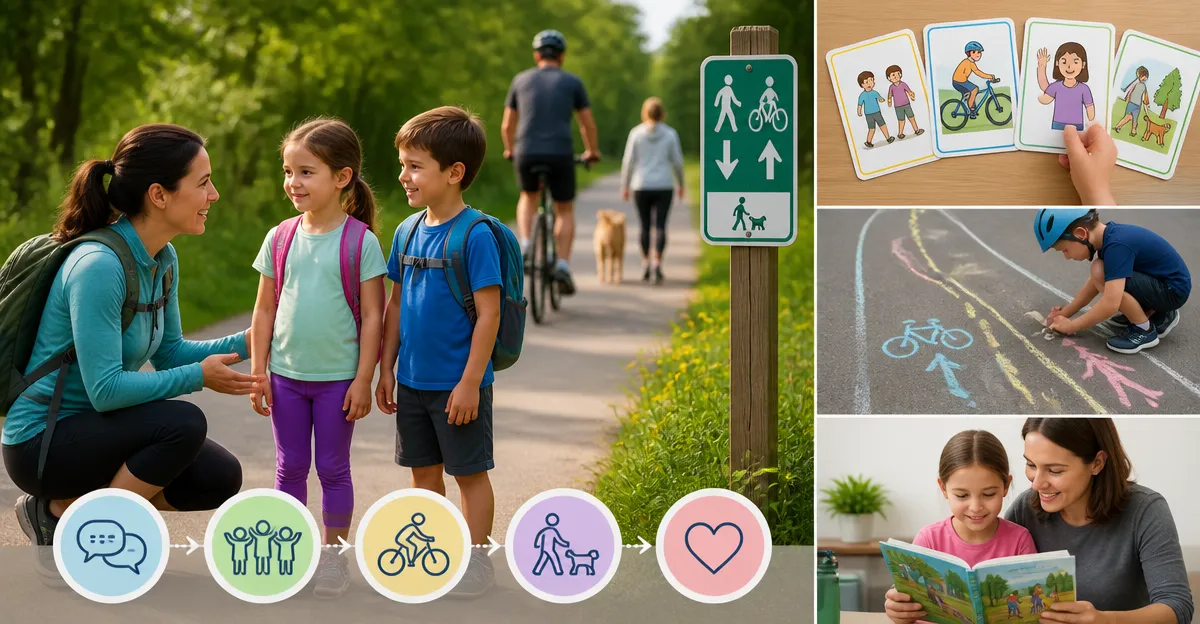
In this guide the reader will learn how to teach children shared‑path courtesy on hiking trails through simple scripts, interactive games, and hands‑on activities. Understanding trail manners is valuable because it protects the natural environment, reduces conflicts among hikers, and builds lifelong respect for outdoor spaces. Parents, teachers, and youth‑group leaders can apply the methods with children as young as five years old. The approach combines clear instruction, visual reinforcement, and playful practice to create lasting habits.
What You’ll Need
- Hiking Trail Etiquette Tin Sign – $6.88
- Joys of Hiking Etiquette – $2.99
- Share the Trail Metal Sign – $9.99
- On Trails – $13.99, rating 4.3/5 (1,366 reviews)
- Trail Etiquette Sign – $12.87
- Basic art supplies (paper, crayons, markers)
- Portable speaker for playing nature sounds
- Clipboards and printable script sheets
Step 1: Explain the Concept of Shared‑Path Courtesy
The facilitator should begin by describing what shared‑path courtesy means: yielding to others, announcing one’s presence, and keeping the trail clean. Use simple language and relate the idea to everyday situations such as waiting in line at a grocery store. Emphasise that the goal is safety and enjoyment for everyone on the trail. This foundational explanation prepares children for the visual and practical tools that follow.
Step 2: Use Visual Aids and Signs
Visual reminders help children internalise rules. Hang the Hiking Trail Etiquette Tin Sign at the trailhead or in the learning area. The tin sign measures 8 × 6 inches, is constructed of durable aluminum, and costs $6.88, making it an affordable, weather‑resistant cue. Its festive design captures attention, encouraging kids to glance at the sign before stepping onto the path.
Complement the tin sign with the larger Share the Trail Metal Sign. This 8 × 12 inch aluminum plaque features retro‑style graphics and clear etiquette rules. Priced at $9.99, it offers premium lightweight construction, pre‑drilled holes for easy mounting, and UV‑protected printing that will not fade. Position it at decision points such as trail intersections where children must choose to yield or pass.
For indoor practice, display the Trail Etiquette Sign. This 8 × 12 inch rust‑resistant metal sign includes high‑definition graphics and a protective UV coating. At $12.87 it serves as a versatile reminder that can be placed on classroom walls, garage doors, or picnic tables, reinforcing the same messages in multiple environments.
Step 3: Read Engaging Stories About Trail Manners
Storytelling creates emotional connections to abstract rules. Read Joys of Hiking Etiquette, a concise Kindle guide priced at $2.99 that outlines essential trail etiquette in clear, actionable steps. The book’s positive customer sentiment highlights its usefulness for beginners, and its brief format fits short attention spans.
For older children or adults who enjoy deeper narratives, introduce On Trails. This bestseller costs $13.99 and holds a rating of 4.3/5 from 1,366 reviewers. Its exploration of trails as metaphors for life provides a rich context that can spark discussions about why respect on the path matters beyond the forest floor.
After each reading session, ask the children to summarise one rule they will apply on their next hike. This reinforces comprehension and creates a personal commitment to courteous behaviour.
Step 4: Practice Scripts Through Role‑Play
Develop simple scripts that children can recite when encountering other hikers. Example script: “Excuse me, I am coming from behind. May I pass?” Provide printed cue cards on clipboards so each child can see the wording. Role‑play scenarios such as approaching a group, encountering a dog, or stepping onto a narrow ridge. Encourage children to switch roles to experience both the giver and receiver of courtesy.
Use the visual signs from Step 2 as backdrops during role‑play. Position the Tin Sign on a mock trail entrance and the Share the Trail Sign at a “crossing”. This spatial context helps children associate the spoken script with the physical environment.
Step 5: Reinforce Learning with Games
Design a “Trail Courtesy Relay” where children move along a marked path while practising the scripts and obeying sign cues. Divide participants into teams; each child must pause at a sign, announce themselves, and then continue. Award points for correct phrasing and respectful gestures. The game turns abstract rules into a fun, competitive activity that solidifies habits.
Another effective game is “Leave No Trace Treasure Hunt”. Hide small, recyclable items along a short trail segment. Provide each child with a bag and a checklist that references the Trail Etiquette Sign messages about keeping the trail clean. After the hunt, discuss how removing litter protects wildlife and enhances the experience for future hikers.
Finally, incorporate nature‑sound listening stations using a portable speaker. Play bird calls or rustling leaves, then ask children to identify the source without disturbing the environment. This activity teaches quiet awareness, an often‑overlooked aspect of trail courtesy.
Tips & Pro Tips
- Model the behaviour yourself; children imitate adult actions more than spoken instructions.
- Keep script cards colour‑coded by scenario to aid quick reference.
- Use praise that references the specific rule, for example, “Excellent job announcing yourself before passing the group.”
- Rotate signs between indoor and outdoor settings to maintain novelty.
- Schedule a short debrief after each activity to reflect on successes and areas for improvement.
Conclusion
This guide has outlined a comprehensive approach to teaching kids shared‑path courtesy through explanation, visual reinforcement, storytelling, role‑play, and games. By integrating affordable tools such as the Hiking Trail Etiquette Tin Sign and the Trail Etiquette Sign, the learning experience becomes tangible and memorable. Consistent practice will enable children to internalise respectful habits that benefit the entire hiking community. Encourage families to continue using the scripts and signs on real outings, and watch courtesy become a natural part of every adventure.
Products Mentioned in This Guide
Frequently Asked Questions
What age group can benefit from the shared‑path courtesy guide?
The methods work with children as young as five years old, as well as older kids.
What materials are recommended for teaching trail etiquette?
A hiking trail etiquette tin sign, the “Joys of Hiking Etiquette” booklet, a share‑the‑trail metal sign, and the “On Trails” guide are suggested.
How do scripts help children learn trail manners?
Scripts provide clear, repeatable language that children can use to politely greet hikers and yield the trail.
What type of games can reinforce shared‑path courtesy?
Interactive role‑play games, such as “Trail Tag” and “Yield Relay,” let kids practice yielding and communication in a fun setting.
Why is teaching shared‑path courtesy important for the environment?
Proper trail manners protect natural habitats, reduce hiker conflicts, and foster lifelong respect for outdoor spaces.