
Introduction
The electric‑mobility market offers a wide range of replacement motors for scooters, bikes, and DIY projects. Two popular options on Amazon are the RiToEasysports 6.5‑Inch 200W Scooter Hub Motor and the Vevitts 24V 350W E‑Scooter Motor. Understanding their differences matters because the right motor can improve ride quality, extend battery life, and reduce maintenance costs.
This article evaluates both products using only the data supplied by the manufacturers and Amazon listings. It examines price, specifications, customer feedback, performance, and suitability for various applications. The goal is to help hobbyists, repair technicians, and small‑scale manufacturers decide which motor aligns with their needs.
Individual Product Overviews
RiToEasysports 6.5‑Inch 200W Scooter Hub Motor
The RiToEasysports hub motor is marketed as a rain‑resistant, high‑torque replacement for self‑balancing scooters. It operates at 36 V, delivers 200 W of power, draws 6 A, and spins at 500 rpm with an 8 Nm torque output. The motor housing combines rubber, aluminum, and metal to resist wear and tear, promising durability in adverse weather.
Key strengths include its compact 6.5‑inch wheel size, which fits many standard scooter frames, and its low power consumption that can extend battery runtime. The product description repeats each feature twice, emphasizing rain resistance, versatility for DIY projects, high performance, robust construction, and the listed specifications.
There is no publicly listed price, rating, or number of reviews for this motor, so the assessment relies solely on the manufacturer’s specifications.
Vevitts 24V 350W E‑Scooter Motor
The Vevitts motor is a brushed DC unit built from an aluminum body with full copper windings. It runs on 24 V, produces 350 W, draws 20 A, and reaches a rated speed of 3000 rpm. The motor delivers 1.25 Nm of torque and is rated for a load capacity of 85 kg. Its dimensions are 5.11 × 3.94 × 4.72 inches, and it weighs approximately 4 lb.
Key features highlighted by the seller include premium materials, high‑speed performance, reversible rotation, and a wide range of applications—from scooters and e‑bikes to go‑karts and mini‑ATVs. The product is priced at $36.99 and holds a 4.4‑star rating based on 313 customer reviews.
Customer feedback frequently mentions the motor’s solid construction and ease of installation, while a minority note that the motor can become warm during extended use, which the seller describes as normal.
Head‑to‑Head Comparison
Price and Value
The Vevitts motor has a clear price point of $36.99, offering a high power‑to‑price ratio for a 350 W brushed motor. In contrast, the RiToEasysports motor does not list a price, making direct value comparison impossible. Potential buyers must consider the unknown cost against the known price of the Vevitts unit.
Features and Specifications
- Voltage: RiToEasysports – 36 V; Vevitts – 24 V.
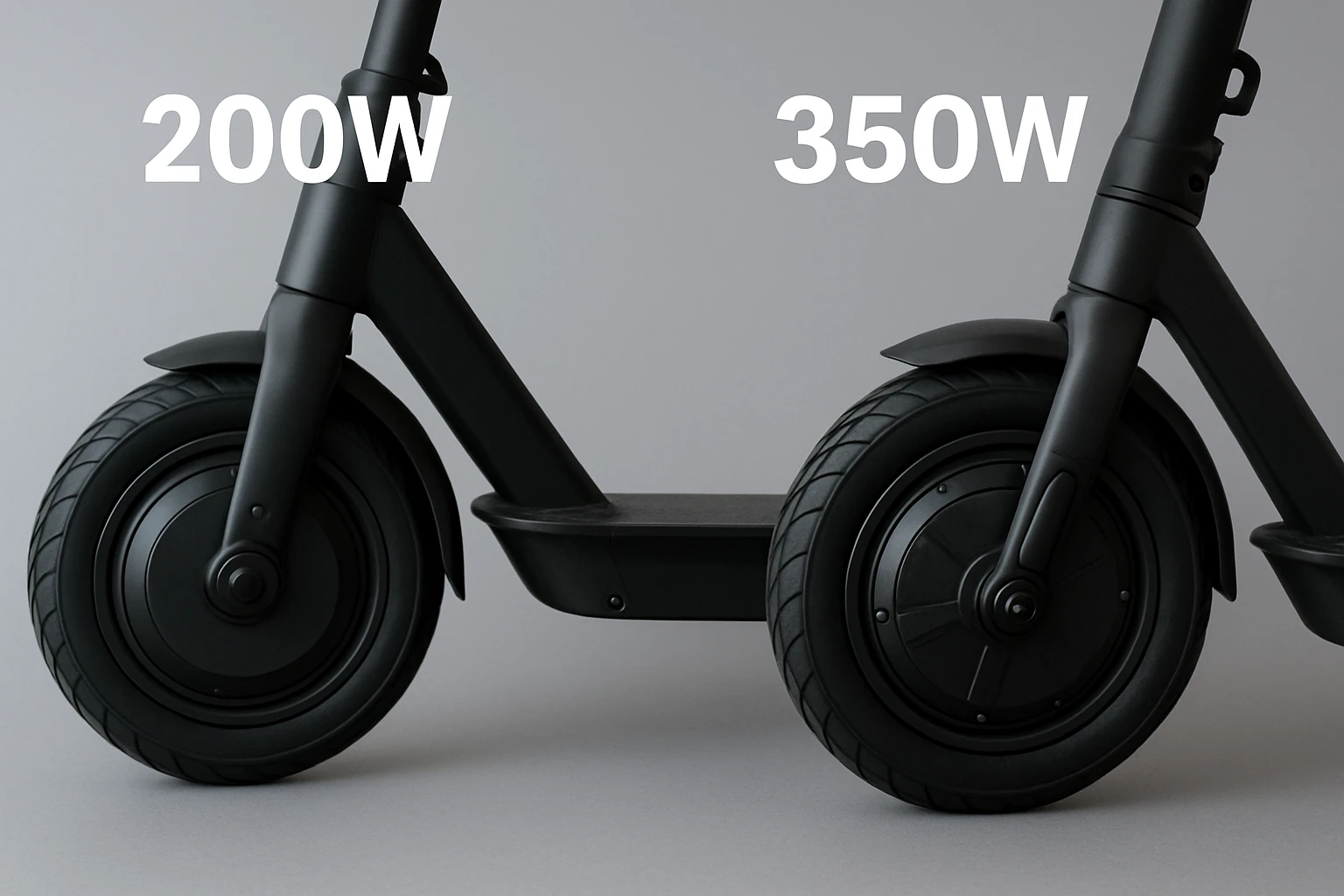
- Power Output: RiToEasysports – 200 W; Vevitts – 350 W.
- Torque: RiToEasysports – 8 Nm; Vevitts – 1.25 Nm.
- Speed (RPM): RiToEasysports – 500 rpm; Vevitts – 3000 rpm.
- Current Draw: RiToEasysports – 6 A; Vevitts – 20 A.
- Construction: Both use aluminum; RiToEasysports adds rubber and metal wear‑resistant components, while Vevitts highlights full copper coils and natural air cooling.
- Mounting: RiToEasysports is a hub motor integrated into a 6.5‑inch wheel; Vevitts is a chain‑drive motor requiring a sprocket and chain.
These differences affect installation complexity, power delivery, and compatibility with existing scooter frames.
Customer Ratings and Feedback
The Vevitts motor enjoys a 4.4‑star rating from 313 reviews, indicating general satisfaction. Review excerpts praise its sturdy build and straightforward wiring. The RiToEasysports motor lacks rating data, so buyer confidence must be inferred from the product description and feature list.
Performance and Reliability
Vevitts delivers higher power and speed, making it suitable for performance‑oriented builds. However, its lower torque (1.25 Nm) may limit hill‑climbing ability compared to the 8 Nm torque of the RiToEasysports hub motor, which is designed for high torque at low speed. The hub motor’s rain‑resistant claim suggests better reliability in wet environments, while Vevitts notes normal heating during operation.
Best Use Cases
- RiToEasysports 200W Hub Motor: Ideal for self‑balancing scooters, low‑speed city commuters, and projects requiring a compact, weather‑proof wheel unit.
- Vevitts 350W Brushed Motor: Suited for high‑speed DIY scooters, e‑bikes, go‑karts, and applications where a chain‑drive system is acceptable and higher wattage is desired.
Comparison Table
| Specification | RiToEasysports 200W Hub Motor | Vevitts 350W Motor |
|---|---|---|
| Price | Not listed | $36.99 |
| Voltage | 36 V | 24 V |
| Power | 200 W | 350 W |
| Torque | 8 Nm | 1.25 Nm |
| Speed (RPM) | 500 rpm | 3000 rpm |
| Current | 6 A | 20 A |
| Mounting Type | Hub (integrated wheel) | Chain drive (sprocket) |
| Material | Rubber, aluminum, metal | Aluminum body, copper coil |
| Rating | Not available | 4.4/5 (313 reviews) |
Pros & Cons
RiToEasysports 200W Hub Motor
- Pros:
- Rain‑resistant construction suitable for wet climates.
- High torque (8 Nm) at low speed, beneficial for hill climbing.
- Compact hub design eliminates need for external chain or belt.
- Versatile for DIY self‑balancing scooter projects.
- Cons:
- No publicly listed price makes budgeting difficult.
- Lack of customer ratings limits confidence in real‑world performance.
- Lower power (200 W) may not satisfy high‑speed enthusiasts.
- Limited speed (500 rpm) restricts top‑end velocity.
Vevitts 350W Motor
- Pros:
- Clear price of $36.99 provides transparent budgeting.
- Higher power output (350 W) supports faster rides.
- Positive 4.4‑star rating from over 300 reviewers.
- Reversible rotation adds flexibility for drivetrain configurations.
- Aluminum body and copper windings enhance durability.
- Cons:
- Lower torque (1.25 Nm) may limit performance on steep inclines.
- Chain‑drive system requires additional sprocket and chain components.
- Higher current draw (20 A) demands a robust battery and controller.
- Motor can become warm during prolonged use, which may concern some users.
Recommendations
For users seeking a compact, weather‑proof solution for a self‑balancing scooter or a low‑speed commuter, the RiToEasysports 200W Hub Motor is the logical choice, provided the price aligns with the buyer’s budget.
For hobbyists building high‑speed DIY scooters, e‑bikes, or small motorized vehicles that can accommodate a chain drive, the Vevitts 350W Motor offers superior power, proven customer satisfaction, and clear cost transparency.
FAQ
- Can the RiToEasysports motor be used on a standard scooter without a hub wheel? The motor is designed as an integrated hub, so it replaces the entire wheel rather than attaching to a conventional frame.
- Is the Vevitts motor compatible with 36 V battery systems? The motor is rated for 24 V; using a higher voltage may damage the windings and void any warranty.
- Which motor provides better hill‑climbing ability? The RiToEasysports motor, with its 8 Nm torque, is better suited for steep inclines despite lower overall power.
- Do either of these motors require additional cooling? Both motors rely on natural air cooling. The Vevitts motor may feel warm during extended operation, which is normal.
- Can the Vevitts motor run in reverse? Yes, reversing the power wires changes the rotation direction, enabling flexible drivetrain setups.
- What is the expected lifespan of these motors? Manufacturer claims for the RiToEasysports motor emphasize wear‑resistant materials; the Vevitts motor cites high‑quality aluminum and copper, both suggesting long service life under proper use.
- Are there any warranty details available? The provided data does not include warranty information for either product; buyers should consult the seller pages for specifics.
Conclusion
Both motors address distinct market segments. The RiToEasysports 200W hub motor excels in torque, weather resistance, and integration simplicity, making it ideal for low‑speed, weather‑exposed scooters. The Vevitts 350W brushed motor delivers higher power, verified customer approval, and a transparent price, catering to performance‑oriented builds that can accommodate a chain drive.
Considering the available data, the final recommendation is:
- Choose the RiToEasysports 200W Hub Motor for compact, rain‑proof, high‑torque applications where wheel integration is desired.
- Choose the Vevitts 350W Motor for higher speed, higher power projects with a willingness to install a chain drive and benefit from strong user feedback.
Products Mentioned in This Review
Frequently Asked Questions
What are the main power differences between the RiToEasysports 200W and Vevitts 350W scooter hub motors?
The RiToEasysports motor delivers 200 W at 36 V, while the Vevitts motor provides 350 W at 24 V, offering higher torque and speed potential.
Can the RiToEasysports 200W motor be used as a drop‑in replacement for most 6.5‑inch scooter wheels?
Yes, its 6.5‑inch hub size matches standard scooter wheels, making it a direct swap for compatible models.
How does rain‑resistance compare between the two motors?
Both are marketed as rain‑resistant, but the RiToEasysports motor specifically highlights sealed bearings for better moisture protection.
Which motor is more suitable for DIY projects that require higher speed?
The Vevitts 350W motor, with its greater wattage, is better suited for projects needing higher top speeds.
Will upgrading to the Vevitts 350W motor affect battery life on a 24 V system?
Higher power output can drain a 24 V battery faster, so users may notice reduced runtime compared to the 200 W option.