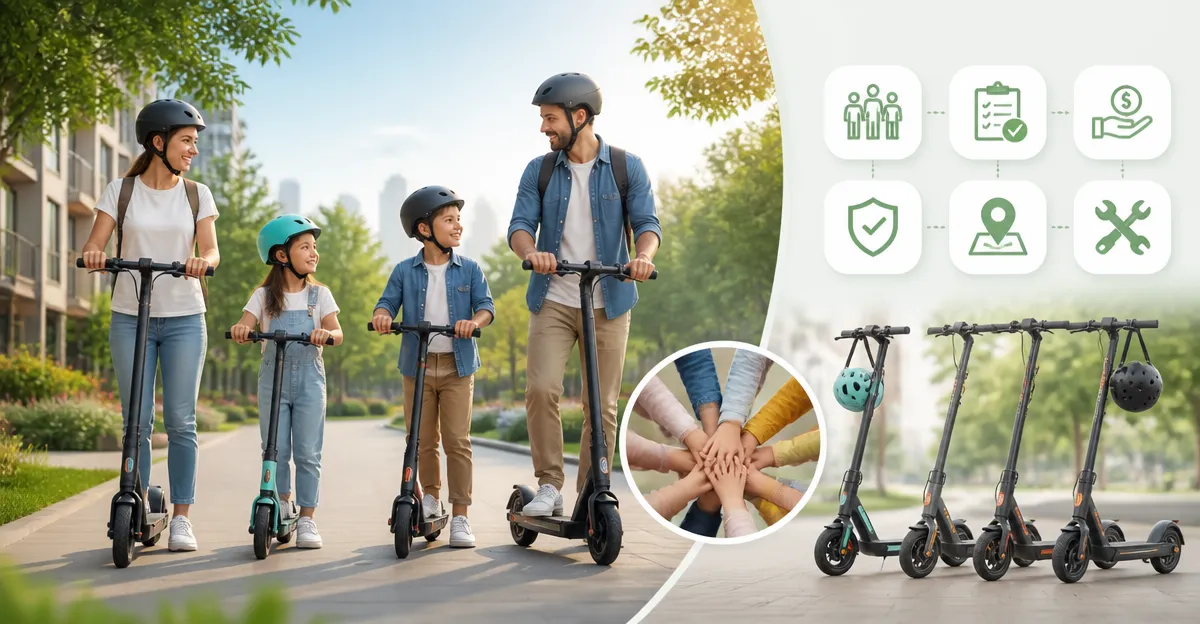
How to Start an E‑Scooter Co‑op for Families: The Complete Step‑by‑Step Guide
Introduction
Families are increasingly seeking sustainable, fun, and cost‑effective transportation for short trips, and an e‑scooter co‑op offers exactly that. This guide explains the concept, outlines each phase of creation, and highlights the equipment that best supports a shared‑use model. Readers will learn how to assess demand, select suitable scooters, establish policies, and maintain safety standards. By the end, one will possess a clear roadmap to launch a thriving family‑focused e‑scooter cooperative.
Background and Context
Electric scooters have moved from novelty gadgets to mainstream micromobility solutions, especially in suburban neighborhoods where car trips are short. Their low operating cost, zero emissions, and ease of use make them ideal for shared ownership among relatives. However, successful co‑ops require more than purchasing a few units; they need structured governance, reliable charging infrastructure, and clear usage rules. Understanding these fundamentals prevents disputes and maximizes the benefits of shared mobility.
Planning Your Co‑op: Key Steps
The first phase involves gathering interested family members, defining the co‑op’s purpose, and estimating the number of scooters required. Conduct a simple survey to gauge weekly mileage, preferred speed, and terrain types. Use the results to decide whether a single‑speed model or a range of performance levels is needed. Remember that a diversified fleet can accommodate both teenagers seeking speed and older adults prioritizing stability.
Next, draft a written agreement that covers reservation procedures, charging responsibilities, and liability coverage. Assign a rotating “scooter steward” role to ensure that batteries are charged nightly and that routine inspections occur weekly. This governance structure distributes workload and fosters collective ownership.
Finally, allocate a secure storage location—such as a garage shelf or a dedicated locker—where scooters can be locked when not in use. Install a basic charging station with multiple outlets, and label each charger to match a specific scooter. Proper storage protects the vehicles from weather‑related wear and reduces theft risk.
Selecting the Right Scooters
Choosing scooters that align with the co‑op’s usage patterns is critical. For families that need a balance of portability, speed, and safety, the WERHY Folding Electric Scooter offers a lightweight frame, 19 mph top speed, and a 16‑mile range on a single charge. Its dual‑brake system and bright front/rear lights enhance safety for riders of all ages, while the 350 W motor handles modest hills up to a 15° incline.
The VOLPAM Folding Electric Scooter provides a slightly higher speed of 19 mph and a longer range of up to 15 miles, plus a rapid 3‑second folding mechanism that simplifies storage. Its 350 W brushless motor, dual‑brake system, and integrated LED lights make it suitable for daily commuting and weekend outings.
For families that desire a scooter with a seat for younger riders, the Maxshot Electric Scooter with Seat combines a 500 W motor, 22 mph top speed, and a 22‑mile range. The dual suspension and 10‑inch honeycomb tires absorb bumps, while the LED display and smartphone app allow parents to monitor speed and battery status remotely.
If budget constraints are a primary concern, the Maxshot Folding Electric Scooter delivers solid performance at a lower price point. Its 350 W motor, 19 mph speed, and 15‑mile range meet the needs of casual riders, and the bright orange frame increases visibility during low‑light conditions.
Lastly, the Hiboy S2 Electric Scooter stands out with 8.5‑inch solid tires, a 350 W motor, and a 17‑mile range. Its triple‑light system and disc‑plus‑eABS braking provide a high safety margin, making it an excellent choice for mixed‑age families.
Comparison and Selection Guide
| Feature | WERHY Folding | VOLPAM Folding | Maxshot with Seat | Maxshot V3 | Hiboy S2 |
|---|---|---|---|---|---|
| Motor Power | 350 W | 350 W | 500 W | 350 W | 350 W |
| Top Speed | 19 mph | 19 mph | 22 mph | 19 mph | 18 mph |
| Range (full charge) | 16 mi | 15 mi | 22 mi | 15 mi | 17 mi |
| Weight | ~30 lb | 30 lb | 36 lb | ~30 lb | ~28 lb |
| Max Load | 265 lb | 265 lb | 265 lb | 265 lb | 260 lb |
| Price (USD) | $149.99 | $139.99 | $265.98 | $139.98 | $299.99 |
| Average Rating | 4.2/5 (524 reviews) | 4.1/5 (968 reviews) | 4.1/5 (1,262 reviews) | 4.2/5 (336 reviews) | 4.3/5 (2,520 reviews) |
Families should match the scooter’s specifications to their primary use case. For short, frequent trips around a suburban neighborhood, a model with a 15‑20 mile range and lightweight frame—such as the WERHY or VOLPAM—offers the best balance of portability and cost. If the co‑op includes younger children who need a seat and smoother ride over uneven sidewalks, the Maxshot with Seat provides the necessary comfort and safety features. For those who prioritize premium safety components and are willing to invest more, the Hiboy S2’s disc brake and triple‑light system deliver superior confidence.
Best Practices & Tips for Managing the Co‑op
- Establish a reservation calendar. Use a shared Google Sheet or a simple mobile app so members can book scooters in advance, preventing conflicts.
- Implement a charging schedule. Assign nightly charging duties to a rotating steward; a fully charged scooter ensures availability for the next day.
- Conduct weekly safety inspections. Check tire pressure, brake responsiveness, and battery health; record findings in a maintenance log.
- Provide protective gear. Helmets, knee pads, and reflective vests should be stored alongside the scooters and used by all riders.
- Educate riders on local regulations. Many municipalities require riders to be at least 16 years old and to obey speed limits on sidewalks and bike lanes.
- Leverage smartphone apps. Models like the WERHY and Maxshot series offer app integration for speed control, battery monitoring, and anti‑theft alerts.
By adhering to these practices, families can minimize wear, extend battery life, and maintain a safe riding environment. Regular communication—such as a monthly family meeting to discuss usage patterns—helps refine policies and address any emerging concerns.
Frequently Asked Questions
- How many scooters are needed for a family of six? Typically, one scooter per two active riders is sufficient, assuming each rider uses the scooter 2‑3 times per week. A fleet of three scooters provides flexibility and a backup in case of maintenance.
- What is the optimal charging method? Use the charger supplied by the manufacturer, plug into a standard 110 V outlet, and avoid fast‑charging beyond the recommended 5‑hour limit to preserve battery longevity.
- Can the scooters be used in rain? All listed models are UL 2272 certified, indicating compliance with safety standards, but they are not fully waterproof. Light rain is acceptable, but riding through deep puddles should be avoided.
- How should we handle insurance? Many homeowner’s policies cover shared equipment, but it is prudent to add a rider‑liability endorsement or purchase a small personal injury policy for added protection.
- What maintenance tasks are required monthly? Inspect brake pads for wear, tighten any loose bolts, clean the motor vents, and verify that the battery holds at least 80 % of its original capacity.
- Is a lock necessary? Yes. Use a U‑lock or a cable lock that secures both the frame and the wheel. Some models include built‑in lockable features via the smartphone app.
- Can the scooters be upgraded? Most units allow battery upgrades or tire replacements. Upgrading to higher‑capacity batteries extends range but may affect warranty terms.
Conclusion
Launching an e‑scooter co‑op empowers families to share a sustainable, enjoyable mode of transport while reducing individual costs. By following the structured planning steps, selecting scooters that align with the group’s needs, and enforcing clear safety and maintenance protocols, one can create a reliable shared‑mobility system that serves both teenagers and adults. The recommended models—WERHY, VOLPAM, Maxshot (with and without seat), and Hiboy S2—cover a spectrum of performance, price, and safety features, ensuring that every family can find a suitable fit.
With the co‑op in place, families will experience fewer car trips, lower emissions, and stronger bonds as they ride together to school, the park, or the local store. The journey begins with a single decision to invest in shared mobility; the rest follows through thoughtful organization and responsible riding.
Products Featured in This Guide
WERHY Folding Electric Scooter
Price: $149.99 | Rating: 4.2/5 (524 reviews)
Featured for its lightweight, portable design, 350 W motor, 19 mph top speed, 16‑mile range, and dual‑brake safety system—ideal for mixed‑age family use.
VOLPAM Folding Electric Scooter
Price: $139.99 | Rating: 4.1/5 (968 reviews)
Chosen for its rapid 3‑second fold, 350 W motor, 19 mph speed, 15‑mile range, and comprehensive app‑controlled riding modes.
Maxshot Electric Scooter with Seat
Price: $265.98 | Rating: 4.1/5 (1,262 reviews)
Highlighted for its 500 W motor, 22 mph top speed, 22‑mile range, dual suspension, and optional seat—perfect for younger riders seeking comfort.
Maxshot Folding Electric Scooter
Price: $139.98 | Rating: 4.2/5 (336 reviews)
Featured for its affordable price, solid 350 W motor, bright orange visibility, and UL2272 certification—suitable for budget‑conscious families.
Hiboy S2 Electric Scooter
Price: $299.99 | Rating: 4.3/5 (2,520 reviews)
Selected for its robust safety suite—including disc brake, eABS, and triple‑light system—plus a reliable 350 W motor and 17‑mile range.
Frequently Asked Questions
What are the main benefits of an e‑scooter co‑op for families?
It provides low‑cost, zero‑emission transportation for short trips while sharing expenses and maintenance among members.
How do I assess demand before starting an e‑scooter co‑op?
Survey family members about travel habits, calculate trip frequency, and estimate the number of scooters needed based on usage patterns.
What type of e‑scooter is best for a family co‑op?
Choose durable, low‑speed models with safety features, removable batteries, and a weight capacity that accommodates children and adults.
What governance structure should a family e‑scooter co‑op have?
Establish a simple board or rotating leadership, clear membership rules, and a written agreement covering booking, fees, and liability.
How can I set up a safe charging and storage system?
Install a locked charging station with individual slots, use surge‑protected outlets, and keep scooters in a weather‑proof, supervised area.