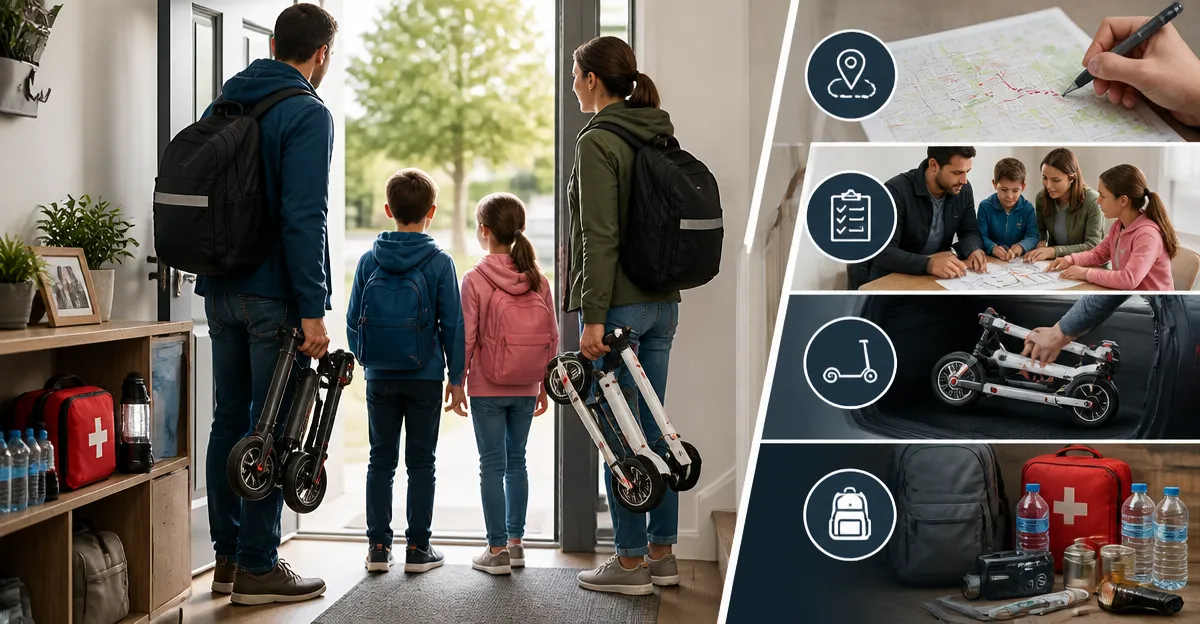
Introduction
This guide explains how a family can develop a reliable emergency evacuation plan that leverages folding scooters as rapid‑deployment mobility tools. Readers will learn how to assess needs, select appropriate scooters, integrate them into escape routes, and practice drills. The result is a plan that reduces evacuation time, increases safety for children and adults of all abilities, and remains adaptable to various emergency scenarios.
What You'll Need
- Folding scooters suitable for children, teens, and adults
- Portable charging solutions or spare batteries (for electric models)
- Sturdy storage area near exits
- Basic safety equipment: helmets, reflective vests, first‑aid kit
- Printed evacuation map and checklist
All recommended scooters are available on Amazon; links are provided at their first mention.
Step 1: Assess Household Mobility Requirements
Begin by cataloguing each family member's mobility level, age, and typical footwear. Identify who may need assistance navigating stairs, uneven terrain, or long distances. Document these findings in a simple table and rank each person from "independent" to "requires assistance". This assessment informs the selection of scooters with appropriate load capacities and wheel sizes.
Step 2: Choose Appropriate Folding Scooters
Based on the assessment, select scooters that match the height, weight, and terrain needs of each rider. The following products cover a broad spectrum of requirements:
- Kids and Younger Teens: The Razor A Kick Scooter offers a lightweight aluminum frame, adjustable handlebars, and urethane wheels. Priced at $29.97 with a 4.8‑star rating from 33,821 reviews, it folds quickly for storage and is ideal for children aged 5‑12 who need a simple, non‑electric option.
- Older Teens and Light Adults: The GRENYX Foldable Kick Scooter features 8‑inch wheels, dual‑brake safety, and four height settings, supporting riders up to 240 lb. At $47.49 and a 4.2‑star rating, it provides a sturdy ride for school commutes or park outings.
- Adults Requiring Powered Assistance: The IQIRAF Mobility Scooter delivers a 300 W motor, 330 lb capacity, and a 15.5‑mile range. Priced at $299.99 with a 4.2‑star rating, it includes a seat, adjustable armrests, and accessories such as a phone holder and rear basket, making it suitable for seniors or adults with limited stamina.
- Travel‑Ready Light‑Weight Option: The Sugogo Lightweight Mobility Scooter weighs only 43 lb, folds in three steps, and runs on a removable lithium battery. At $599.99 and a 4.8‑star rating, it is airline‑approved and perfect for families that travel frequently.
- Versatile Family‑Sharing Model: The WAYPLUS Kick Scooter offers 8‑inch wheels with ABEC‑9 bearings, a load capacity of 240 lb, and four adjustable height levels. Priced at $89.99 with a 4.5‑star rating, it can serve both children and adults, reducing the need for multiple models.
When choosing, consider the scooter's wheel size (larger wheels handle rough surfaces better), folding mechanism (quick‑release folds reduce evacuation time), and load capacity (ensure safety margins). Electric models require battery management; keep spare batteries charged and store them near exit points.
Step 3: Design the Evacuation Route
Map the primary and secondary exits of your home. Mark obstacles such as narrow doorways, stairs, and carpeted areas. For each route, note where a scooter can be positioned to assist a specific family member. Example: place the IQIRAF Mobility Scooter near the main stairwell to aid a senior parent, while the Razor A Kick Scooter sits by the front door for quick retrieval by children.
Ensure that each scooter is stored upright on a stable surface, with the brake engaged, to prevent accidental movement. Use wall‑mounted hooks or a designated scooter rack that does not obstruct the pathway.
Step 4: Establish Communication and Roles
Assign a specific role to each family member during an evacuation. Typical roles include:
- Route leader – guides others to the exit
- Scooter operator – retrieves and deploys the appropriate scooter
- Safety monitor – checks that doors are closed and assists those with limited mobility
Write these responsibilities on a laminated sheet and place it near the primary exit. Conduct a brief briefing each month to remind everyone of their duties.
Step 5: Conduct Practice Drills
Schedule quarterly drills that simulate realistic emergencies (fire alarm, power outage, severe weather). During each drill:
- Activate the alarm and announce the evacuation.
- The designated scooter operator retrieves the correct scooter for each rider.
- All participants use the scooter to reach the exit, observing proper braking and folding techniques.
- Record the total evacuation time and note any bottlenecks.
Review the results and adjust the plan as needed. For electric scooters, verify that batteries are fully charged before each drill. The Sugogo Lightweight Mobility Scooter is particularly useful for drills because its quick‑fold design allows rapid deployment and storage.
Tips & Pro Tips
- Maintain Battery Health: Store lithium batteries at room temperature and charge them to 80 % if they will not be used for more than a month.
- Use Reflective Tape on scooter frames and wheels to improve visibility in low‑light conditions.
- Secure Loose Items such as backpacks or grocery bags in the scooter’s rear basket (available on the IQIRAF Mobility Scooter) to prevent shifting during movement.
- Practice Folding/Unfolding under timed conditions; the faster the scooter can be readied, the shorter the overall evacuation time.
- Consider Terrain: For homes with carpeted hallways, choose scooters with larger wheels (8‑inch or more) to reduce resistance.
Troubleshooting
| Problem | Possible Cause | Solution |
|---|---|---|
| Scooter will not fold | Lock engaged or debris in hinge | Release the lock, clean the hinge, and lubricate with silicone spray. |
| Battery does not hold charge | Old lithium cell or charger malfunction | Replace the battery (spare battery sold separately for IQIRAF) and test with original charger. |
| Brake feels spongy | Air in hydraulic line (if applicable) or worn pads | Bleed the brake system or replace brake pads; the GRENYX model uses a simple foot brake that can be tightened. |
Conclusion
By following this checklist, families can create an evacuation plan that integrates folding scooters to enhance speed, safety, and inclusivity. Regular assessments, proper scooter selection, clear role assignments, and frequent drills ensure that every member—young or old—can exit a dangerous situation confidently. Remember that the plan is a living document; update it whenever a new scooter is added or household dynamics change.
Products Mentioned in This Guide
Frequently Asked Questions
How can folding scooters improve a family emergency evacuation plan?
Folding scooters provide fast, portable mobility for all ages, reducing evacuation time and helping those with limited walking ability navigate stairs or long distances quickly.
What items should be included in a folding scooter evacuation kit?
Include helmets, reflective vests, a first‑aid kit, spare batteries or a portable charger for electric scooters, and a printed evacuation map with a checklist.
How do I assess the mobility needs of each family member for the plan?
Catalog each person’s age, mobility level, and any assistance required for stairs or uneven terrain, then note these details in a simple spreadsheet or checklist.
Where should folding scooters be stored for quick access during an evacuation?
Store them in a sturdy, easily reachable area near an exit, such as a hallway closet or garage shelf, ensuring they’re ready to deploy immediately.
How often should families practice evacuation drills with folding scooters?
Conduct drills at least twice a year, rehearsing routes and scooter deployment to ensure everyone is familiar with the process.