Introduction
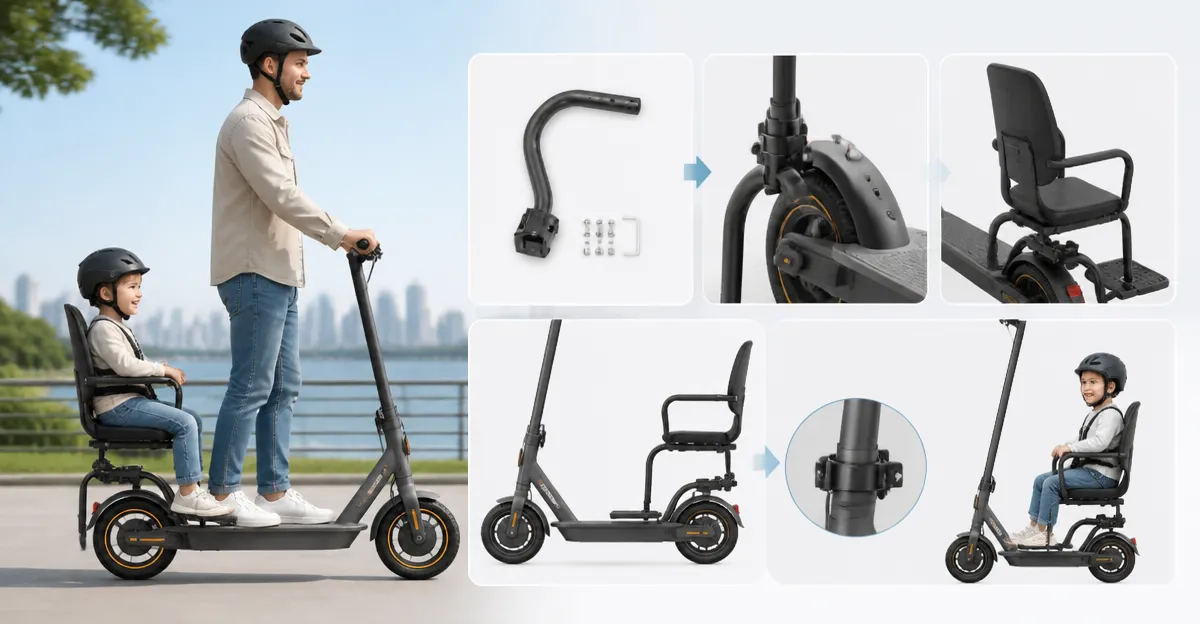
One can transform a popular folding scooter into a secure platform for a child passenger without compromising performance. This guide explains the essential considerations, required tools, and precise actions needed to adapt Hiboy, Gotrax, and VOLPAM models. Readers will learn how to select compatible child seats, install cushioning, and perform safety checks that meet industry standards. By following each step, one ensures a comfortable ride for both adult rider and child passenger.
What You’ll Need
- Rear‑mounted child seat for scooters or bicycles (e.g., Felixstory Electric Scooter Child Seat).
- Front‑mounted child bike seat for additional stability (e.g., OUSEXI Front Child Bike Seat).
- Adjustable scooter seat cushion for rider comfort (e.g., NAIXTYRE Scooter Seat Cushion).
- Standard tools: Allen wrenches, screwdriver, torque wrench, and zip ties.
- Safety equipment: helmet for child, reflective stickers, and a portable lock.
Step 1: Verify Scooter Compatibility
Before installing any accessory, confirm that the scooter frame possesses a rear rack or a sturdy mounting point. Hiboy, Gotrax, and VOLPAM models typically feature a reinforced rear axle that can support additional weight up to 40 lb. Measure the distance between the rear axle and the deck; it should exceed 19.6 inches to accommodate a front‑mounted seat if desired. If the scooter lacks a rear rack, consider adding a universal rack using the mounting brackets supplied with the child seat.
When a rear rack is present, the Felixstory Electric Scooter Child Seat becomes a viable option because it attaches directly to the rack with four‑hole screws. This seat supports children up to 110 lb, which exceeds the typical weight limit for scooter passengers, providing a generous safety margin.
Step 2: Install the Rear‑Mounted Child Seat
- Position the seat on the rear rack so that the padded cushion aligns with the scooter deck.
- Secure the seat using the supplied bolts; tighten each bolt to the manufacturer’s torque specification (usually 5‑7 Nm). Use a torque wrench to avoid over‑tightening, which could damage the frame.
- Attach the 3‑point harness, adjusting the strap length so that the child’s shoulders sit comfortably within the side‑clasp buckles.
- Adjust the foot wells to match the child’s leg length, ensuring that the feet rest on the secured straps without slipping.
The Felixstory seat features a thickened, waterproof cushion and breathable guardrail hand guards, which protect the child from road vibration and weather exposure. Its adjustable fixing rod accommodates multiple angles, making it suitable for the varied geometry of folding scooters. At a price of $65.98 and a rating of 4.3 / 5 from 94 reviewers, it offers a cost‑effective balance of durability and comfort.
Step 3: Add Front‑Mounted Support (Optional)
For longer rides or uneven terrain, a front‑mounted seat can distribute weight more evenly across the scooter frame. The OUSEXI Front Child Bike Seat folds flat for storage and can be mounted on the scooter’s front fork using its multi‑folding adjustment system. Ensure that the distance between the front fork crown and the seat exceeds 50 cm, as required by the product specifications.
Installation steps:
- Slide the seat’s steel pipe into the fork’s eyelet, then tighten the clamp bolts.
- Adjust the seat height so that the child’s eyes are level with the rider’s line of sight, improving communication.
- Verify that the seat remains horizontal when the scooter is tilted; the one‑piece thickened metal tube maintains stability.
With a price of $52.99 and a 4.2 / 5 rating from 154 users, the OUSEXI seat offers a sturdy steel pipe capable of bearing up to 130 lb, far beyond the needs of a young passenger. Its waterproof PU‑coated cushion ensures comfort during rainy conditions.
Step 4: Install a Comfort Cushion for the Rider
Long rides can cause hip soreness for the adult rider, especially on scooters with narrow decks. The NAIXTYRE Scooter Seat Cushion fits decks with widths from 13.3 cm to 17 cm, covering most folding scooter models. Its extra‑wide, shock‑absorbing design distributes pressure evenly, reducing fatigue.
Installation procedure:
- Place the cushion on the deck, aligning the mounting holes with the existing screw holes.
- Insert the provided hardware and tighten gently; no drilling is required.
- Adjust the cushion height using the built‑in mechanism to match the rider’s preferred posture.
At $56.99 and a 3.8 / 5 rating from 30 reviewers, the NAIXTYRE cushion offers water‑resistant material that can be wiped clean after rain, extending the scooter’s usability in varied weather.
Step 5: Secure Harnesses and Perform Safety Checks
After mounting both seats and the rider cushion, conduct a comprehensive safety inspection. Verify that all bolts are torqued correctly, that the harness straps are free of fraying, and that the foot restraints hold the child’s shoes securely. Check that the child’s headrest is positioned to prevent excessive forward motion in the event of sudden braking.
Next, perform a stationary balance test: place the scooter on a level surface, apply gentle pressure to the handlebars, and observe whether the seats remain level. If any wobble occurs, re‑tighten the mounting bolts or adjust the seat’s angle using the folding adjustment mechanisms provided by the OUSEXI or XIEEIX seats.
Finally, equip the child with a properly fitted helmet and attach reflective stickers to the scooter’s frame for enhanced visibility during dusk or dawn rides.
Tips & Pro Tips
- Use zip ties to secure loose cables and prevent them from entangling the child’s feet.
- Periodically inspect the harness for wear; replace it immediately if any strap shows signs of damage.
- For scooters with a folding mechanism, lock the hinge after installation to avoid accidental collapse while the child is seated.
- When riding on rough surfaces, reduce speed to 10‑12 km/h to maintain stability and minimize stress on the mounting points.
Troubleshooting
Problem: Seat wobbles after a short ride.
Solution: Re‑check all mounting bolts with a torque wrench; ensure the fork or rack is not cracked. If wobble persists, consider adding a reinforcing plate between the seat and the frame.
Problem: Harness does not tighten fully.
Solution: Verify that the side‑clasp buckles are aligned correctly; some models require the buckles to be fully seated before tightening.
Conclusion
Adapting a folding scooter for a child passenger involves careful assessment of compatibility, precise installation of a rear‑mounted seat, optional front support, and rider comfort enhancements. By following the outlined steps, one can create a safe, enjoyable riding experience for Hiboy, Gotrax, and VOLPAM scooters. Consistent safety checks and proper maintenance will prolong the life of the accessories and ensure confidence on every journey.
Frequently Asked Questions
Can any folding scooter be converted to carry a child passenger?
Only models with a sturdy rear frame and sufficient load capacity—such as Hiboy, Gotrax, and VOLPAM—are safe for conversion.
What type of child seat is recommended for a folding scooter?
A rear‑mounted scooter‑specific child seat (e.g., Felixstory) combined with a front‑mounted bike seat for extra stability works best.
What tools are needed to install the child seat?
Standard Allen wrenches, a screwdriver, and optionally a torque wrench to tighten bolts to the manufacturer’s specifications.
How much weight can the adapted scooter safely support?
Most converted scooters are rated for a combined rider and child weight of up to 120 kg (265 lb), but always check the specific model’s limit.
Do I need to perform safety checks after installation?
Yes—inspect all bolts, test the seat’s lock, and conduct a short low‑speed ride to ensure the child seat remains secure before full use.