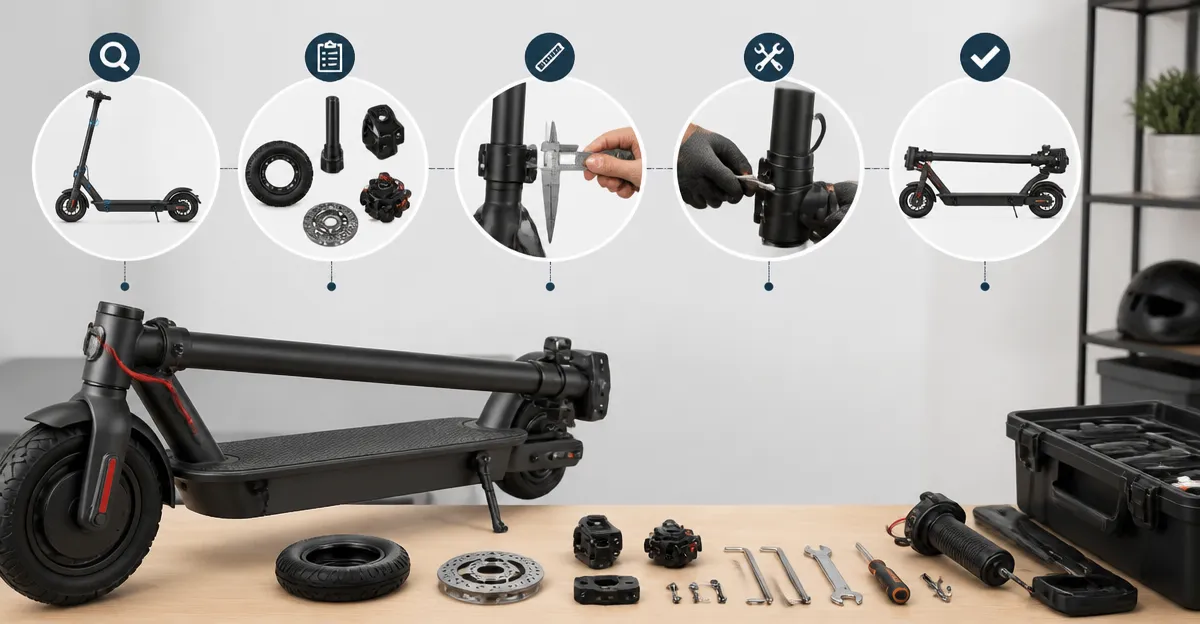
Introduction
One often discovers that maintaining a folding electric scooter requires more than casual intuition. This guide explains how to match replacement components to a specific scooter model, ensuring structural integrity and optimal performance. Readers will learn how to identify the correct parts, verify compatibility, and execute repairs with confidence. By following the outlined process, one can avoid costly mistakes and extend the service life of the scooter.
What You’ll Need
- A reliable internet connection to access product pages and technical manuals.
- Basic hand tools such as screwdrivers, hex wrenches, and a torque wrench.
- Protective gloves and safety glasses for personal protection.
- The Electric Scooter Diagnostic Manual for model‑specific troubleshooting.
- The Scooter Shaft Locking Screw Set for reinforcing folding joints.
Step‑by‑Step Instructions
1. Identify the Scooter Model and Its Core Specifications
Begin by locating the model badge, typically affixed near the deck or under the battery compartment. Record the brand, model number, and any revision codes printed on the frame. Consult the user manual to confirm the motor power, wheel size, and folding mechanism type. Accurate identification prevents the selection of incompatible components later in the process.
When the model is a Max G30 or a closely related variant, the shaft locking screws described in the product listing are designed to fit the folding pole geometry. For other models, the diagnostic manual will indicate whether a different screw profile is required.
2. Verify Part Compatibility Using Official Documentation
Open the Electric Scooter Diagnostic Manual and navigate to the section titled “Folding Mechanism Components.” This chapter lists part numbers, dimensions, and material specifications for each supported scooter. Cross‑reference the recorded model details with the table to confirm that the locking screw set matches the required thread pitch and length.
If the manual confirms compatibility, note the part numbers for future reference. If the manual indicates a different specification, search the manufacturer’s spare‑parts catalog for the exact match before proceeding.
3. Acquire the Correct Diagnostic Reference and Replacement Screws
Purchase the diagnostic manual if it has not been obtained previously; the paperback edition provides clear diagrams and step‑by‑step troubleshooting flows. The manual carries a rating of 5 out of 5 stars based on two reviews, reflecting its thoroughness and ease of use. Although the price is not listed, the value lies in the reduction of guesswork during repairs.
Simultaneously, order the Scooter Shaft Locking Screw Set. This product is priced at CAD19.59, has a perfect 5‑star rating from three reviewers, and includes two complete sets of precision‑engineered steel screws with anti‑rust coating. The set is marketed for the Max G30 series, making it an ideal choice for compatible models.
4. Prepare the Scooter for Disassembly
Power down the scooter completely and disconnect the battery to eliminate any risk of electrical shock. Place the scooter on a stable work surface, preferably a padded mat to protect the deck. Using the appropriate hex wrench, loosen the folding latch just enough to expose the shaft joint without fully releasing the lock.
Before removing any hardware, photograph the original configuration. Visual documentation assists in reassembly and helps verify that all components are accounted for.
5. Remove the Existing Shaft Screws
Apply a penetrating oil to the old screws if they appear corroded or seized. Allow the oil to sit for three to five minutes, then use a torque‑controlled screwdriver to unscrew them clockwise. Take care to keep the screw heads oriented in the same direction to avoid cross‑threading later.
Inspect the shaft threads for wear. Excessive wear may indicate that the replacement set alone will not solve the problem; in such cases, the diagnostic manual recommends replacing the entire shaft assembly.
6. Install the New Locking Screws from the Set
Align the new steel screws with the shaft holes, ensuring the anti‑rust coating faces outward for maximum protection. Hand‑tighten each screw until resistance is felt, then use the torque wrench set to the manufacturer‑specified torque value, typically 2.5 Nm for folding pole connections.
The precision engineering of the locking screws reduces micro‑movements and vibration, thereby enhancing overall scooter stability. This benefit is explicitly highlighted in the product description, which notes that the screws absorb tension cycles during repeated folding.
7. Test the Folding Mechanism and Ride Quality
Re‑engage the folding latch and gently fold the scooter several times to confirm smooth operation. Pay attention to any audible clicks or resistance that may indicate misalignment. After confirming mechanical integrity, reinstall the battery and power the scooter to perform a short test ride on a flat surface.
During the ride, monitor the scooter for unusual vibrations or wobble, especially around the folding joint. If any issues persist, revisit the diagnostic manual’s troubleshooting flowchart to isolate the remaining cause.
8. Document the Repair and Update Maintenance Records
Record the date of repair, part numbers installed, and any observations about the scooter’s performance post‑repair. Store this information in a digital log or a physical notebook for future reference. Maintaining accurate records simplifies subsequent maintenance cycles and can increase the resale value of the scooter.
Finally, clean the work area and safely dispose of any used lubricants or packaging materials in accordance with local regulations.
Tips & Pro Tips
- Always use a torque wrench; overtightening can strip threads, while undertightening may lead to joint loosening.
- Apply a thin layer of anti‑seize compound on new screw threads to facilitate future removal.
- If the scooter is frequently folded, consider replacing the screws every six months to maintain optimal stability.
- Store spare screws in a dry environment to prevent corrosion, even though the set includes an anti‑rust coating.
Troubleshooting
Problem: Folding latch feels loose after screw replacement.
Solution: Verify that the screws were tightened to the exact torque specification. Re‑check thread alignment and re‑torque if necessary.
Problem: Persistent vibration during rides.
Solution: Inspect the shaft for hidden cracks using a flashlight. If cracks are present, replace the entire shaft assembly as advised in the diagnostic manual.
Conclusion
One now possesses a systematic approach to matching folding e‑scooter parts, from model identification to final testing. By leveraging the Electric Scooter Diagnostic Manual and the Scooter Shaft Locking Screw Set, the repair process becomes efficient, reliable, and repeatable. Readers are encouraged to apply these practices to future maintenance tasks, thereby preserving the safety and performance of their folding scooters.
Products Mentioned in This Guide
Frequently Asked Questions
How can I determine if a replacement part is compatible with my folding e‑scooter?
Check the scooter’s model number against the part’s specifications in the manufacturer’s manual or online product page.
What tools are essential for replacing folding e‑scooter components?
Basic screwdrivers, hex wrenches, a torque wrench, plus protective gloves and safety glasses.
Where can I find model‑specific technical information for my scooter?
Refer to the Electric Scooter Diagnostic Manual or the manufacturer’s website for detailed diagrams and part numbers.
How do I ensure the folding joint remains secure after installing new parts?
Use the recommended Scooter Shaft Locking Screw Set and tighten bolts to the specified torque.
Can using the wrong part affect the scooter’s performance or safety?
Yes, incompatible parts can compromise structural integrity, reduce performance, and pose safety hazards.