How to Convert a Kids' Scooter for Adult Use: The Complete Safety Guide (DIY Reinforcement, Weight Limits & Legal Tips)
Introduction
The modern scooter market offers lightweight, foldable models that appeal to children, teenagers, and even adults seeking convenient transportation. This guide explains how to transform a kids scooter into a reliable adult‑friendly vehicle while preserving safety, durability, and legal compliance. Readers will learn essential concepts such as load‑capacity calculations, frame reinforcement techniques, wheel upgrades, braking improvements, and jurisdictional regulations. By the end of this article, one will possess a clear roadmap for a successful conversion project.
Although many manufacturers produce adult‑specific scooters, repurposing an existing children’s model can be cost‑effective and environmentally responsible. The process requires careful assessment of the scooter’s original specifications, followed by targeted modifications that address the increased stresses of adult use. The following sections present a systematic approach, supported by real‑world product examples.
Background/Context
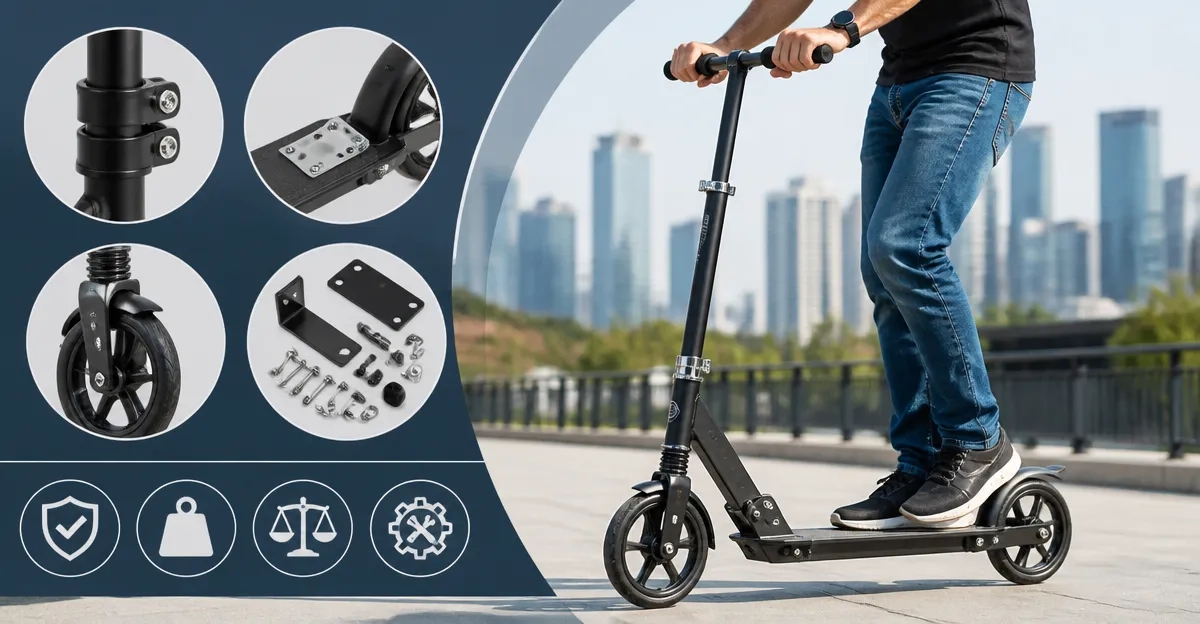
Kids scooters typically feature small wheels, lightweight frames, and modest weight limits designed for riders up to approximately 120 lb. The featured GRENYX Kids Scooter exemplifies this category with an 8‑inch wheel, foldable aluminum deck, and a maximum load of 240 lb, which already exceeds many standard child models. Understanding the engineering rationale behind these specifications provides insight into which components can be safely upgraded.
The scooter’s dual‑brake system, anti‑slip deck, and adjustable handlebars contribute to stability and comfort for riders between 3.9 ft and 6.6 ft tall. However, adult riders often demand higher structural rigidity, smoother ride quality on varied terrain, and compliance with local traffic laws that may differ from those governing children’s devices. Recognizing these gaps informs the selection of reinforcement materials, wheel enhancements, and braking upgrades.
Understanding Scooter Design and Load Capacity
Load capacity is determined by the strength of the frame, the resilience of the wheel hubs, and the integrity of the braking system. The manufacturer’s rating of 240 lb for the GRENYX model reflects a generous safety margin for a child‑focused design, yet the frame geometry and material thickness remain optimized for lower forces. When an adult weighing 180 lb or more uses the scooter, the dynamic loads during acceleration, turning, and impact can exceed the original design limits.
Engineers calculate these forces using principles of static and dynamic stress, considering factors such as rider weight, speed, surface roughness, and braking intensity. Exceeding the recommended load can cause frame deformation, wheel wobble, or brake failure. Therefore, a prudent conversion plan must include reinforcement of critical stress points, especially the fork, deck, and handlebar clamp.
Reinforcing the Frame for Adult Weight
The most effective method to increase structural strength is to add lightweight reinforcement plates made from high‑strength aluminum or carbon‑fiber composites. One can attach a 0.5 mm aluminum plate to the underside of the deck using marine‑grade adhesive, thereby distributing rider weight more evenly across a larger surface area. Additionally, reinforcing the fork with a tubular steel sleeve can prevent bending under heavier loads.
When applying these upgrades, it is essential to retain the scooter’s foldable functionality. Using removable brackets that snap into the existing bolt holes allows the user to disassemble the scooter for transport without permanent alteration. The GRENYX Kids Scooter already includes a quick‑fold mechanism, making it an ideal platform for such modular enhancements.
Upgrading Wheels and Suspension
Eight‑inch wheels provide adequate maneuverability for short commutes, yet larger pneumatic tires improve shock absorption and traction on uneven surfaces. Replacing the original solid wheels with 10‑inch air‑filled tires fitted with a robust tread pattern can reduce vibration and enhance rider comfort. Ensure that the new wheels share the same axle diameter to avoid additional machining.
Complementary suspension upgrades, such as adding a small elastomeric shock absorber to the fork, further mitigate impact forces. This addition is especially beneficial for adult riders who may travel on city streets with potholes or cobblestones. The combination of larger tires and a modest suspension system transforms a child‑centric ride into a competent urban commuter.
Enhancing Braking Systems
The dual‑brake system on the GRENYX scooter includes a hand‑operated brake and a foot‑activated rear brake, providing redundancy for safety. Adult riders, however, often travel at higher speeds, necessitating more responsive stopping power. Upgrading to a hydraulic disc brake on the front wheel dramatically improves modulation and reduces stopping distance.
Installation of a disc brake requires a compatible fork mount and a small rotor, both of which can be sourced from bicycle component kits. The rear foot brake can be retained as a backup, preserving the original safety philosophy while adding a modern, reliable front brake. After installation, it is advisable to test the braking system on a low‑traffic area before regular use.
Legal Considerations and Public Use
Legal regulations for scooters vary by municipality, with many jurisdictions distinguishing between “personal mobility devices” and “motorized scooters.” A non‑electric scooter that has been reinforced for adult use typically falls under the category of a “personal conveyance” and may be subject to sidewalk, bike lane, or road restrictions. It is crucial to consult local ordinances to confirm whether the modified scooter can be ridden on public pathways.
Some cities require adult riders to wear helmets, reflectors, or high‑visibility clothing, especially after modifications that increase speed capability. Additionally, insurance considerations may arise if the scooter is used for commuting in traffic. Ensuring compliance with these legal requirements protects the rider from fines and enhances overall safety.
Product Recommendation
For readers seeking a ready‑made platform that already incorporates many of the desired features, the GRENYX Kids Scooter stands out. Priced at $49.99, it offers a 4‑height adjustable handlebar, dual‑brake system, and a maximum load of 240 lb, which provides a solid foundation for adult conversion. Its 4.3‑star rating from 302 reviews indicates reliable performance and customer satisfaction.
The scooter’s foldable design, lightweight construction, and anti‑slip deck make it suitable for both indoor storage and outdoor travel. By applying the reinforcement techniques described above, one can extend its service life and adapt it to adult riding demands without incurring the expense of a brand‑new adult model.
Comparison/Selection Guide
When choosing a base scooter for conversion, consider the following criteria:
| Feature | GRENYX Kids Scooter | Typical Adult Scooter |
|---|---|---|
| Maximum Load | 240 lb | 250‑300 lb |
| Wheel Size | 8 in solid | 9‑12 in pneumatic |
| Braking | Hand & foot | Disc or hydraulic |
| Price | $49.99 | $150‑$300 |
| Adjustability | 4 handlebar heights | Fixed or limited |
The GRENYX model offers a lower entry price and greater adjustability, while a purpose‑built adult scooter provides larger wheels and factory‑installed disc brakes. If budget constraints are paramount, the GRENYX scooter combined with the reinforcement steps outlined earlier delivers comparable performance for most urban commuting scenarios.
Best Practices & Tips
Before beginning any modification, inspect the scooter for existing damage, rust, or loose bolts; address these issues to ensure a solid baseline. Use torque specifications recommended by the manufacturer when re‑tightening bolts after reinforcement, as over‑tightening can strip threads and compromise safety.
Maintain a regular maintenance schedule that includes checking wheel pressure, brake pad wear, and deck integrity. Keep a spare set of replacement parts such as brake cables and axle nuts, especially if the scooter is used frequently. Document all modifications with photographs and notes, which can be valuable for future troubleshooting or resale.
Frequently Asked Questions
- Can I ride the reinforced scooter on public roads? In most jurisdictions, a non‑motorized scooter may be used on bike lanes or shared paths, but local regulations vary; always verify with municipal authorities.
- What is the safest wheel size for an adult conversion? A 10‑inch pneumatic tire offers a balanced mix of stability, comfort, and maneuverability for most adult riders.
- Do I need to replace the deck when increasing load capacity? Reinforcing the existing deck with an aluminum plate is sufficient for most adult weights, provided the reinforcement is securely bonded.
- Will adding a disc brake void the warranty? Most manufacturers’ warranties cover the original components only; aftermarket upgrades typically do not affect the warranty of the unmodified parts.
- How often should I inspect the reinforced joints? Perform a visual inspection after every 50 miles of riding, and a more thorough check after any impact or hard braking event.
- Is a helmet required for adult scooter riders? Many cities mandate helmet use for riders of any age on non‑motorized scooters; wearing a helmet is strongly recommended for safety.
- Can I use the scooter for downhill riding after upgrades? With appropriate wheel and brake upgrades, moderate downhill rides are feasible, but high‑speed descents should be avoided unless the scooter is specifically engineered for that purpose.
Conclusion
Converting a kids scooter for adult use is a feasible project that combines mechanical ingenuity with safety awareness. By understanding load limits, reinforcing the frame, upgrading wheels and brakes, and adhering to local regulations, one can create a versatile, cost‑effective transportation solution. The GRENYX Kids Scooter provides an affordable foundation that, when properly modified, meets the demands of adult riders without sacrificing portability.
Readers are encouraged to approach each modification methodically, document their work, and prioritize regular maintenance. With these practices in place, the converted scooter can serve as a reliable companion for campus commutes, park outings, and short‑distance urban travel.
Products Featured in This Guide
GRENYX Kids Scooter
Price: $49.99
Rating: 4.3/5.0 (302 reviews)
Why it is featured: This model offers a generous 240 lb load capacity, adjustable handlebars, dual‑brake safety system, and a foldable design, making it an ideal base for adult conversion projects.