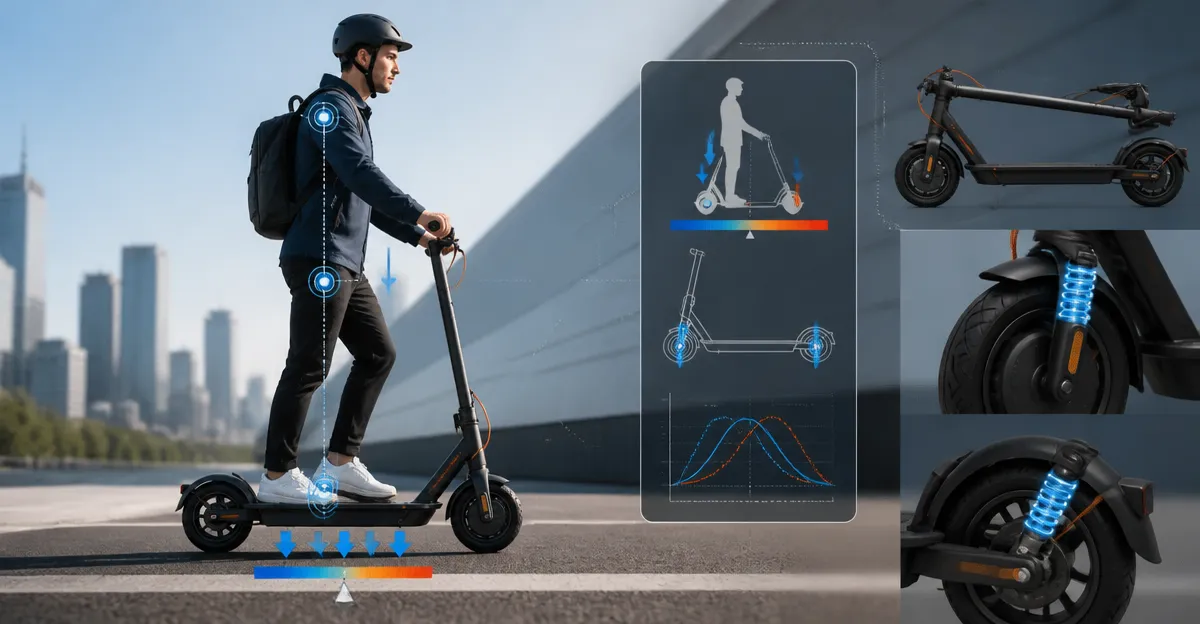
Folding E‑Scooter Stability Guide: Weight Distribution Analysis for Safer Rides
Introduction
The rapid growth of folding electric scooters has created new opportunities for commuters, recreational riders, and families. This guide explains how weight distribution influences stability, how riders can optimise balance, and which market‑leading models support safe handling. Readers will learn the physics behind centre of gravity, the role of suspension systems, and practical strategies for everyday riding. By the end of the article, the audience will be equipped to select a scooter that matches their physical profile and riding environment.
Background and Context
Stability on a two‑wheeled vehicle is governed by the interaction of three primary forces: gravity, inertia, and friction. The centre of gravity (CoG) represents the point where the scooter‑rider system’s mass is concentrated; a lower and more central CoG reduces the likelihood of tip‑over during acceleration, braking, or cornering. In addition, suspension components absorb road irregularities, preventing sudden shifts in load that can destabilise the rider. Finally, tyre profile and tread pattern affect the contact patch, influencing grip on wet or uneven surfaces.
Folding e‑scooters introduce additional variables because the frame must balance portability with structural rigidity. Aluminium alloy frames provide a lightweight solution, yet the folding hinge must maintain alignment under load. Manufacturers address these challenges through dual‑suspension designs, reinforced hinges, and smart braking systems. Understanding these engineering choices helps the rider assess whether a scooter will remain stable under their typical riding conditions.
Key Concepts in Weight Distribution
Three concepts dominate the discussion of weight distribution on folding e‑scooters: rider position, load capacity, and dynamic shifting during manoeuvres. Rider position refers to where the rider places their feet and how they shift their torso while steering. Load capacity is the maximum combined weight of rider, accessories, and cargo that the scooter can safely support. Dynamic shifting occurs when the rider accelerates, decelerates, or turns, causing the CoG to move forward, backward, or laterally.
- Centralised Rider Stance: Keeping the feet close to the deck centre aligns the rider’s mass with the scooter’s longitudinal axis, minimising yaw moments.
- Even Weight Distribution: Distributing any additional load (such as a seat bag) symmetrically on both sides prevents lateral imbalance.
- Suspension Tuning: Dual suspension systems, as found on the Maxshot Electric Scooter, absorb shocks and keep the CoG stable over uneven terrain.
When a rider leans into a turn, the scooter experiences a centrifugal force that pushes the CoG outward. A well‑designed scooter counteracts this force with a low deck height and wide tyre footprint. Conversely, a high‑deck scooter without adequate suspension may feel twitchy at speeds above 20 mph, especially on rough pavement.
Product Recommendations Aligned with Stability
Each of the featured scooters incorporates design elements that directly address weight distribution and stability. The following subsections describe how these features translate into a safer riding experience.
Maxshot Electric Scooter
The Maxshot Electric Scooter offers dual suspension, 10‑inch honeycomb solid tyres, and a 500 W brushless hub motor capable of 22 mph. Its aluminium frame weighs 36 lb, and the scooter folds to a compact 44.5 × 16.9 × 24.4 inches, preserving rigidity at the hinge. The LED display provides real‑time speed and battery data, allowing riders to manage acceleration within the scooter’s safe operating envelope. With a UL 2272 safety certification, the Maxshot model also includes dual braking (electronic and mechanical) that distributes stopping force evenly across both wheels.
FRITTON 4‑Wheel Mobility Scooter
The FRITTON 4‑Wheel Mobility Scooter is designed for adults and seniors who prioritise stability over speed. Its four‑wheel layout inherently lowers the CoG and distributes weight across a broader base, reducing the risk of tip‑over on slopes up to 12°. The scooter features a 250 W motor, 20‑mile range, and a 330 lb load capacity, making it suitable for heavier riders or those who require additional cargo space. The adjustable armrests and 360° swivel seat enable the rider to adopt an ergonomic posture that aligns the torso with the scooter’s centre line.
Sugogo Lightweight Mobility Scooter
The Sugogo Lightweight Mobility Scooter combines ultra‑light construction (43 lb) with a removable 24 V lithium battery. Despite its low weight, the scooter retains a 300 lb load capacity and 8‑inch flat‑free tyres that provide a stable contact patch on indoor and outdoor surfaces. The 270 W brushless motor delivers smooth acceleration, while the electromagnetic brake with a 0.5 s response time ensures consistent deceleration without abrupt weight transfer.
Misodo Heavy‑Duty Electric Scooter
The Misodo Heavy‑Duty Electric Scooter targets riders who demand high performance and rugged stability. Its 1500 W peak motor, dual disc brakes, and 10‑inch pneumatic off‑road tyres create a solid platform for speeds up to 25 mph and slopes of 30°. The scooter’s 48 V 13 Ah battery supplies up to 45 miles of range, while the reinforced aluminium frame and foldable design maintain structural integrity during high‑impact rides. The inclusion of an optional seat further lowers the CoG for longer journeys.
Comparison and Selection Guide
Choosing the right folding e‑scooter requires matching rider weight, typical terrain, and performance expectations with the scooter’s specifications. The table below summarises the key attributes of each model.
| Model | Max Speed | Range | Load Capacity | Suspension | Braking System | Price |
|---|---|---|---|---|---|---|
| Maxshot Electric Scooter | 22 mph | 12‑50 mi (depending on battery) | 265 lb | Dual suspension | Dual (electronic & mechanical) | $269.99 |
| FRITTON 4‑Wheel Mobility Scooter | 6.2 mph | 20 mi | 330 lb | None (rigid frame) | Electronic brake | $369.99 |
| Sugogo Lightweight Mobility Scooter | 6.2 mph | 12.4 mi | 300 lb | Front & rear anti‑tip wheels | Electromagnetic (0.5 s response) | $699.99 |
| Misodo Heavy‑Duty Electric Scooter | 25 mph | 45 mi | 300 lb+ | Front & rear shock absorbers | Dual disc & electronic | Price varies (not listed) |
Riders who value portability and moderate speed will find the Maxshot model a balanced choice, especially given its 4.2‑star rating from 1,152 reviews. Those who require a stable platform for heavy loads or limited mobility should consider the FRITTON or Sugogo options, both of which provide four‑wheel stability and higher load limits. Performance‑oriented commuters who travel longer distances on mixed terrain will benefit from the Misodo scooter’s powerful motor and extended battery capacity.
Best Practices and Tips for Maintaining Stability
Even the most advanced scooter can become unsafe if the rider neglects basic maintenance and technique. The following checklist helps preserve optimal weight distribution and handling characteristics.
- Inspect Tyres Regularly: Verify tyre pressure (for pneumatic models) and examine tread wear. Uneven wear can shift the contact patch, causing lateral drift.
- Secure Cargo Symmetrically: When using a seat bag or external storage, place items evenly on both sides of the deck to avoid side‑to‑side imbalance.
- Adjust Suspension Settings: If the scooter offers adjustable preload, set it according to rider weight; a heavier rider requires firmer suspension to prevent excessive sag.
- Maintain a Low Centre of Gravity: Sit or crouch rather than standing upright when travelling at higher speeds. An upright posture raises the CoG and amplifies tipping risk.
- Practice Controlled Braking: Apply both front and rear brakes gradually. Sudden front‑brake application can shift weight forward, potentially causing a wheel‑lock.
- Regularly Tighten Folding Hinges: Loose hinges introduce flex that can alter alignment, especially on rough roads.
- Charge Batteries Correctly: Follow manufacturer guidelines for initial and subsequent charges. Over‑charging or using an incompatible charger can affect battery weight distribution and overall scooter balance.
By integrating these habits into routine use, riders reduce the likelihood of unexpected tip‑overs and extend the service life of critical components.
Frequently Asked Questions
- What is the ideal rider weight for a folding e‑scooter?
- Most models specify a maximum load capacity; staying below 80 % of that limit ensures the suspension and brakes operate within their design parameters. For example, the Maxshot scooter supports up to 265 lb, making a rider weight of 210 lb a safe benchmark.
- How does tyre width affect stability?
- Wider tyres increase the contact patch, which improves lateral grip and reduces the tendency to wobble during cornering. The Misodo scooter’s 10‑inch pneumatic tyres exemplify this principle for off‑road stability.
- Can I add a rear seat bag without compromising balance?
- Yes, provided the bag is positioned centrally and its weight does not exceed the scooter’s remaining load capacity. The Maxshot model includes a dedicated seat bag compartment designed to keep the load centred.
- Do folding hinges weaken over time?
- High‑quality aluminium hinges, such as those on the Maxshot and Misodo scooters, are engineered to retain strength after thousands of folds. Regular inspection and torque checks prevent premature wear.
- Is a higher top speed always safer?
- No. Higher speeds increase kinetic energy, which magnifies the impact of any instability. Riders should select a speed mode that matches their skill level and road conditions.
- How often should suspension components be serviced?
- Manufacturers typically recommend inspection every 200‑300 miles. Replace worn dampers or springs to maintain consistent shock absorption.
Conclusion
Weight distribution, suspension design, and rider technique together define the stability of a folding e‑scooter. By understanding the physics of the centre of gravity, selecting a scooter that aligns with personal load requirements, and following disciplined maintenance practices, riders can enjoy confident and safe journeys. The products highlighted in this guide illustrate how manufacturers translate engineering principles into tangible safety features, ranging from dual‑suspension systems to four‑wheel platforms. Armed with this knowledge, the reader can make an informed purchase decision and ride with greater assurance.
Products Featured in This Guide
Maxshot Electric Scooter
Price: $269.99
Rating: 4.2/5.0 (1,152 reviews)
Featured for its dual suspension, solid honeycomb tyres, and smart LED display that together enhance weight distribution and rider confidence.
FRITTON 4‑Wheel Mobility Scooter
Price: $369.99
Rating: 4.4/5.0 (74 reviews)
Featured for its four‑wheel architecture, high load capacity, and ergonomic seat that keep the centre of gravity low for senior riders.
Sugogo Lightweight Mobility Scooter
Price: $699.99
Rating: 4.6/5.0 (404 reviews)
Featured for its ultra‑light aluminium frame, removable lithium battery, and electromagnetic brake that together preserve balance on the go.
Misodo Heavy‑Duty Electric Scooter
Price: Not listed
Rating: Not listed
Featured for its 1500 W peak motor, dual disc brakes, and 10‑inch off‑road tyres that deliver stability at high speeds and on rough terrain.