Introduction
Parents who consider a folding electric scooter for their child must understand both the excitement of the technology and the responsibilities that accompany it. This guide explains the essential safety considerations, offers evidence‑based recommendations, and highlights products that meet rigorous standards. Readers will learn how to evaluate scooter specifications, select appropriate protective equipment, and establish safe riding habits. By the end of the article, a parent will be equipped to make an informed purchase and to supervise confident, secure riding experiences.
Background and Context
Folding electric scooters have become popular among children aged six to fourteen because they combine mobility, fun, and a sense of independence. The market offers a range of motor powers, battery capacities, and speed limits, each influencing safety outcomes. Regulatory bodies such as UL 2272 certify electrical safety, while local traffic laws may restrict speed or require helmets. Understanding these factors provides a foundation for evaluating any scooter model.
Understanding Scooter Mechanics
The core components of a folding electric scooter include the motor, battery, controller, braking system, and structural frame. A quiet 130W motor, as found on the SIMATE Kids Electric Scooter, delivers a maximum speed of 8.7 mph, which aligns with recommended limits for younger riders. The scooter’s 24V battery recharges in two to three hours, allowing multiple short rides without extended downtime. A dual‑brake system that combines electronic regeneration braking with a splash‑proof rear foot brake enhances stopping power on wet surfaces.
Higher‑powered models such as the Caroma Kids Electric Scooter feature a 250W motor capable of 15 mph, suitable for older children who have mastered basic control. This scooter includes a 36V 5.2Ah battery that provides up to 16 miles of range, and an EABS (Electronic Anti‑Lock Braking System) that reduces stopping distance by roughly 30 percent. While the performance is impressive, parents must verify that the child’s age and skill level match the scooter’s capabilities.
Choosing a Safe Folding Electric Scooter
When selecting a scooter, three criteria dominate safety decisions: speed limitation, weight capacity, and structural integrity. A scooter that limits speed to under 10 mph for beginners reduces the kinetic energy involved in a potential collision. Load capacity must exceed the child’s weight plus any additional gear; both the SIMATE and Caroma models support riders up to 154 lbs and 220 lbs respectively, offering ample margin for growth.
Portability is another practical consideration. The SIMATE scooter weighs 14 lbs and folds with a single click, enabling easy storage in a car trunk or closet. The Caroma scooter, at approximately 16 lbs, also folds quickly but includes a more robust frame designed for higher speeds. Parents should assess the balance between weight, durability, and intended usage environments such as sidewalks, parks, or school campuses.
Protective Gear Essentials
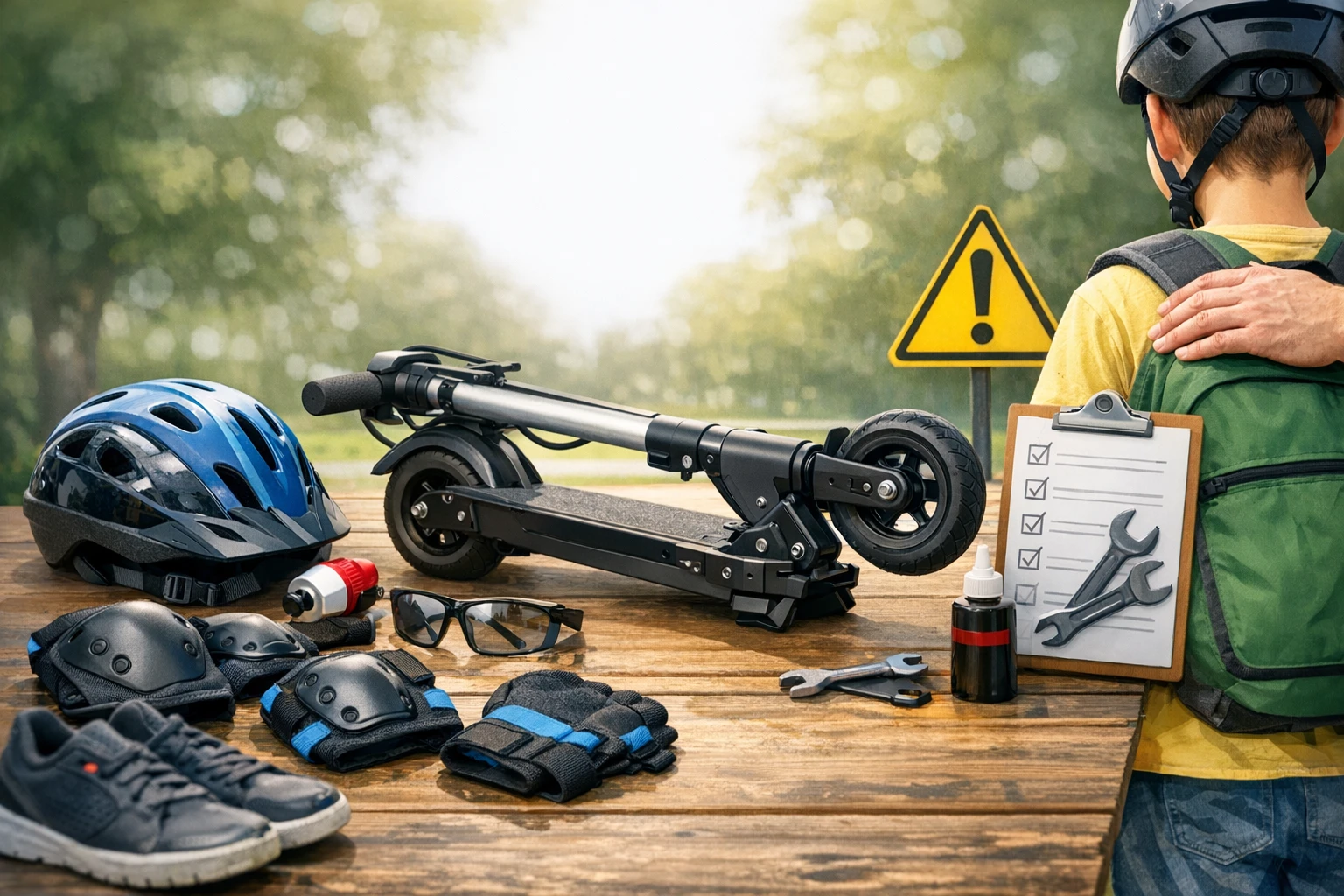
Even the safest scooter cannot eliminate the need for personal protective equipment. A well‑fitted helmet is the single most effective device for preventing head injuries. The ZLEIOUY Kids Adjustable Helmet & Pads Set offers a double‑adjustment system that accommodates head circumferences from 48 cm to 58 cm, making it suitable for children aged five and older. The set includes elbow, knee, and wrist pads, providing comprehensive coverage during falls.
For families seeking a broader gear package, the CELOID Kids Helmet & Protective Gear Set delivers a similar protective suite with high‑impact PE shell, breathable EVA padding, and a storage bag for easy transport. Both sets have earned ratings above 4.5 stars, indicating strong consumer confidence in comfort and durability. Selecting a set that matches the child’s preferred colors can also encourage consistent use.
Comparison and Selection Guide
| Feature | SIMATE Kids Electric Scooter | Caroma Kids Electric Scooter | Jetson Jupiter Light‑Up Kick Scooter |
|---|---|---|---|
| Motor Power | 130 W | 250 W | Non‑electric, kick‑propelled |
| Top Speed | 8.7 mph | 15 mph | Manual, speed varies |
| Battery Capacity | 24 V, 2‑3 hr charge | 36 V 5.2 Ah, 5 hr charge | None |
| Weight | 14 lb | 16 lb | 6.2 lb |
| Max Load | 154 lb | 220 lb | 132 lb |
| Safety Certifications | UL 2272 | UL 2272, EABS | None (mechanical) |
| Rating (as of listing) | 4.2 / 5 (53 reviews) | 4.3 / 5 (1,033 reviews) | 4.5 / 5 (23,780 reviews) |
| Price | $139.99 | $189.99 | $34.99 |
The table illustrates that the SIMATE scooter provides a balanced combination of modest speed, lightweight construction, and an affordable price point, making it ideal for younger children. The Caroma scooter excels in performance and range, suitable for older, more experienced riders who require higher speeds. The Jetson Jupiter is a non‑electric, light‑up kick scooter that emphasizes visibility and fun for very young children; it does not replace an electric model but can serve as an introductory option.
Best Practices and Tips for Parents
- Perform a pre‑ride inspection of brakes, tires, and battery connections before each use.
- Establish a designated riding area free of traffic, obstacles, and steep grades.
- Enforce the use of a certified helmet, elbow, knee, and wrist protection on every ride.
- Set speed limits using the scooter’s built‑in display controls; begin with the lowest setting for beginners.
- Teach children to dismount safely by stepping off the deck rather than jumping.
- Charge the battery in a well‑ventilated area away from flammable materials, following the manufacturer’s instructions.
- Store the scooter folded in a dry location to prevent rust and battery degradation.
Regular maintenance, such as tightening bolts and checking tire pressure, extends the life of the scooter and maintains safety performance. Parents should schedule a comprehensive inspection every three months, especially after exposure to rain or rough terrain. Keeping a maintenance log can help track service intervals and identify recurring issues.
Frequently Asked Questions
- What age is appropriate for a folding electric scooter? Most manufacturers recommend a minimum age of six years, provided the child can balance and follow safety instructions.
- How fast should a child’s scooter be allowed to travel? For beginners, a top speed of 8‑10 mph is advisable; older children may graduate to 12‑15 mph if they demonstrate competent control.
- Is a helmet mandatory for scooter use? Yes, a certified helmet that fits securely is required by law in many jurisdictions and is essential for reducing head injury risk.
- Can the battery be charged overnight? Both the SIMATE and Caroma scooters feature batteries that fully charge within three to five hours; overnight charging is safe if the charger is UL certified.
- What maintenance tasks are most critical? Inspecting brakes, ensuring tire inflation, and verifying battery connections are the most critical tasks to perform regularly.
- Are foldable scooters safe for rainy conditions? While the scooters are water‑resistant, riding in heavy rain reduces traction and should be avoided.
- How does the dual‑brake system improve safety? The combination of electronic regeneration braking and a rear foot brake provides redundancy, ensuring the scooter can stop even if one system fails.
Conclusion
Folding electric scooters offer children a convenient and exhilarating mode of transportation, yet they demand diligent safety oversight from parents. By selecting a model that matches the child’s age and skill level, equipping the rider with certified protective gear, and enforcing disciplined riding habits, families can enjoy the benefits of modern mobility while minimizing risk. The recommendations and practices outlined in this guide empower parents to make confident decisions and to foster safe, enjoyable experiences for their children.
Products Featured in This Guide
SIMATE Kids Electric Scooter
Price: $139.99 | Rating: 4.2/5 (53 reviews)
Featured for its UL‑2272 certification, 130W motor, dual‑brake system, and lightweight foldable design that suits younger riders.
Caroma Kids Electric Scooter
Price: $189.99 | Rating: 4.3/5 (1,033 reviews)
Featured for its 250W hill‑climbing motor, EABS braking, adjustable speed modes, and higher load capacity for older children.
Jetson Jupiter Light‑Up Kick Scooter
Price: $34.99 | Rating: 4.5/5 (23,780 reviews)
Featured for its vibrant LED illumination, ultra‑light weight, and easy‑fold mechanism, making it an excellent introductory scooter for younger children.
ZLEIOUY Kids Adjustable Helmet & Pads Set
Price: $33.99 | Rating: 4.7/5 (1,554 reviews)
Featured for its double‑adjustment helmet, comprehensive elbow/knee/wrist protection, and high comfort rating for multi‑sport use.
CELOID Kids Helmet & Protective Gear Set
Price: $35.99 | Rating: 4.6/5 (1,265 reviews)
Featured for its high‑impact PE shell, breathable EVA padding, and complete 7‑piece protective kit suitable for a wide range of outdoor activities.
Frequently Asked Questions
What safety certifications should I look for when buying a folding electric scooter for my child?
Choose models that meet UL 2272 certification, which verifies electrical safety and fire‑resistance standards.
At what age is a folding electric scooter appropriate for kids?
Most experts recommend scooters for children aged 6‑14, provided the speed and power suit the child’s maturity.
Which protective gear is essential for young riders?
A certified helmet is mandatory, and knee and elbow pads add extra protection on uneven surfaces.
How can I ensure the scooter’s speed is safe for my child?
Select a scooter with a top speed of 10‑12 mph or use built‑in speed‑limiting settings to comply with local laws.
What battery safety practices should parents follow?
Keep the scooter charged in a cool, dry place, avoid overcharging, and inspect the battery for swelling or damage regularly.